
Seven Trends Reshaping the Southern California Backyard
Fire-safe first five feet, water budgets, smaller lawns and outdoor rooms: GreenPlace co-founder Volodymyr Drahan, whose Costa Mesa backyard won a 2026 CLCA Orange County award, on where residential landscaping is heading.
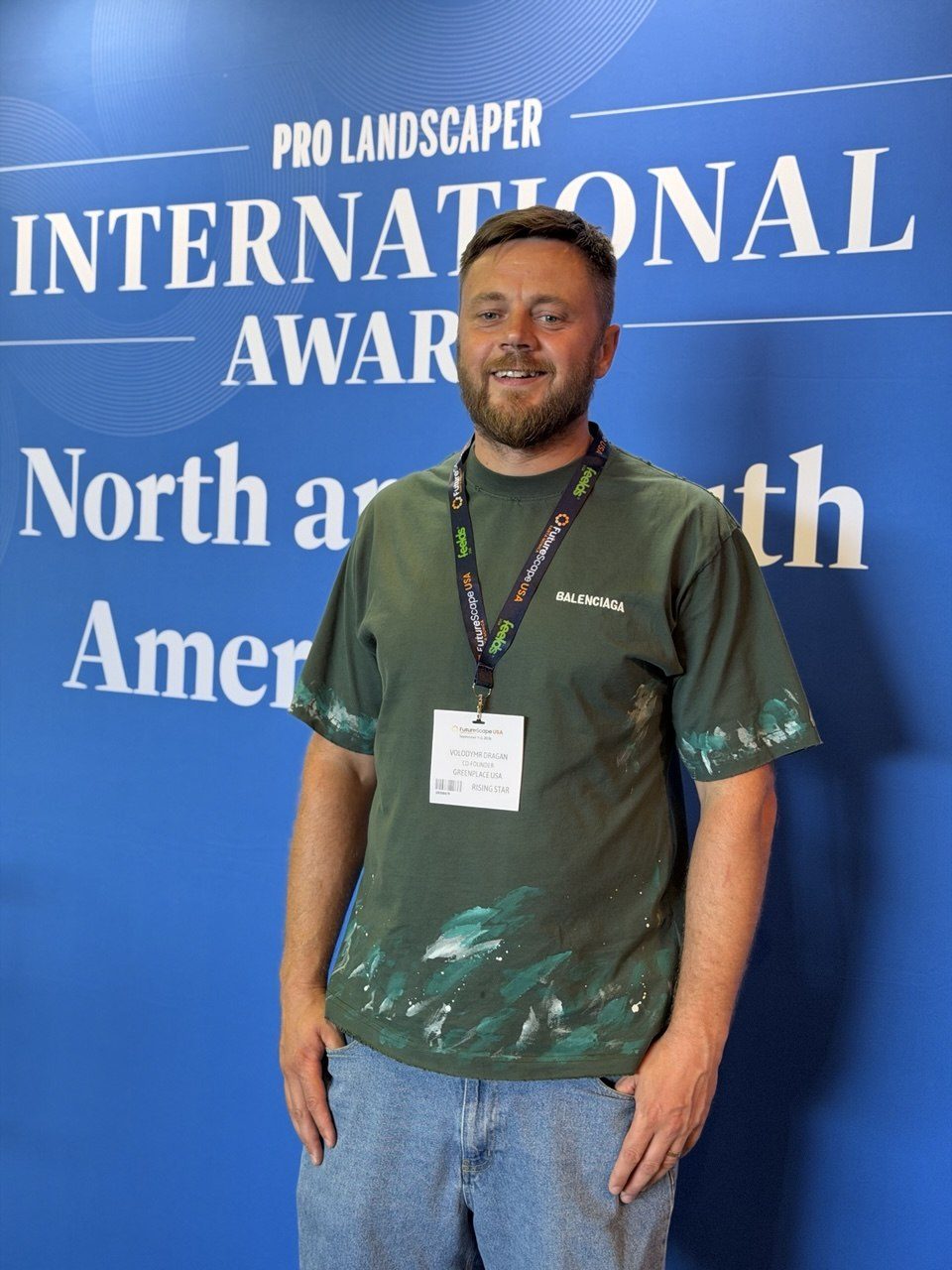
By Volodymyr Drahan, Co-Founder and CEO, GreenPlace Inc.
A few years ago, most of our clients in Orange County and Los Angeles came to us with the same request: make the backyard look good and keep it green. Today the first conversation is different. Homeowners ask how much water the new landscape will use, whether it is safe in a wildfire, how much maintenance it needs and how many evenings a year they will actually spend outside.
This year our company, GreenPlace Inc., received the 2026 Landscape Beautification Achievement Award from the Orange County Chapter of the California Landscape Contractors Association (CLCA) in the Residential Landscape Installation category for a project we call the Costa Mesa Backyard Transformation. In September, our team was also recognized among Pro Landscaper USA’s Rising Stars at FutureScape USA in Santa Monica. Both projects and both conversations with peers pointed to the same shift. Here are the seven trends I see reshaping the Southern California backyard going into 2027.
1. The First Five Feet Become Noncombustible
The most important change is happening right next to the house. After the January 2025 fires in Los Angeles, California’s Board of Forestry and Fire Protection has been working on “Zone 0” rules for the ember-resistant area within five feet of a home in high fire-risk areas. The Board adopted a revised emergency package on November 5, 2026; as of mid-November it still has to clear state review before taking effect, and requirements for existing homes are expected to phase in over several years.
Whatever the final timeline, the direction is clear, and many clients are not waiting. In that first five feet we are replacing bark mulch with gravel, decomposed granite or pavers, moving shrubs and firewood away from walls and windows, and specifying noncombustible gates and fence sections where they meet the house. The design challenge is to make that strip look intentional rather than bare: stone, sculptural containers and well-placed lighting do a lot of work there.
2. Water Budgets Drive the Design
California’s Model Water Efficient Landscape Ordinance already sets water budgets for new and renovated landscapes, and local water agencies tighten outdoor watering rules during every drought. For us, irrigation is now the starting point of the design, not the last line item.
That means grouping plants by water need (hydrozoning), drip irrigation for shrubs and trees, and weather-based controllers that adjust schedules automatically. On slopes and heavy clay, we size emitters and split run times so water soaks in instead of running off. A well-designed system is invisible, and it is the main reason a drought-tolerant garden still looks healthy in August.
3. The Lawn Shrinks, and Fake Grass Gets a Second Look
The classic wall-to-wall lawn is disappearing. Clients keep a small, usable patch of grass where children or dogs actually play and replace the rest with planting beds, gravel gardens and hardscape.
Synthetic turf, once seen as the easy answer to drought, is now a more careful decision. Since a 2023 state law (SB 676), cities and counties in California may again regulate or ban artificial turf, and concerns about heat and chemicals have grown: on a 100-degree day, synthetic grass can get far hotter than natural lawn. We still use it, but selectively: a narrow strip along a patio, a pet area, a shaded side yard. It is a tool, not a default.
4. Smaller, Better-Equipped Outdoor Rooms
Instead of one large showcase yard, homeowners want several defined spaces: a dining area, a lounge around a fire feature, a quiet corner with a bench. Outdoor kitchens remain one of the biggest line items in our proposals, and fire pits sized for a family or a small group of friends are requested on almost every project.
In fire-prone areas this trend meets the first one. Gas fire features, safe clearances and noncombustible surrounding materials are part of the plan from day one.
5. Structure First: Walls, Raised Planters and Permeable Paving
Many Southern California lots are narrow, sloped or both. Retaining walls and raised planters turn those constraints into structure. In the Costa Mesa project, a long raised planter along the block wall gives the garden height and greenery without taking space from the patio, which centers on a fire pit and a ribbon of turf.
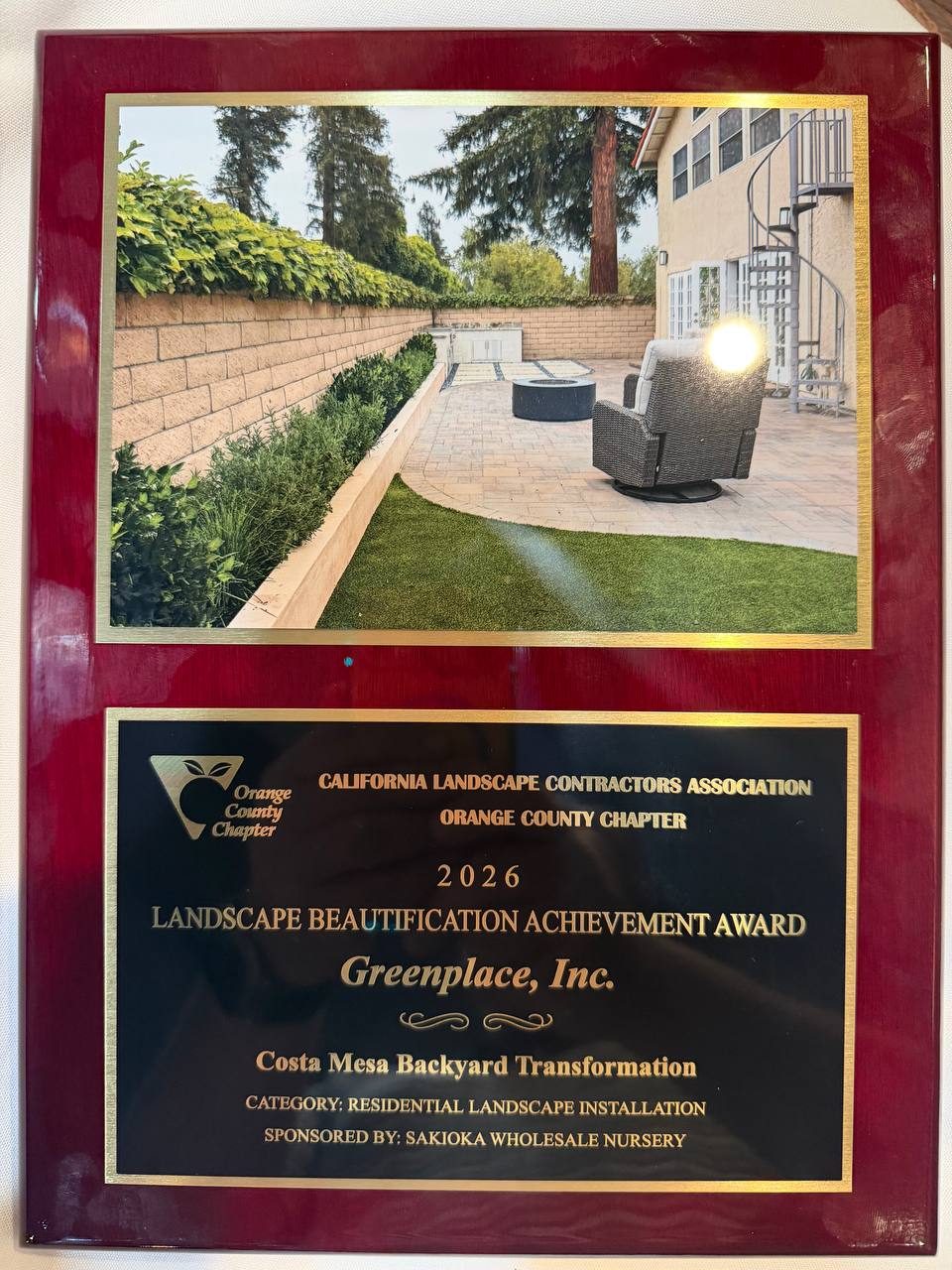
Underfoot, permeable pavers and gravel joints are replacing solid concrete. They let rainwater soak into the soil instead of running into the street, which matters both for water conservation and for local stormwater rules.
6. Natural, Durable Materials
Clients are choosing natural stone, gravel, steel and porcelain pavers over imitation finishes. These materials age well, tolerate heat and need little maintenance. They also pair naturally with Mediterranean and California native plants, which are becoming the backbone of planting plans across the region.
7. The Backyard Goes on the Phone
Irrigation, lighting, fire features and water features are increasingly controlled from a single app. What used to be an expensive custom system is now accessible for an ordinary family home. For us, the most valuable part is not the convenience but the data: flow monitoring and leak alerts catch problems before a plant dies or a water bill doubles.
What This Means for Homeowners
All seven trends come down to one idea: a landscape is no longer decoration added after the house is finished. It is a working system that has to manage water, reduce fire risk, handle heat and still be a place where a family wants to spend time.
My advice to anyone planning a new backyard in 2027 is simple. Start with the site and the rules, not with pictures from social media. Ask your contractor how the design handles water, fire safety and maintenance over ten years, not just how it will look on the day it is finished. The most beautiful gardens we have built are the ones where those questions were answered first.
About the Author
Volodymyr Drahan is co-founder and CEO of GreenPlace Inc., a landscape construction company in Southern California, and co-founder of GreenMix Nutrition. He specializes in irrigation systems, water infrastructure and resource-efficient landscape design, and serves as Senior Editor for engineering infrastructure and water management at Industry Pulse.

Senior Editor, Engineering Infrastructure & Water Management
Volodymyr Drahan edits Industry Pulse coverage of engineering, infrastructure, irrigation and water management.