
Ukraine’s Grid Under Fire: What America Can Learn About Energy Resilience
Ukraine kept its grid running under missile strikes with distributed generation, storage and fast repair. The lessons matter for a U.S. grid strained by data centers, extreme weather and cyber threats.
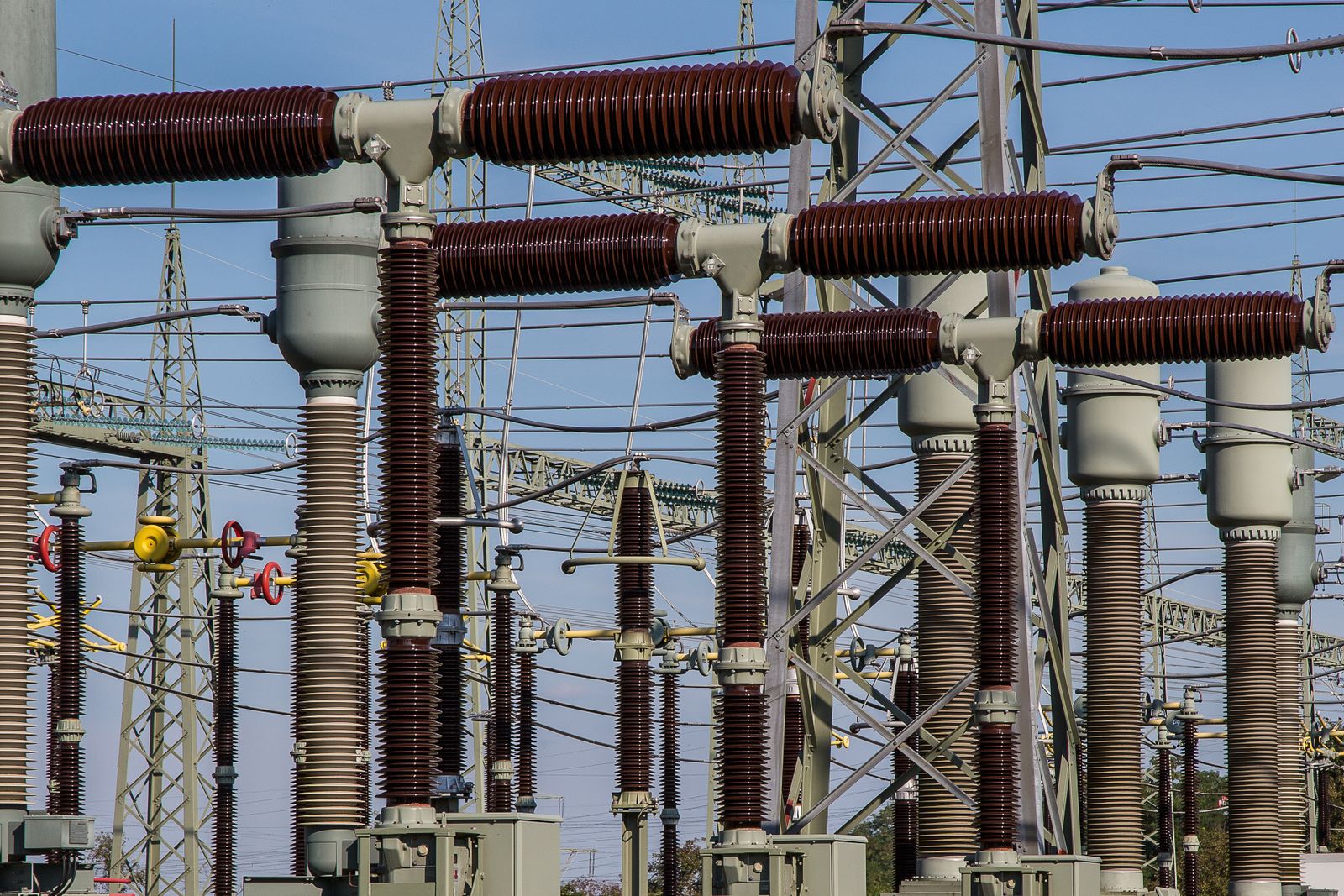
Ukraine has learned to keep its power system running under missile strikes by building out distributed generation, energy storage and backup infrastructure. That experience is now relevant to the United States, where surging electricity demand from data centers, extreme weather and cyber threats are exposing the weaknesses of the traditional model of power supply. Ukraine’s experience shows how to make a grid more resilient to large-scale shocks, and why American energy planners should apply these lessons while new infrastructure is still being built.
Ukraine: How War Rewired a Power System
Ukraine’s power system has gone through a stress test no regulator would have dared to model. In 2025 alone, its energy infrastructure was attacked 4,500 times with 1,800 missiles and 50,000 drones, and households spent 1,951 hours without electricity, roughly a fifth of the year, according to the International Energy Agency. In mid-January 2026, demand reached 18 gigawatts against roughly 11 GW of available capacity.
The sustained attacks pushed Ukrainian energy companies toward decentralization: it is easier to hit one large power plant with a missile than to knock out a dozen small ones. Small facilities are also harder to locate, especially new ones that do not appear on old maps, and much faster to repair. The numbers bear this out. By the IEA’s estimate, more than half of Ukraine’s centralized generating capacity has been damaged or destroyed, compared with just 7% of its distributed generation.
From Large Plants to Thousands of Small Sources
Ukraine is not rebuilding what was destroyed. It is changing the architecture of the system. The IEA describes this shift as a combination of three elements: distributed generation with no single points of failure, energy storage to keep supply continuous, and modular infrastructure that can be deployed quickly.
Small gas-fired generation forms the backbone of this architecture. In 2025 alone, according to Ukraine’s Energy Ministry, 762 megawatts of new gas-fired capacity came online. Government agencies give different estimates of the total, and that discrepancy is telling in itself: the state still has no single record of what is happening behind the meter. Under regional resilience plans, another 388.8 MW has been added since March 2026, with 532.2 MW across 247 units under construction. The government supports distributed generation through simplified installation procedures and special gas prices in frontline regions.
The same principle has been applied to heating. In the winter of 2025–2026, as centralized systems failed, Kharkiv kept its heat on with heat pumps, cogeneration units and mobile boiler plants. The IEA considers that Kharkiv, close to the front line, entered January 2026 better prepared than Kyiv, where more than 5,500 residential buildings were left without heat. But the two cities faced different levels of destruction, had different heating systems and came under attack with different intensity, so the comparison illustrates an approach rather than proving it works.
Batteries: Security First, Business Later
In 2025, Ukraine installed roughly 3 gigawatt-hours of battery storage, becoming Europe’s fourth-largest market behind Germany, the United Kingdom and Italy. More than 60% of that capacity is distributed, and buyers’ main motive is energy security rather than lower bills. Ukraine’s solar industry association puts the figure lower, at more than 1 GWh, but the scale of the growth is the same either way.
Deregulation did the most to accelerate the market. Since 2024, battery systems have not required a construction permit, and projects up to 5 MW are exempt from storage licensing. DTEK and Fluence built a 200 MW / 400 MWh system across six sites in just six months.
The business model, however, has yet to take shape. Arbitrage revenue is held back by a price cap of €300 per megawatt-hour, and the move to 15-minute trading intervals is not expected until next year.
Repairing Faster Than Destruction
The most important capability turned out to be restoring facilities faster than new strikes could destroy them. To do that, energy companies keep engineers on staff, even though in peacetime the industry had largely outsourced maintenance.
Physical protection comes in three levels, from sandbags and gabions to placing equipment underground. The first two levels, according to the IEA, cut damage from indirect hits by roughly half. The third and most robust level has been largely abandoned: retrofitting existing facilities to that standard proved prohibitively expensive.
Standardization offered a separate lesson. Autotransformers donated by Lithuania were installed immediately, because both countries had inherited the same Soviet-era voltage standards. Other donated equipment, by contrast, required lengthy re-engineering. Ukraine now maintains a national strategic transformer reserve.
There is a cyber dimension as well. In April 2022, Ukraine detected and stopped an attack on high-voltage substations that was designed to cut power to roughly 2 million people. The defense rested on strict separation of operational and corporate networks and rapid information-sharing with partners.
What Decentralization Doesn’t Solve
Ukraine’s experience should not be romanticized. Many decisions were improvised rather than the product of long-term planning, as even the IEA acknowledges. A distributed architecture also creates thousands of new entry points for cyberattacks.
Decentralization shifts responsibility to the local level as well. Yet in 2026, only 69 municipalities, about 5%, had approved local energy plans.
A second problem is the variability of renewables. Solar provides backup during blackouts, but its usefulness depends on the season: there is the least sunlight in winter, precisely when strikes are most frequent and demand is highest. In summer the opposite happens: a midday surplus forces the grid operator to curtail output. Batteries were supposed to bridge that gap, and they do shift output within a day. But most utility-scale systems are designed to run for about two hours, so they cannot cover the seasonal shortfall or multi-day outages.
Finally, gas-fired generation does not make the system invulnerable: since 2025, strikes have also targeted gas infrastructure. Moving away from one vulnerable network means depending on another.
America: New Threats to an Old Grid
The American power system is not under missile fire, but it shares the vulnerability Ukraine discovered in 2022: it is built around large nodes. The difference is that in the United States, three forces are straining those nodes at once: fast-growing demand from data centers, extreme weather and cyber threats.
Data Centers: Demand Growing Faster Than the Grid
In January 2026, the North American Electric Reliability Corporation (NERC) warned that North American summer peak demand could rise by 224 GW and winter peak demand by 245 GW by 2035. NERC attributes most of that growth to data centers built for artificial intelligence. These projections are disputed: analysts at Grid Strategies argue that NERC overstates the risks by double-counting load.
What matters more than the volume of demand is that data centers behave unpredictably. Several times in 2025, more than 1 GW of their load suddenly dropped off the grid after routine disturbances, including about 1,800 MW in February and 1,300 MW in June. Data center equipment simply cannot ride through fluctuations that the grid clears as a matter of course. NERC proposes placing such facilities in a new category, the “Computational Load Entity,” subject to mandatory reliability standards.
For the power system, this is a mirror image of Ukraine’s problem. In Ukraine, generation suddenly disappears; in the United States, load suddenly disappears. In both cases, the system has seconds to rebalance a gigawatt that was there a moment ago.
Flight From the Grid
Tech companies’ answer has been to stop waiting in interconnection queues and build their own generation. According to the Financial Times, Anthropic agreed to pay about $3.4 billion for 1.7 GW of Caterpillar gas-fired generators, taking over orders originally placed by supplier OnePWR. The Nscale campus in West Virginia, where Anthropic leases computing capacity, will run in its first phase on 864 gas reciprocating engines totaling 2.16 GW, entirely off the public grid.
Technologically, this is the same distributed gas generation Ukraine is building. The motive, though, is the opposite. Ukraine decentralized to survive attacks on its grid. American data centers are leaving the grid to get around it.
That creates two vulnerabilities Ukraine’s experience has already exposed. The first is gas. Anthropic’s IPO filing acknowledges that competition for gas and pipeline capacity could drive up prices, and that its fuel costs are uncapped. The second is isolation. An islanded microgrid protects its owner but does nothing for its neighbors during an outage. In the Ukrainian model, distributed generation does the opposite: it props up the local grid.
Hurricanes and Cyberattacks: Two Different Kinds of Failure
Hurricanes showed America the cost of a centralized grid before war showed it to Ukraine. After Hurricane Maria in 2017, 1.6 million customers in Puerto Rico lost power, and full restoration took nearly a year. Since then, the island has aggregated more than 81,000 home batteries into a 20–30 MW virtual power plant. In Florida, smart-grid infrastructure deployed after Hurricane Irma saved nearly $1.7 billion in avoided outages, by the IEA’s estimate.
Cyber threats work differently. A hurricane brings down lines, and crews can see what needs fixing. A cyberattack can leave hidden malware in the system, and operators cannot be sure it is over. After the first successful cyberattack on a power grid, in Ukraine in 2015, power was restored manually in about six hours, because the substations still had Soviet-era manual controls. In the United States, fragmentation complicates matters: there are more than 3,000 utilities with widely varying levels of protection, and the federal government is urging them to share more threat information.
Where the United States Lags
As far back as 2024, the Congressional Research Service noted that the industry lacks consensus resilience metrics and, citing the Government Accountability Office, that the Department of Energy had not set concrete objectives or timelines for a reserve of large power transformers. Ukraine built such a reserve under the pressure of war.
Ukraine’s Lessons: How to Make America’s Grid More Resilient
Ukraine is not a model to imitate. Its power system was rebuilt in emergency mode, often through improvisation, and every lesson was paid for with destroyed plants and hours without power. But that is exactly why it is the largest resilience experiment in the world, and its results can already be read.
Why the Model Can’t Simply Be Copied
Before drawing conclusions, it is worth stating the obvious: Ukraine’s model cannot be transplanted to the United States as a ready-made recipe. The two systems are built too differently.
Ukraine effectively has a single transmission system operator, Ukrenergo, and its key generation and distribution companies are largely controlled by the state or a handful of large groups. The American system is not a single grid. It consists of three largely separate interconnections, the Eastern, the Western and Texas’s ERCOT, along with regional market operators and more than 3,000 utilities: investor-owned, municipal and cooperative.
Regulation differs as well. Under martial law, Ukraine could abolish permits for battery storage or introduce special gas prices for frontline regions within months. In the United States, wholesale markets and interstate transmission are regulated by the federal FERC, retail sales and distribution by each state’s utility commission, and construction must also be approved by local authorities. A decision Ukraine’s government makes on its own has to pass through dozens of jurisdictions in America.
Markets follow different logic, too. In Ukraine, prices are held down by administrative caps, so batteries are built primarily for security, not profit. In America, storage and new generation appear where the market pays for them, so resilience has to be bought through market incentives rather than by directive.
Finally, the threats are different. Ukraine faces an adversary that deliberately and repeatedly targets the most vulnerable nodes. The United States contends with hurricanes, heat waves, cyberattacks and rapid demand growth: threats that are mostly random or hidden rather than kinetic. What should be transferred, therefore, is not institutions or specific measures, but principles that have proven their value under the heaviest pressure.
Count Resilience, Not Just Cost
Distributed generation loses to large power plants when the only comparison is the cost per megawatt-hour. The IEA states plainly that the resilience value of distributed resources is not captured in such comparisons. Ukraine changed that calculation under fire. American regulators should do so sooner. Britain’s Ofgem, for example, is considering including resilience spending in grid operators’ baseline cost allowances rather than treating it as exceptional.
Distributed Generation Should Serve the Grid, Not Replace It
The key difference between Ukrainian and American decentralization lies in whom it serves. A Ukrainian cogeneration unit or battery supports the local grid, and that is why the system as a whole has become more resilient. An isolated gas-powered data center campus protects only its owner. If the United States builds gigawatts of generation off the grid, it will get decentralization without its main benefit.
Puerto Rico shows how to fix this: home batteries there are automatically enrolled in a program that supplies power to the grid during emergencies. The same logic should extend to large players. The IEA recommends writing minimum requirements for how distributed resources behave during grid faults into grid codes. That is the same requirement NERC is now trying to impose on data centers: don’t drop off the grid at the first disturbance.
Standardize and Stockpile Equipment
Ukraine learned the cost of mismatched equipment when donated transformers had to be adapted to its grid for months. Austria’s grid operator APG took the opposite approach: it cut the number of large transformer models to four standard designs and signed long-term agreements with manufacturers. With thousands of utilities, this is harder in the United States, but without standardization, any strategic transformer reserve will remain a warehouse of incompatible spare parts.
Keep the People and the Manual Controls
Ukraine’s most important capability turned out to be not technology, but repair crews who fix things faster than strikes can break them. The same logic applies to cyber defense: full automation without an “analog” fallback makes a system more efficient on an ordinary day and more helpless on the worst one.
Don’t Rely on a Single Fuel
Distributed gas generation does not eliminate vulnerability; it shifts it to the gas network. American data centers turning en masse to gas engines risk creating a new concentrated dependence, just one scattered across the map. Combining gas with solar, wind and storage costs more upfront but, according to IEA modeling for Ukraine, pays off over the long run.
Decentralization Requires Stronger Governance, Not Weaker
The least obvious lesson is that thousands of small sources are harder to coordinate than a few large plants. In Ukraine, only one municipality in twenty has an energy plan, and the state does not even have a single record of its distributed generation. The American system, with authority divided among the federal government, the states and thousands of utilities, risks running into the same problem. Decentralization does not remove the need for local governing capacity; it pushes that need downward.
Ukraine learned all this under missile fire because it had no other choice. The United States does have a choice: new generation and data centers are being built right now, and resilience can be designed in from the start rather than retrofitted later. Ukraine paid for these lessons with a shattered power system. The United States can learn them far more cheaply.

Editor, Business, Finance & Energy Markets
Stepan Kroka is a senior business journalist and an editor at Industry Pulse covering business, finance, economics and energy markets.