
Engineering & ConstructionEditorial · Industry PulseMay 29, 2026

    Why California's Water Crisis Requires Engineering, Not Restrictions

    California has spent decades discussing water shortages and drought resilience — but the future of water management won't be decided by how much water is available. It will depend on how intelligently it's used.

    California has spent decades discussing water shortages, drought resilience, and environmental sustainability. Yet despite stricter regulations, public awareness campaigns, and significant investments in water infrastructure, one critical issue remains largely overlooked: efficiency.

    The future of water management will not be determined solely by how much water is available. It will depend on how intelligently water is used.
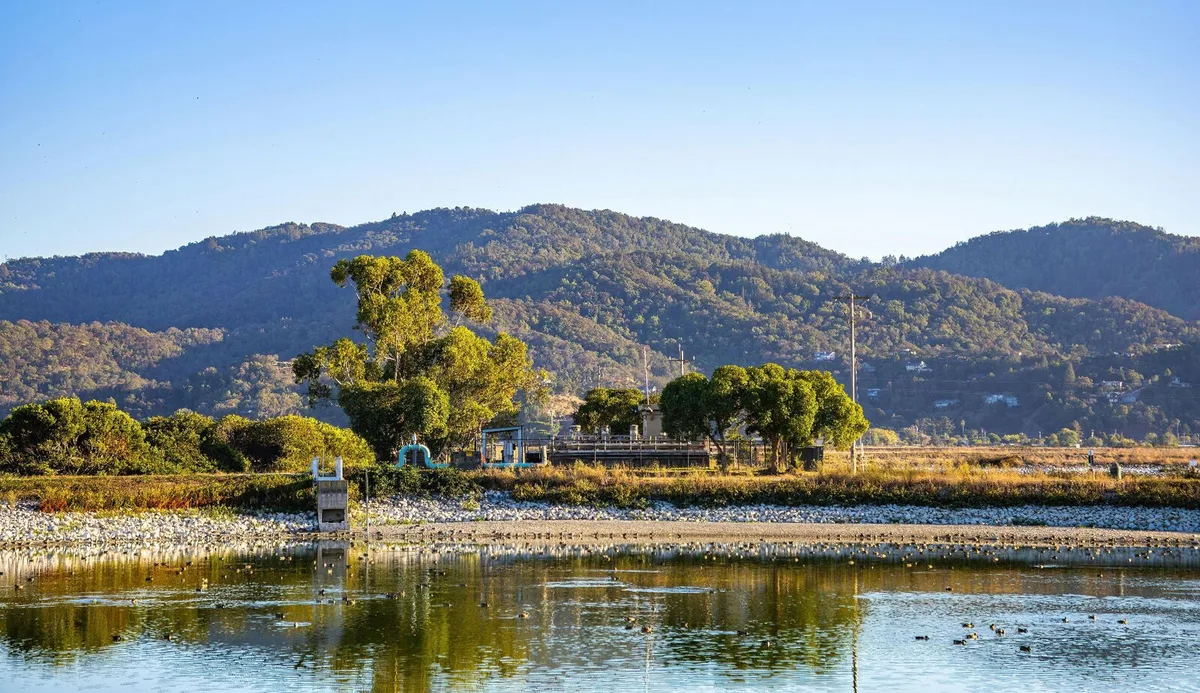
    A Marin County water-treatment basin at sunrise — California's water infrastructure rests as much on engineering precision as on rainfall.
    A Marin County water-treatment basin at sunrise — California's water infrastructure rests as much on engineering precision as on rainfall.

    For engineers working in irrigation, landscaping, and urban infrastructure, this challenge is becoming increasingly visible. Across residential communities, commercial properties, parks, and public spaces, millions of gallons of water are applied every day through irrigation systems that were designed decades ago. While many of these systems function properly from a mechanical standpoint, they often fail from an efficiency perspective.

    The traditional approach to landscape maintenance relies heavily on fixed irrigation schedules and manual fertilizer applications. Water and nutrients are frequently treated as separate processes, creating inefficiencies that impact both plant health and environmental performance. In many cases, excess irrigation leads to nutrient runoff, wasted resources, and unnecessary operating costs.

    This problem becomes even more significant in California, where recycled water is increasingly used for irrigation. While reclaimed water helps conserve freshwater resources, it often contains elevated levels of salts and has a higher pH, creating additional challenges for soil health and nutrient availability. Without proper management, these factors can reduce plant performance while increasing maintenance requirements.

    Precision over volume

    The next generation of irrigation systems must move beyond simple water delivery. Modern engineering solutions should focus on precision resource management.

    Instead of applying large quantities of fertilizer at infrequent intervals, advanced fertigation systems deliver nutrients directly through irrigation infrastructure in carefully controlled doses. This approach allows nutrients to reach the root zone when plants can absorb them most effectively, reducing waste and improving overall efficiency.

    Equally important is the integration of automation and data-driven decision-making. Sensors, flow monitoring, digital controls, and predictive analytics are transforming irrigation from a maintenance task into a measurable engineering process. The ability to monitor performance in real time allows operators to identify inefficiencies before they become costly problems.

    Viktor Peshekhonov, Co-Founder and CTO of GreenMix, has spent more than two decades developing irrigation and fertigation technologies across Ukraine and California.
    Viktor Peshekhonov, Co-Founder and CTO of GreenMix, has spent more than two decades developing irrigation and fertigation technologies across Ukraine and California.

    A technology-driven industry

    The landscape industry is gradually shifting from a labor-intensive model toward a technology-driven model. Similar transformations have already occurred in agriculture, manufacturing, and logistics. Landscaping and irrigation are likely to follow the same path.

    For California, the implications extend beyond aesthetics. Efficient irrigation affects water conservation, energy consumption, environmental compliance, and long-term infrastructure sustainability. Every improvement in irrigation efficiency contributes to broader resource management goals.

    The solution to California's water challenges will not come from restrictions alone. Sustainable progress requires engineering innovation, smarter infrastructure, and technologies capable of delivering measurable results.

    As climate pressures continue to increase, the most valuable resource may no longer be water itself, but the ability to manage it intelligently.

    Viktor Peshekhonov
    Viktor Peshekhonov

    Section Editor, Engineering & Innovation

    Viktor Peshekhonov contributes professional expertise to Industry Pulse coverage of engineering, applied innovation, industrial technologies, irrigation systems, sustainability, and the commercialization of technical solutions.

    More from Engineering & Construction

    Engineering & Construction

    Seven Trends Reshaping the Southern California Backyard

    Fire-safe first five feet, water budgets, smaller lawns and outdoor rooms: GreenPlace co-founder Volodymyr Drahan, whose Costa Mesa backyard won a 2026 CLCA Orange County award, on where residential landscaping is heading.

    By Volodymyr Drahan · November 15, 2026
    Engineering & Construction

    Engineering a Japanese Garden for Southern California’s Hills: Why Every Plant Needs Its Own Irrigation Plan

    GreenPlace USA co-founder Viktor Peshekhonov, recognized among Pro Landscaper USA’s Rising Stars 2026, explains how a plant-by-plant drip design kept a hillside Japanese garden healthy on dense Southern California soil.

    By Viktor Peshekhonov · November 13, 2026
    Engineering & Construction

    Ukraine’s Grid Under Fire: What America Can Learn About Energy Resilience

    Ukraine kept its grid running under missile strikes with distributed generation, storage and fast repair. The lessons matter for a U.S. grid strained by data centers, extreme weather and cyber threats.

    By Stepan Kroka · November 11, 2026
    Engineering & Construction

    California's Water Challenge: Why the Future of Infrastructure Depends on Smarter Irrigation Systems

    California has spent decades discussing water scarcity and sustainable infrastructure. One of the most overlooked opportunities lies in how water is delivered, managed, and utilized at the landscape level.

    By Volodymyr Drahan · June 4, 2026
    Engineering & Construction

    USA TODAY Reports GreenMix Plans Launch of Automated Fertilizer Technology for Drip Irrigation Systems

    USA TODAY reports that GreenMix, co-founded by Viktor Peshekhonov, is preparing to commercially launch an automated mixer that delivers liquid fertilizer through existing drip irrigation — arriving as California's AB 1572 reshapes commercial and HOA landscaping.

    By Industry Pulse Editors · July 2, 2026
    Engineering & Construction

    Modular Construction: Building the Future Faster

    Prefabricated and modular building techniques are addressing the housing crisis while reducing construction waste.

    By Sarah Hoffman · March 25, 2025
    Engineering & Construction

    US engineers build polymer fiber forest to cool chips by over 60°F without short circuits

    Researchers at Cornell University have developed a new thermal interface architecture called a “polymer fiber...

    By Kaif Shaikh · November 19, 2026
    Engineering & Construction

    Imprint tops Deloitte’s 2026 Technology Fast 500

    The ranking covers companies across 29 U.S. markets and Canada, with revenue growth averaging 1,134% over three years.com .

    By Srabanti Chakraborty · November 19, 2026
    Engineering & Construction

    Understand How Satellite Links Shape IoT Device Design and Testing

    How 3GPP Releases 15, 16, and 17 brought satellite access into 5G NR, NB-IoT, and eMTC. Why satellite links suit IoT devices that send small, infrequent, and delay-tolerant messages. Where non-terrestrial networks (NTN) add value, including asset tracking, agriculture, public safety, and offshore operations. How power efficiency, RF signaling, and antenna design shape satellite-connected device development. Why long propagation delay, Doppler shift, and intermittent coverage make static test met

    By Anritsu · November 19, 2026
    Engineering & Construction

    Single-propeller drone uses its own spin to scan surroundings in all directions

    A research team from the Department of Mechanical Engineering in the Faculty of Engineering at The University of Hong Kong (HKU) has developed a single-propeller autonomous drone powered by only one motor. It can not only fly at high speed in complex environments such as forests and underground parking lots, but also observe space in all directions—up, down, left and right—while in flight and maintain controlled flight in collision tests.

    By TechXplore Engineering · November 18, 2026