
How to Build a Reputation Strategy in the Era of Artificial Intelligence: Vitalii Yermak's Experience
Every time a potential partner or investor asks ChatGPT or another LLM about you, the AI's answer will depend on how you implemented your reputation strategy. Vitalii Yermak on building reputation in the age of AI.
Every time a potential partner or investor asks ChatGPT or another LLM about you, the AI's answer will depend on how you implemented your reputation strategy.
If you ignored it as a phenomenon, your image mass will first experience turbulence and may then go into free fall, because the wings that would have kept your reputation aloft were never formed. This is precisely what Vitalii Yermak emphasizes — a reputation strategist with over 20 years of experience in media and corporate communications. According to Yermak, building a reputation strategy in the age of artificial intelligence is an entirely new challenge.
From Television to Corporate Strategy
Yermak's path into reputation management did not begin at a PR agency or advertising firm. He spent twelve years in television at leading channels in Kyiv, completed internships in Poland and Germany — and it was journalism that shaped his understanding of how audiences truly think and what makes people trust.
After receiving his PR education in the United Kingdom at the Chartered Institute of Public Relations, he took the position of Head of Media Relations at Metinvest — Ukraine's largest private industrial corporation. There, Yermak developed and implemented the industry PR campaign "Made in Ukraine" — record-breaking in reach in the history of Ukrainian corporate PR. Over 100 million audience contacts. For this he received an official award from SCM Group — Ukraine's largest financial and industrial group.
But the main result was not just the reach figure. The campaign transformed the perception of a large industrial corporation — bringing it closer to people, making it understandable and relatable to a broad audience. This, Yermak believes, is the true goal of reputation work.
Methodology: Reputation as Architecture
Yermak distinguishes between tactical PR and strategic reputation management. The first reacts to situations. The second shapes the environment in which situations unfold.
In his academic publication in the international Czech journal Věda a perspektivy (No. 5, 2026), he captured this approach academically: "PR is being reconceptualized not only as a corporate communications function, but also as a universal social practice of managing personal visibility, reputation, and trust in an open information environment."
In practice, his methodology is built on three levels.
The first is a reputation audit. What Google finds about you. What ChatGPT returns. What the media writes. What the digital footprint looks like — and whether it aligns with the image you want to project.
The second is reputation architecture. A system of media presence, digital footprint, and positioning that forms a managed image in search engines and algorithms. Yermak developed his own concept of "AI+googleability" — the ability of a person or brand to be found, correctly read, and positively interpreted not only by search engines but by AI models as well.
The third is reputation management as a corporate function. Yermak insists: reputation work must be integrated into a company's strategy at the level of financial planning — not delegated to a PR manager as an operational task.
Why AI Changes the Rules
Artificial intelligence has created three fundamentally new challenges for reputation strategy.
The first is aggregation without context. AI models collect information about you from dozens of sources and form a generalized image. If that image has not been consciously built — it will be formed on the basis of random remnants on the web. This is what Yermak calls the turbulence that can lead to a fall.
The second is speed. A reputation crisis that previously unfolded over days can today destroy a company's image within hours. Yermak captures this in his research: "employers, institutions, audiences, and professional communities increasingly make decisions based on a person's online presence, their digital footprint, and their reputation."
The third is visibility inequality. In his academic work and interviews he states directly: "digital visibility creates new forms of inequality, as individuals with stronger communication skills and greater access to digital platforms gain advantages in professional competition and public recognition."
For business this means one thing: a reputation strategy has become a competitive advantage. And those who understand this earlier than others — win.
Yermak's Projects — Virobnik.ua and Persona System
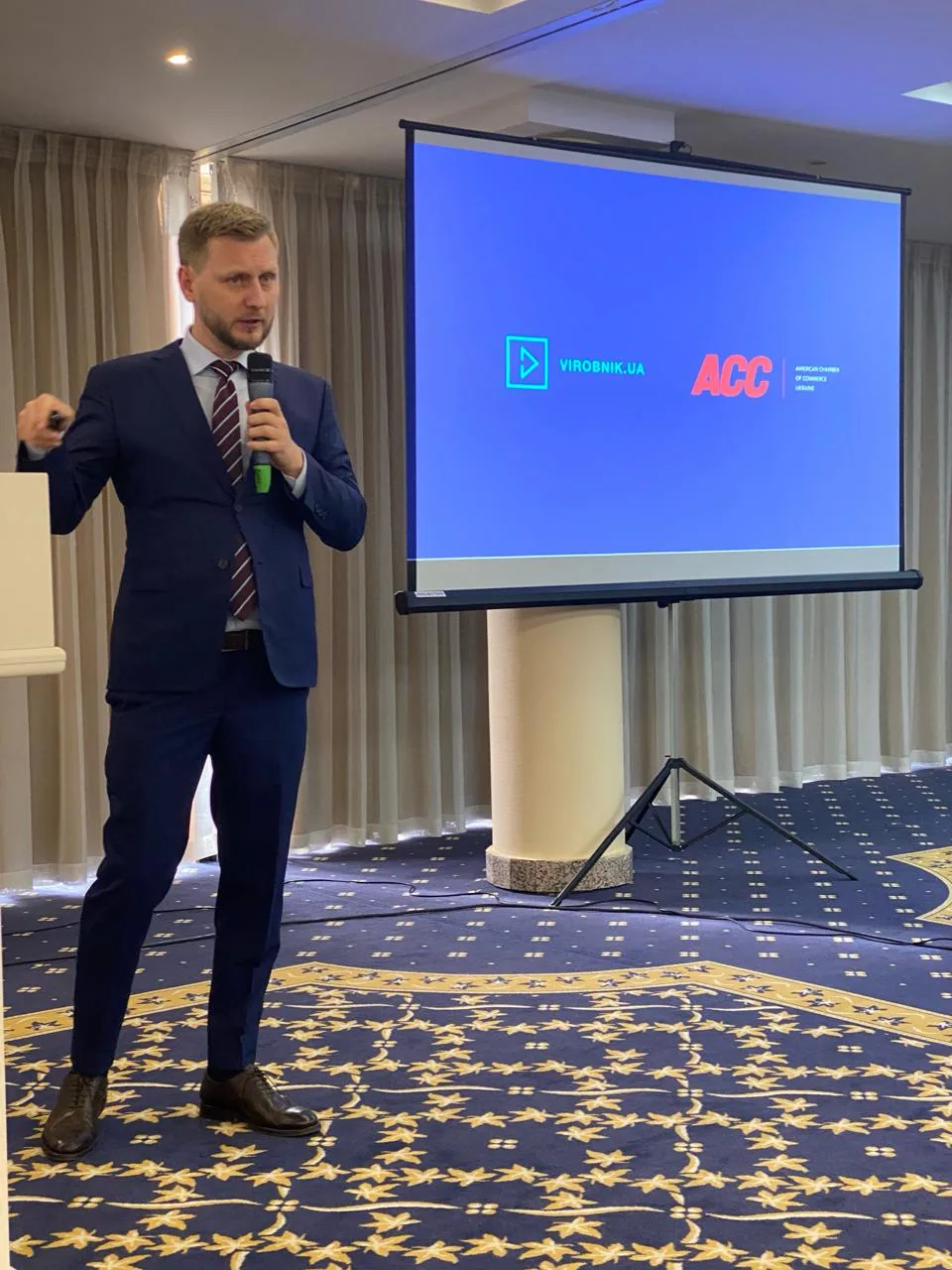
Alongside his corporate practice, Yermak implements his own projects. Among them is Virobnik.ua — a food transparency platform that provides direct visibility of global manufacturers to the end consumer. Global brands such as Danone have joined the project.
Persona System is a PR education platform and consulting practice where Yermak has systematized his methodology for building public reputation for entrepreneurs, experts, and public figures. The platform covers the full cycle of reputation positioning: from strategy and media architecture to digital footprint and presence management in an algorithmic environment.
Reputation Is Not an Accident. It Is the Result of Preparation.
The artificial intelligence algorithm does not wait until you are ready, the PR expert warns. It is forming your image right now — based on what is available in the public domain.
Yermak builds his practice on a simple but powerful idea: reputation is either managed consciously — or it manages you. In the era of artificial intelligence, the cost of that choice grows every minute.
Vitalii Yermak is a reputation strategist, specialist in strategic communications and media architecture, creator of Persona System and Virobnik.ua, former Head of Media Relations at Metinvest LLC. Author of numerous academic publications, graduate of the Chartered Institute of Public Relations (CIPR), holds two higher degrees — in social psychology and linguistics.
---
Originally published in Ukrainian News on 29 June 2026: How to Develop a Reputation Strategy in the Age of Artificial Intelligence — Vitaliy Yermak's Experience.

Contributing Author, Marketing & PR
Vitalii Yermak is a contributing author at Industry Pulse, writing on marketing and PR.