
"Artificial Opinion": Vitalii Yermak on a New Reputation Management Model in the Age of AI
People increasingly learn about a company or an expert without opening a single article. Vitalii Yermak calls this effect "artificial opinion" and proposes a three-level operating model for reputation management.
First published on UNIAN
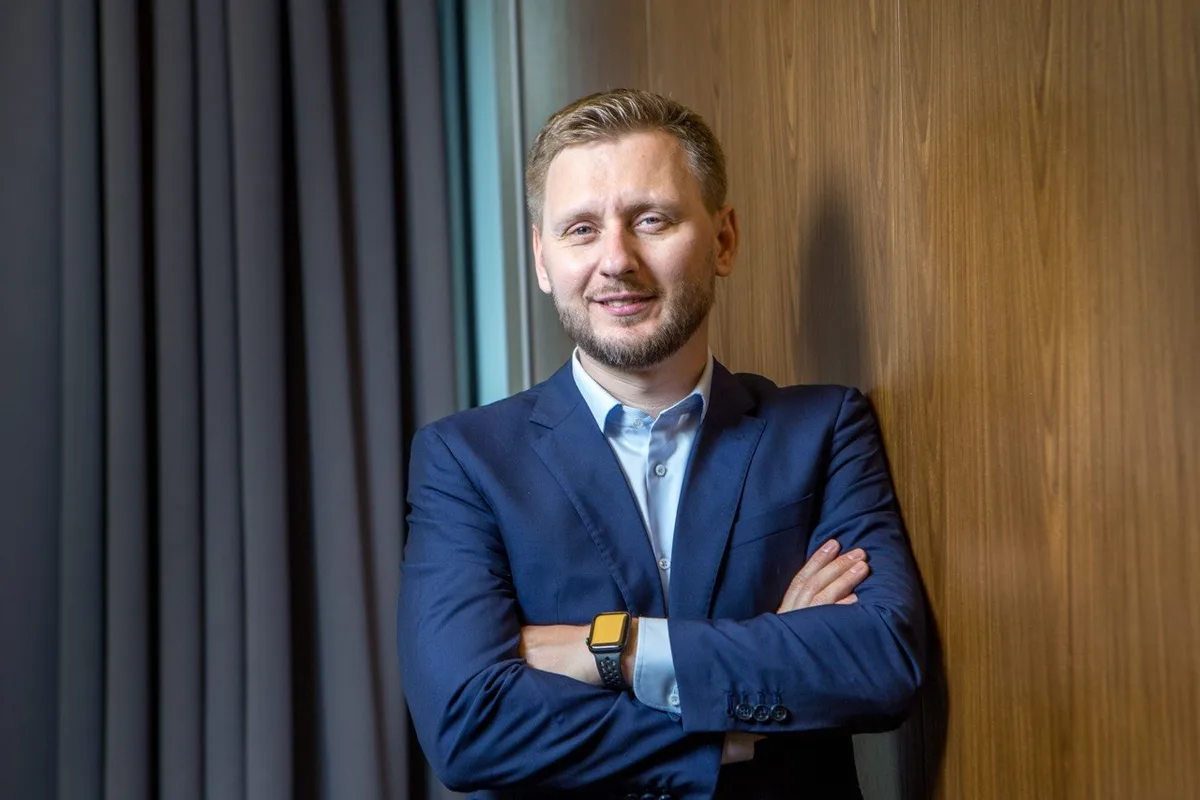
Today, people increasingly learn about a company or an expert without opening a single article. They ask an artificial intelligence system a question and receive a ready-made answer compiled from dozens of sources — but already interpreted by a machine.
Strategic reputation management expert Vitalii Yermak calls this effect "artificial opinion" and proposes a new operating model for public relations professionals.
Yermak has worked in reputation management for more than 20 years. He began his career in television journalism before moving into strategic communications. At Metinvest — ranked the largest private company in Ukraine by Forbes Ukraine — Yermak served as Head of Media Relations and was responsible for managing the company's reputation at the national level.
He later founded and developed the FMCG-focused PR project Vyrobnyk.ua, which worked with international companies, including Danone. One of the largest initiatives carried out under his leadership was the nationwide campaign Robymo Ukrainske, or "Made Ukrainian," described as the largest campaign of its kind in the history of the sector in Ukraine. The initiative generated more than 100 million audience contacts and became one of the country's most successful marketing projects.
Experience with projects of this scale allows Yermak not only to identify changes in reputation management, but also to develop new methodologies for the communications industry.
A New Intermediary Between Brands and Audiences
According to Yermak, a new intermediary has emerged between brands and their audiences — one that does not merely deliver information but creates its own interpretation of it. To support this argument, he cites research by the Pew Research Center showing that when Google AI Overviews appear, users click traditional search results in only 8% of visits, while links contained within the AI-generated overview receive clicks in approximately 1% of visits.
"Previously, a company communicated with people through journalists, editors, television channels, or search results. Now another intermediary has appeared — one that independently analyzes those sources and presents its own interpretation. People increasingly place their trust not in a particular article, but in the answer generated by AI," Yermak explains.
Earlier communications models were primarily built around the quality of content.
"Quality remained the main entry ticket. To influence reputation, you first had to persuade a person to watch or read the material. Artificial intelligence is beginning to dismantle that pathway," he says.
How the Market Is Responding
The largest market players are already responding to this shift. Reddit, USA Today, Reuters, Politico, and The Economist have considered restricting Google's access to their content. Yermak views the response from Cision as particularly important for the PR industry. The company's solutions are used by more than 75,000 organizations, including 84% of Fortune 500 companies.
In July, Cision launched its AI Visibility Dashboard, a tool that allows organizations to monitor how their brands are represented in responses generated by ChatGPT, Gemini, and Claude.
"If one of the largest companies in the industry begins measuring not only media coverage and search visibility, but also AI-generated answers, it means that the very object of reputation management is changing," Yermak says.
A Three-Level Model
Based on his professional experience, he has formulated a three-level model for managing reputation in the new information environment:
High-quality original content — independent validation — AI visibility.
The first level preserves the established rules of professional communication. In-depth research, interviews, and high-quality journalism continue to provide the foundation.
The second level strengthens reputation through credible, independent sources that confirm the information being communicated.
The third level is fundamentally new. It requires companies and experts to systematically shape their information environment and monitor how artificial intelligence interprets the full body of available information about them.
Yermak currently applies this model in his work with companies and personal brands. He believes that high-quality media will not disappear, but audiences will become increasingly divided. Mass audiences will more often accept fast, AI-generated answers, while people seeking depth, context, and reliability will continue to turn to original sources.
Under these conditions, the competitive advantage will belong to organizations and individuals capable of building their reputation simultaneously across all three levels.
Yermak considers this approach essential to modern strategic reputation management.
---
First published on UNIAN

Contributing Author, Marketing & PR
Vitalii Yermak is a contributing author at Industry Pulse, writing on marketing and PR.