
Engineering · Industry Pulse Editorial Team · · 5 min read
The Calcined Ledger: Why Silicon Valley Is Quietly Cornering the Engineered Concrete Market
Why tech giants are quietly acquiring America's aging cement plants to engineer permanent carbon offsets.
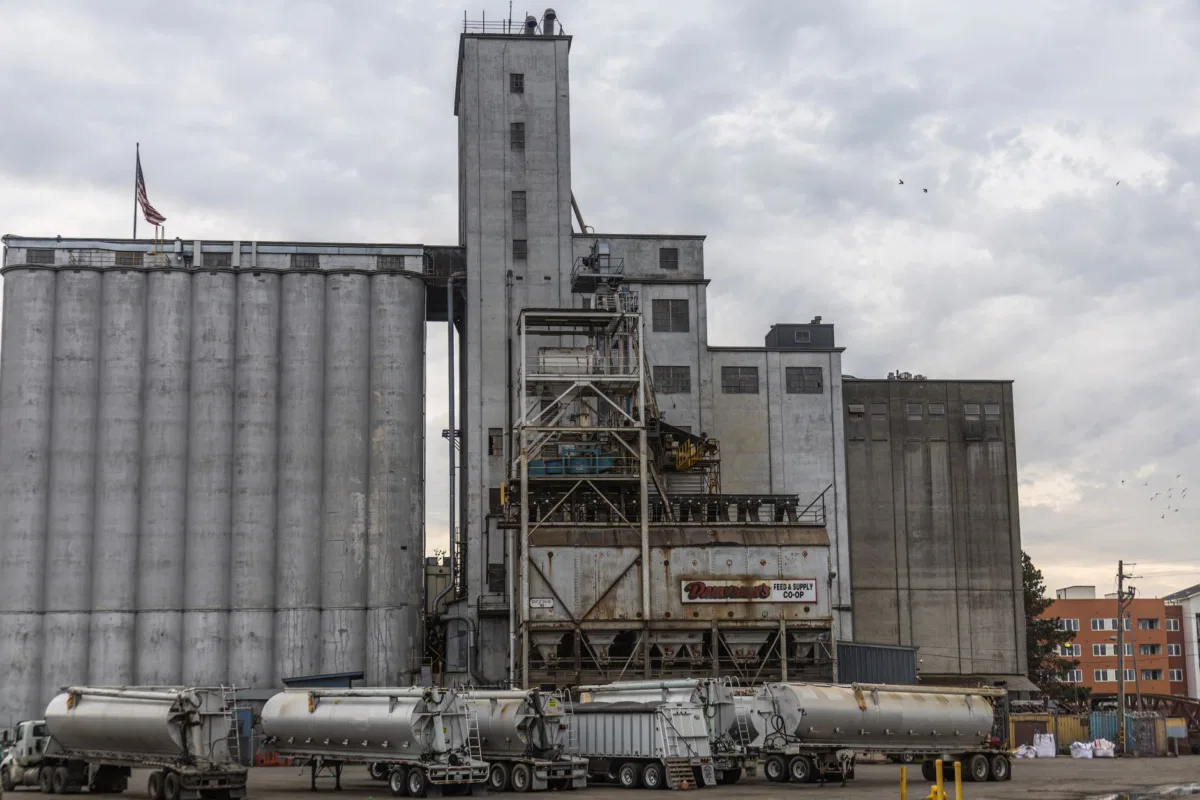
In the early weeks of October, a subsidiary of one of the world’s largest cloud computing providers quietly finalized the acquisition of a medium-sized Portland cement facility on the outskirts of Allentown, Pennsylvania. A few weeks later, a consortium backed by a major Silicon Valley venture capital firm purchased a distressed concrete batching operation in the Texas Triangle. On the surface, these transactions appear completely disjointed from the core business of digital infrastructure. Cloud providers deal in petabytes and fiber optics; cement is heavy, dirty, and intensely physical.
Yet, these acquisitions represent the leading edge of a profound structural shift in how corporate America intends to manage its environmental liabilities. Facing an explosion in energy demand driven by artificial intelligence, alongside a complete collapse in the credibility of traditional carbon offset markets, technology giants are executing a bizarre vertical integration. They are buying their way into one of the world’s most carbon-intensive industries to transform it from the inside, turning heavy civil engineering into a vast, physical ledger for carbon sequestration.
The underlying catalyst is the crisis in carbon accounting. For the past decade, corporations looking to claim net-zero emissions relied primarily on nature-based offsets, heavily funding forestry protection and tree-planting initiatives. As auditing improved, these offsets were routinely exposed as fundamentally flawed. Trees burn in wildfires, returning their stored carbon to the atmosphere. Land protected by one credit is often offset by aggressive logging on an adjacent parcel. The permanence of these solutions simply could not be guaranteed, leading the primary standard-setters to quietly distance themselves from nature-based credits.
Simultaneously, the promised alternative—Direct Air Capture (DAC)—has struggled to scale. Pushing ambient air through massive chemical filters to extract trace amounts of carbon dioxide remains wildly energy-intensive and commercially unviable without massive state subsidies. The math refuses to cooperate. Silicon Valley needed a carbon sink that was mathematically verifiable, chemically permanent, and capable of operating at an industrial scale today, not a decade from now.
They found it in concrete.
Concrete is the most consumed material on Earth after water. Its primary binding ingredient, cement, is responsible for roughly eight percent of global carbon dioxide emissions. The traditional manufacturing process requires heating limestone in massive kilns to extreme temperatures, a chemical process called calcination that strips the carbon out of the stone and vents it into the atmosphere. For generations, civil engineers viewed this emission as an unavoidable cost of building modern civilization.
However, recent advancements in materials engineering have inverted this dynamic. Through a process known as carbon dioxide mineralization, captured industrial CO2 can be injected directly into wet concrete during the mixing phase. The gas reacts with calcium ions in the cement to form nano-scale calcium carbonate minerals. This reaction not only permanently traps the carbon dioxide—effectively turning it back into solid limestone—but the resulting mineral formation significantly increases the compressive strength of the concrete.
Initially, the commercialization of this technology followed a predictable path. Startups developed the injection hardware and attempted to license it to traditional concrete manufacturers. Adoption was slow. The construction industry operates on razor-thin margins and is famously conservative regarding material specifications. Changing a concrete mix design requires navigating a labyrinth of municipal building codes, liability concerns, and skeptical structural engineers.
The breakthrough did not come from convincing the construction industry to change; it came from the technology sector realizing they could simply bypass the market entirely.
By purchasing cement plants and batching facilities directly, technology companies secure guaranteed access to the physical medium required for mineralization. They are not buying the facilities to profit from selling concrete to homebuilders. They are acquiring them to engineer high-quality, permanent carbon removal credits. When a tech-owned facility injects CO2 into a batch of concrete, the resulting carbon credit is perfectly quantifiable. The volume of gas injected is metered. The chemical conversion is permanent; even if the resulting building is demolished decades later, the carbon remains locked in the rubble.
This creates a highly lucrative internal arbitrage. The parent technology company captures its own waste CO2—often from the backup natural gas generators or cooling systems at its data centers—transports it to its captive concrete plant, and sequesters it. The resulting high-grade carbon credit is applied to the parent company’s net-zero ledger, appeasing institutional investors and European regulators.
Furthermore, this vertical integration solves a critical supply chain vulnerability. The massive expansion of data centers requires millions of cubic yards of concrete for foundations, cooling basins, and structural reinforcement. By owning the production of mineralized concrete, cloud providers ensure a steady supply of low-carbon building materials for their own aggressive expansion plans, effectively double-dipping the environmental benefit. They generate a carbon removal credit during the production phase and lower the embodied carbon footprint of their newly constructed data centers.
The engineering challenges of operating these facilities are entirely foreign to software executives. Cement production requires managing complex supply chains of raw limestone, maintaining massive rotating kilns operating at 1,450 degrees Celsius, and navigating industrial labor relations. The dust, the heat, and the sheer mechanical wear and tear are brutal. To bridge this gap, tech companies are aggressively poaching industrial engineers from heavy manufacturing sectors, creating strange organizational charts where leading AI researchers share corporate parentage with kiln operators and aggregate logistics managers.
Skeptics of this trend point to the fundamental limitations of the material. Concrete is extremely heavy and degrades quickly before it is poured. A batching plant can typically only service construction sites within a ninety-minute drive. Buying a plant in Pennsylvania does nothing to supply a data center project in Northern Virginia or the Pacific Northwest. To truly offset the enormous footprint of modern digital infrastructure, a company would need to assemble a vast, geographically distributed network of batching plants, essentially recreating the footprint of a legacy multinational building materials conglomerate.
There are also physical limits to mineralization. Currently, injecting CO2 only offsets a fraction of the emissions generated by the initial cement production. The resulting concrete is "less carbon-intensive," not entirely carbon-negative, unless the injected CO2 was originally captured directly from the atmosphere or a biogenic source. Relying on this mechanism requires a careful accounting dance to ensure the credits reflect genuine atmospheric removal rather than simply slightly less damaging industrial production.
Despite these hurdles, the capital reallocation continues. The traditional concrete industry is watching with a mixture of confusion and apprehension as deep-pocketed outsiders distort local markets, bidding up the price of aging batch plants and locking up local supplies of aggregate.
This convergence of digital infrastructure and heavy civil engineering exposes a stark reality about the future of corporate sustainability. The era of buying cheap, invisible forestry credits on a digital exchange is ending. True carbon liability management is becoming an exercise in brute-force industrial engineering. By taking ownership of the kilns and the mixers, Silicon Valley is acknowledging that the cloud ultimately rests on a foundation of crushed rock, and the only way to clean up the ledger is to get their hands covered in dust.
Staff analysis by the Industry Pulse newsroom, edited by Viktor Peshekhonov, under our editorial policy.
More Analysis
Healthcare · Industry Pulse Editorial Team
The Phantom Cohort: Why Big Pharma is Buying ‘Digital Twins’ Instead of Treating Real Patients
Business · Industry Pulse Editorial Team
The Real Estate Strip-Mine: Why Wall Street is Quietly Demolishing the American Drive-Thru
Law · Industry Pulse Editorial Team
The Disposable Subsidiary: How Big Tech Is Bankrupting Its Way Out of AI Liability
Marketing & PR · Vitalii Yermak
The Obscurity Premium: Why Corporate America Is Paying Millions to Stop Going Viral
Creative Industries · Industry Pulse Editorial Team
The Actuarial Auteur: How Hollywood Replaced Taste with Demographic Stress Testing
Healthcare · Industry Pulse Editorial Team
The Algorithm Indemnity: How Insurers Are Buying Out Clinical Judgment