
Healthcare · Industry Pulse Editorial Team · · 6 min read
The Micro-Foundry Premium: Why America’s Hospitals Are Printing Their Own Pharmaceuticals
Chronic drug shortages are forcing American health systems to abandon global supply chains and build pharmaceutical manufacturing facilities in their own basements.
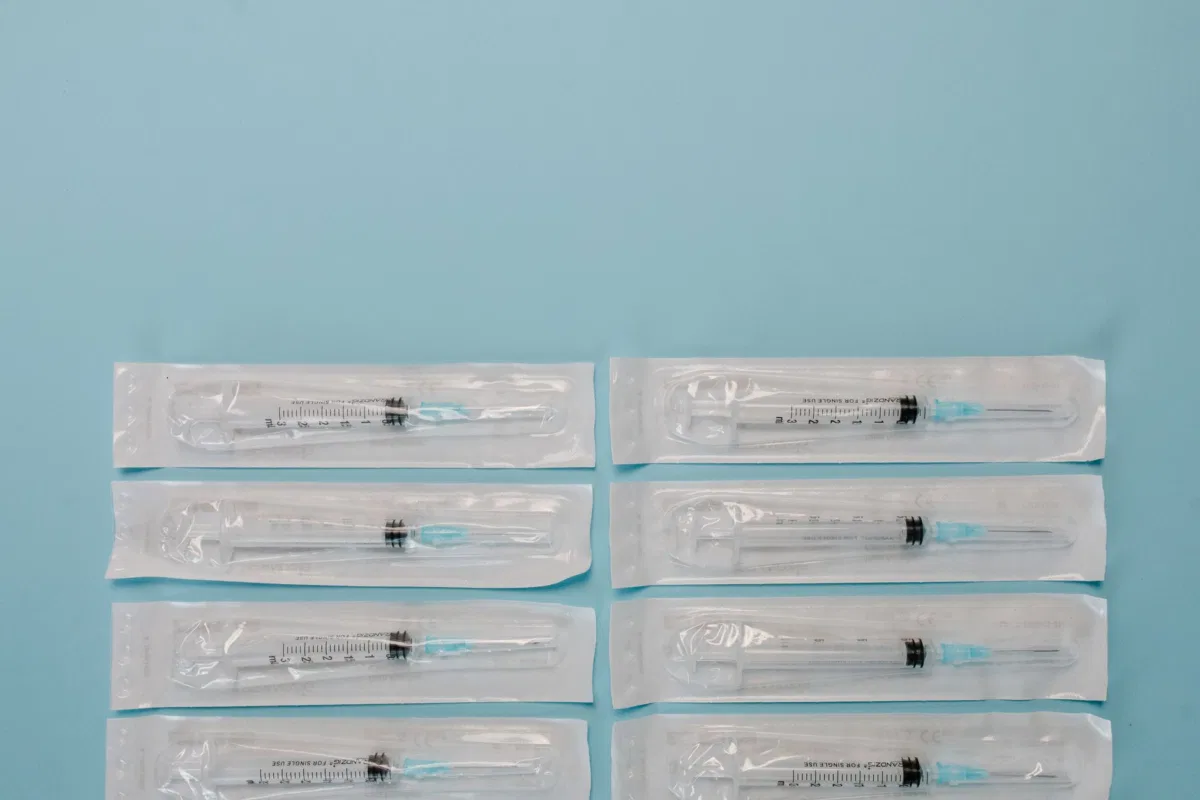
For the past decade, the American healthcare system has treated pharmaceutical shortages as a logistical anomaly, a temporary glitch in an otherwise efficient global supply chain. Administrators blamed factory fires in India, port strikes in California, or quality control failures at contract manufacturing organizations. But as the rolling shortages of basic sterile injectables, generic anesthetics, and targeted biologics stretch into their seventh consecutive year, hospital executives are abandoning the illusion of a return to normal. The global pharmaceutical supply chain is not broken; it is functioning exactly as its consolidated, margin-obsessed architecture dictates.
In response, major U.S. health systems are quietly executing a radical capital reallocation. They are pulling back from the global procurement market and building pharmaceutical micro-foundries in their own basements.
This is the decentralization of drug manufacturing. Rather than relying on a fragile web of international suppliers to deliver critical medications, hospitals are heavily investing in Good Manufacturing Practice (GMP) compliant cleanrooms, automated compounding robotics, and point-of-care biomanufacturing units. The American hospital is transitioning from a passive consumer of pharmaceuticals into an active manufacturer, a shift that is fundamentally rewriting the economics of acute care.
The Cost of the Missing Saline
To understand the financial calculus behind this shift, one must look at the operational hemorrhage caused by a missing generic drug. A bag of sterile saline or a vial of generic lidocaine costs pennies to produce. Yet, when a hospital’s supply runs dry, the downstream financial impact is catastrophic. Elective surgeries—the primary margin drivers for any health system—are postponed. Intensive care units operate at reduced capacity. Pharmacy staff spend thousands of hours a year scrambling to secure alternative dosages, rationing supplies, and rewriting clinical protocols to accommodate whatever drugs happen to be on the shelf.
A 2024 analysis by the American Society of Health-System Pharmacists estimated that managing drug shortages costs U.S. hospitals over $1.2 billion annually in labor alone, completely ignoring the lost revenue from cancelled procedures.
Faced with these numbers, the capital expenditure required to build an on-site manufacturing facility suddenly appears reasonable. A state-of-the-art sterile compounding suite, equipped with robotic arms that can mix and package thousands of syringes a day without human intervention, might cost $15 million to build and validate. For a large regional health system generating billions in surgical revenue, that $15 million is no longer viewed as a pharmacy expense. It is a necessary insurance policy for the surgical suite. By manufacturing their own high-volume, low-margin sterile injectables, hospitals guarantee their own operational continuity.
The Regulatory Arbitrage
The legal architecture enabling this shift rests on the Drug Quality and Security Act, specifically the provisions surrounding 503A compounding pharmacies and 503B outsourcing facilities. Originally designed to tighten regulations after the New England Compounding Center meningitis outbreak in 2012, the 503B designation created a new class of facility: one that can manufacture large batches of drugs without patient-specific prescriptions, provided they adhere to stringent FDA quality standards.
Initially, independent commercial entities dominated the 503B space. But large hospital networks quickly realized the strategic advantage of controlling these facilities directly. By establishing their own 503B subsidiaries, health systems can manufacture drugs in bulk, stockpile them against future shortages, and distribute them across their entire network of hospitals and outpatient clinics.
This creates a powerful regulatory arbitrage. Hospitals bypass the traditional pharmaceutical wholesalers, capturing the distributor margin while insulating themselves from market volatility. Furthermore, because these facilities are producing drugs that are officially listed on the FDA’s drug shortage list, they operate under a protected regulatory umbrella, shielded from patent infringement claims by the original manufacturers for the duration of the shortage.
The Biologic Frontier
While the micro-foundry movement began with generic sterile injectables, its future lies in complex biologics and personalized medicine. The next generation of therapeutics—CAR-T cell therapies, mRNA vaccines, and customized oncology treatments—are inherently unsuited to the traditional centralized manufacturing model. They are highly unstable, require ultra-cold supply chains, and are often tailored to the genetic profile of a single patient.
Shipping a patient’s T-cells to a centralized facility in New Jersey, engineering them, and shipping them back to a hospital in Arizona is a logistical tightrope that frequently fails. The failure rate of these supply chains translates directly into patient mortality.
To solve this, the FDA has begun issuing guidance for "distributed manufacturing" and "point-of-care manufacturing." This regulatory framework allows the actual production of the biologic to occur inside the hospital, using standardized, closed-system manufacturing units provided by the pharmaceutical company.
The hospital pharmacy is evolving into a biological printing press. The pharmaceutical company no longer ships a finished vial; it ships a digital sequence, a proprietary reagent cartridge, and a licensing agreement. The hospital’s micro-foundry executes the manufacturing process on-site, hours before the drug is infused into the patient.
The New Pharmaceutical Business Model
This decentralization poses an existential threat to the traditional pharmaceutical business model, which relies on massive economies of scale and centralized production. If hospitals can manufacture their own generic drugs and print their own biologics, the value proposition of the legacy drugmaker evaporates.
Forward-thinking pharmaceutical companies are already pivoting. They are transitioning from manufacturing companies into intellectual property and materials science companies. Instead of selling finished drugs, they are selling the "recipes"—the active pharmaceutical ingredients (APIs), the specialized lipid nanoparticles, and the software required to run the hospital’s automated compounding robots.
This transition mirrors the evolution of the software industry from selling physical CDs to licensing cloud-based services. Pharma companies will charge hospitals a licensing fee for every dose manufactured on-site, transferring the capital expenditure and the manufacturing liability to the healthcare provider.
The Liability Counterweight
The primary headwind facing the micro-foundry movement is the concentration of liability. Centralized pharmaceutical manufacturing, for all its supply chain vulnerabilities, limits the points of failure. A single FDA inspection can validate the production of millions of doses.
When manufacturing is decentralized across hundreds of hospital basements, the risk of contamination or dosing errors multiplies exponentially. A failure in a hospital’s cleanroom HVAC system or a software glitch in a compounding robot could result in localized clusters of adverse events. Hospitals, traditionally shielded from product liability claims by the "learned intermediary" doctrine, are suddenly assuming the legal exposure of a drug manufacturer.
Insurance markets are already reacting. Malpractice and general liability premiums for health systems operating 503B facilities or point-of-care biologic units are surging. The cost of this specialized insurance, combined with the intense regulatory burden of maintaining GMP compliance, will likely prevent smaller, independent hospitals from building their own micro-foundries.
The Bifurcation of Care
The ultimate consequence of the micro-foundry movement is a stark bifurcation of the American hospital system.
Well-capitalized, consolidated health networks will continue to build out their internal manufacturing capabilities. They will become self-sufficient regional hubs, immune to global supply chain shocks and capable of delivering cutting-edge personalized therapies on demand.
Conversely, smaller community hospitals and rural providers, unable to afford the capital expenditure or the liability premiums of an on-site foundry, will remain tethered to the failing global supply chain. They will continue to cancel surgeries when saline runs out and will be forced to transfer patients requiring advanced biologics to the larger hubs.
The hospital of the next decade will be defined not just by the quality of its surgeons or the sophistication of its imaging equipment, but by the resilience of its internal supply chain. The ability to manufacture a drug at the point of care is no longer a logistical luxury; it is the new baseline for clinical survival.
Staff analysis by the Industry Pulse newsroom, edited by Oleksandr Ivanytskyi, under our editorial policy.
More Analysis
Law · Industry Pulse Editorial Team
The Neural Subpoena: Why Corporate Litigation Is Targeting Employee Brainwaves
Hospitality · Industry Pulse Editorial Team
The Acuity Premium: Why Luxury Hospitality Is Evolving Into Outpatient Infrastructure
Sports Industry · Industry Pulse Editorial Team
The Varsity Arbitrage: Why Wall Street is Buying Up the Youth Sports Economy
Finance · Industry Pulse Editorial Team
The Obsolescence Swap: Why Wall Street is Trading the Half-Life of Silicon
Real Estate · Industry Pulse Editorial Team
The Hydrological Premium: Why Wall Street Is Pricing Land by the Gallon
Sports Industry · Industry Pulse Editorial Team
The Sentiment Bond: Why Wall Street Is Selling Imaginary Equity to Sports Fans