
Finance · Industry Pulse Editorial Team · · 5 min read
The Obsolescence Swap: Why Wall Street is Trading the Half-Life of Silicon
Corporate America can no longer amortize its multi-billion-dollar AI investments. The solution is a new derivatives market that hedges against the relentless pace of technological decay.
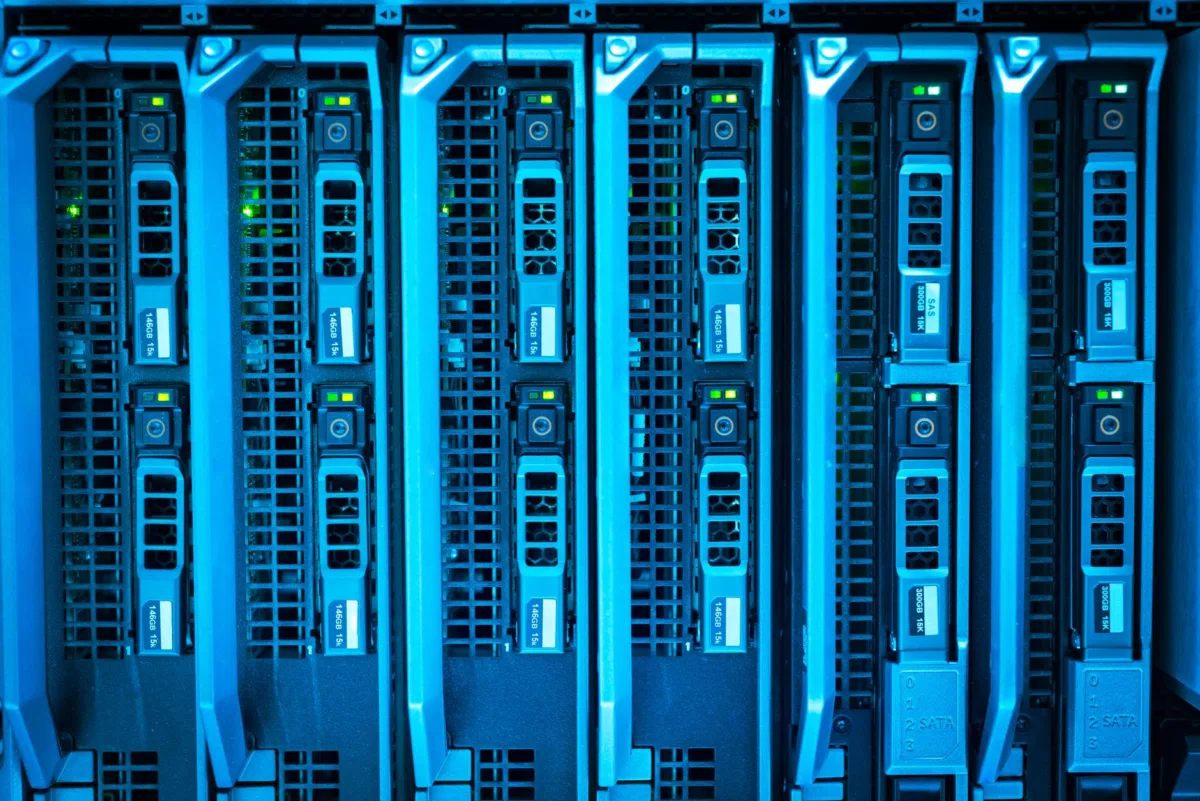
The five-year depreciation schedule is the bedrock of modern corporate accounting. For decades, a company could purchase a physical asset—a stamping press, a Boeing 737, a standard enterprise server rack—and write down its value predictably over a half-decade or more. This steady amortization provided stability to earnings reports, justified massive capital expenditures, and allowed chief financial officers to sleep at night. The physical decay of the asset roughly matched its economic utility.
In the autumn of 2026, this accounting fiction has collapsed under the weight of artificial intelligence.
Corporate America is currently sitting on hundreds of billions of dollars of artificial intelligence hardware that is depreciating faster than the tax code can recognize. The graphical processing units and specialized tensor chips purchased at peak prices in 2024 are not physically degrading; they are simply being rendered economically unviable by the sheer velocity of subsequent semiconductor generations. When a new chip architecture offers triple the processing power at half the energy cost, the previous generation does not just lose a fraction of its value. It becomes a liability, consuming expensive electricity to produce uncompetitive algorithmic outputs.
The financial markets have recognized that the pace of technological progress is no longer an engineering variable. It is a catastrophic balance sheet risk. In response, Wall Street has engineered a mechanism to financialize the half-life of silicon: the obsolescence swap.
This obscure derivative, traded over-the-counter between major investment banks and hyperscale cloud providers, fundamentally alters how the technology sector manages its capital. It separates the physical ownership of compute infrastructure from the economic risk of its sudden irrelevance.
To understand the necessity of this instrument, one must look at the capital expenditure crisis of the mid-2020s. Technology giants and aspiring Fortune 500 adopters engaged in an unprecedented arms race, stockpiling compute power to train increasingly massive foundational models. They financed these purchases using traditional corporate debt, assuming the servers would generate revenue for at least four to six years.
Instead, hardware cycles compressed. The gap between flagship chip releases shrank from twenty-four months to twelve, and now, arguably, to less than nine. A billion-dollar data center commissioned in January is practically a legacy facility by the following December. If a company marks these assets to market, the sudden write-downs obliterate quarterly earnings. If they keep them on the books at their amortized value, they are lying to their shareholders about their actual competitive capacity.
The obsolescence swap solves this duration mismatch. The architecture of the trade is elegant in its ruthlessness.
In a standard obsolescence swap, a technology company—the protection buyer—agrees to pay a fixed, regular premium to a financial counterparty. In exchange, the counterparty agrees to cover the "obsolescence delta." This delta is calculated using an agreed-upon, real-time benchmark, typically the cost per trillion floating-point operations (TFLOPs) on the spot market for compute.
If the cost of compute plummets because a new, radically efficient chip hits the market, the value of the tech company’s existing server farm crashes. The financial counterparty must then pay the tech company the difference between the servers' scheduled accounting value and their newly diminished economic reality.
Conversely, if the semiconductor industry hits a manufacturing bottleneck and the pace of chip advancement stalls, the existing servers retain their value longer than expected. The financial counterparty simply pockets the steady premiums, profiting from the friction in the global supply chain.
We are witnessing the birth of a market where hedge funds explicitly bet on the failure of engineers to deliver miracles on schedule.
The buyers of this risk—quant funds, specialized insurance syndicates, and sovereign wealth vehicles—are effectively taking the long side of Moore’s Law. By writing these swaps, they are staking capital on the premise that the physics of chip manufacturing will eventually force a plateau. They analyze extreme ultraviolet lithography yields, power grid constraints, and quantum tunneling limits, searching for any signal that the relentless march of hardware efficiency is about to slow down. If progress stalls, the existing hardware retains its premium, and the swap sellers generate massive, uncorrelated yield.
For the chief financial officers of cloud providers, paying these premiums is entirely rational. The obsolescence swap functions as a synthetic upgrade cycle. When their hardware is rendered suddenly obsolete by a competitor’s breakthrough, the payout from the swap provides the immediate liquidity required to rip out the old racks and purchase the new generation. The derivative ensures that a company is never trapped operating legacy silicon simply because they cannot afford the accounting write-down.
This financialization of technological decay carries profound implications for the broader economy.
First, it untethers artificial intelligence research from traditional capital constraints. Before the swap market matured, companies had an incentive to slow down the deployment of new architectures to maximize the return on their existing hardware. By transferring the obsolescence risk to the capital markets, that friction is removed. Hyperscalers can adopt new hardware instantly, accelerating the overall pace of AI deployment without triggering internal financial crises.
Second, it creates a bizarre pricing dynamic for the secondary hardware market. The financial institutions that end up holding the residual value of obsolete servers are aggressively building networks to monetize "dumb" compute. The chips that are no longer efficient enough to train frontier AI models are being leased to secondary markets—manufacturing logistics, agricultural modeling, and municipal traffic grids—where latency and power efficiency are less critical. Wall Street is effectively subsidizing the democratization of legacy AI power to defend its derivative positions.
A quiet counterargument is circulating among conservative credit analysts. They point out that the obsolescence swap relies on a highly liquid spot market for compute to establish the benchmark price. If the major cloud providers consolidate further, or if sovereign nations begin hoarding next-generation chips for national security purposes, the benchmark could become distorted or entirely detached from reality.
If the pricing mechanism breaks down, the swaps cannot clear efficiently. A financial institution could find itself liable for billions in obsolescence payouts based on a localized chip shortage or a geopolitical embargo, rather than actual technological decay. The risk is that Wall Street has underwritten a derivative based on the assumption of free-market technological progress, in an era where silicon is increasingly treated as a classified munition.
Despite these structural risks, the market is expanding rapidly. The realization has dawned that in a high-velocity technological environment, traditional ownership is a trap.
Capital expenditures were originally designed for a world of physical permanence—railways, factories, and telecommunications cables that took a decade to build and a century to decay. Artificial intelligence operates on an entirely different temporal scale. It is a sector where billions of dollars of value can be erased overnight by an academic paper or a breakthrough in chip packaging.
The obsolescence swap acknowledges this brutal reality. It concedes that corporate balance sheets cannot absorb the volatility of exponential progress. By trading the half-life of silicon, Wall Street has stopped financing the construction of the future, and has instead begun selling insurance against how violently it arrives.
Staff analysis by the Industry Pulse newsroom, edited by Maksym Lobodiuk, under our editorial policy.
More Analysis
Law · Industry Pulse Editorial Team
The Neural Subpoena: Why Corporate Litigation Is Targeting Employee Brainwaves
Hospitality · Industry Pulse Editorial Team
The Acuity Premium: Why Luxury Hospitality Is Evolving Into Outpatient Infrastructure
Sports Industry · Industry Pulse Editorial Team
The Varsity Arbitrage: Why Wall Street is Buying Up the Youth Sports Economy
Healthcare · Industry Pulse Editorial Team
The Micro-Foundry Premium: Why America’s Hospitals Are Printing Their Own Pharmaceuticals
Real Estate · Industry Pulse Editorial Team
The Hydrological Premium: Why Wall Street Is Pricing Land by the Gallon
Sports Industry · Industry Pulse Editorial Team
The Sentiment Bond: Why Wall Street Is Selling Imaginary Equity to Sports Fans