
Engineering · Industry Pulse Editorial Team · · 7 min read
The Inertia Premium: Why America’s Engineers Are Spinning Giant Dead Weights
As the transition to renewable energy strips the electrical grid of its physical momentum, civil and mechanical engineers are building massive facilities that generate no power—they just spin.
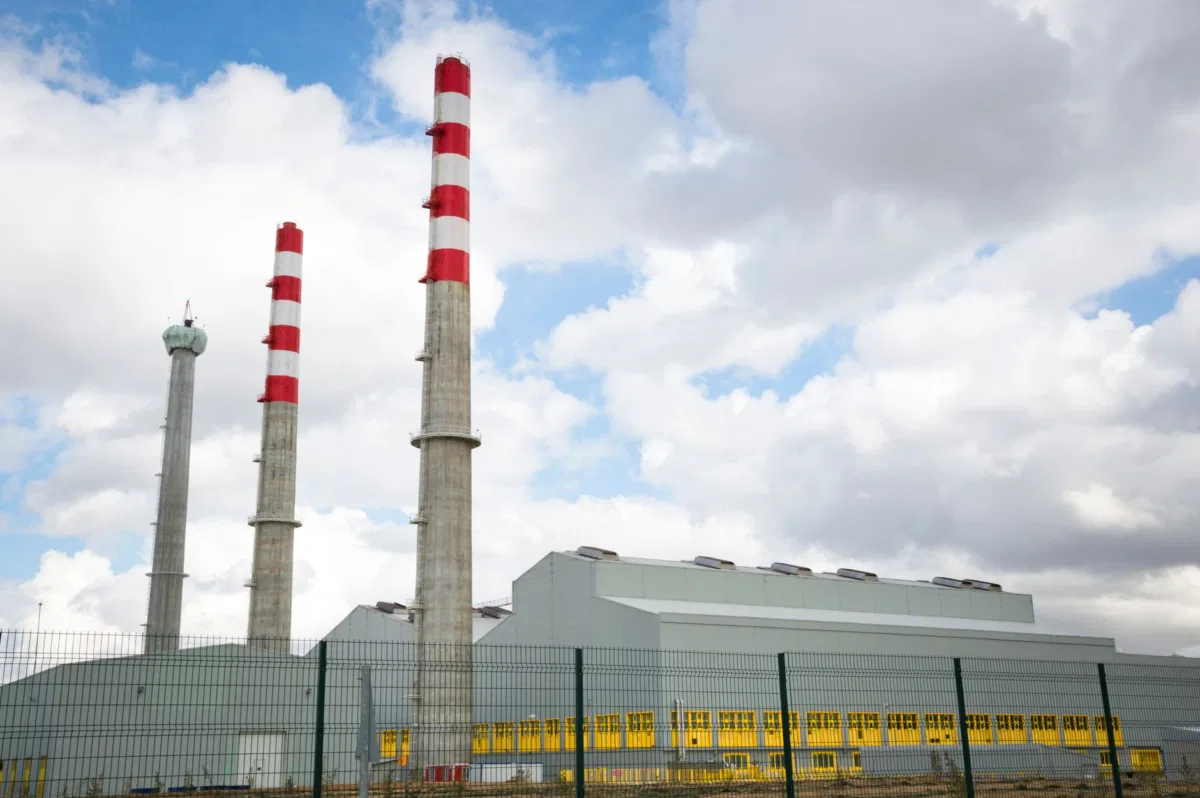
Deep inside a newly reinforced concrete facility in West Texas, a 300-ton cylinder of forged steel rests on highly specialized magnetic bearings. When activated, it will draw electricity from the local grid to spin up to 3,600 revolutions per minute. Once it reaches operating speed, it will stay there, spinning in a near-vacuum indefinitely. It produces no electricity. It stores virtually no energy for later dispatch. Its construction required tens of millions of dollars, demanding extreme tolerances from structural and mechanical engineers to handle the immense vibrational loads.
This facility exists entirely to provide dead weight.
For a century, the North American electrical grid has operated on a fundamental physical assumption: the power that keeps the lights on is generated by massive, heavy things spinning in circles. Coal plants, natural gas turbines, hydroelectric dams, and nuclear reactors all operate on the same basic mechanical principle. Boiling water or falling water forces a colossal metal turbine to rotate, sweeping electromagnets past copper coils to push electrons through a wire.
Collectively, thousands of these massive rotating machines across the continent spin in perfect unison, locked together at a frequency of exactly 60 Hertz. Because they are incredibly heavy, they possess immense physical momentum. In power engineering, this is known as grid inertia.
As the United States rapidly replaces thermal power plants with wind and solar, the grid is undergoing a quiet mechanical crisis. Solar panels and wind turbines are entirely different breeds of infrastructure. Solar panels have no moving parts. Wind turbines move, but their rotation is decoupled from the grid’s frequency by power electronics. Both connect to the grid via inverters—solid-state devices that push electricity purely through semiconductor logic. They provide energy, but they provide zero physical inertia.
The electrical grid is essentially losing its shock absorbers. To solve this, the engineering sector has resurrected an archaic piece of technology and turned it into a multibillion-dollar infrastructure vertical. They are building synchronous condensers: giant, free-spinning motors that exist solely to add raw physical momentum back into the system.
The Physics of Grid Collapse
Understanding the boom in inertia engineering requires looking at how the grid fails. Electricity supply and demand must match perfectly in real time. When demand suddenly spikes, or a transmission line snaps, or a power plant unexpectedly trips offline, a shockwave hits the grid.
In the traditional grid, the physical mass of thousands of spinning turbines absorbs that shock. Because they weigh hundreds of tons and are spinning very fast, they physically resist slowing down. If a massive power plant fails, the remaining turbines across the continent experience a sudden drag. Their rotational speed dips slightly, causing the grid frequency to drop from 60 Hz to, perhaps, 59.8 Hz. This heavy, physical resistance buys grid operators a crucial window of time—usually between five and ten seconds—to detect the fault, fire up backup generators, or shed load before the frequency drops low enough to trigger cascading blackouts.
Inverter-based resources cannot do this. Because they lack physical mass, a grid dominated by solar and wind responds to a sudden fault not by slowing down gracefully, but by crashing almost instantly. Without inertia, the frequency plummets in milliseconds. Protection relays trip, disconnecting entire regions to save the equipment.
Grid operators in regions with extremely high renewable penetration—most notably Texas, California, and South Australia—are already hitting the physical limits of a low-inertia system. They are discovering that you can generate all the clean megawatts you need, but without the physical momentum to stabilize the alternating current, the grid becomes highly brittle.
The Synthetic Inertia Arbitrage
The engineering response has been to decouple the concept of power generation from the concept of grid stabilization. If the grid needs heavy things to spin, engineers will simply build heavy things and spin them, omitting the power plant entirely.
Enter the modern synchronous condenser. Historically, these devices were used sparingly in the mid-20th century to manage voltage levels on long transmission lines. Today, they are being super-sized and installed explicitly for their kinetic energy.
Building a facility dedicated to nothing but inertia is a complex civil and mechanical engineering challenge. A modern high-inertia synchronous condenser features a massive flywheel attached to the rotor. The rotor assembly can weigh up to 400 tons. Spinning that much mass at 3,600 RPM creates terrifying centrifugal forces.
The structural engineering required to house these machines is intense. The foundations must be poured with specialized low-shrinkage concrete, isolated from the surrounding bedrock to prevent high-frequency vibrations from tearing the facility apart. The bearings must support hundreds of tons of lateral load while minimizing friction so the machine does not consume excessive power just to stay spinning. To reduce aerodynamic drag, the most advanced models operate inside sealed casings filled with hydrogen gas, or in a partial vacuum, requiring elaborate cooling and sealing mechanisms.
Major industrial engineering firms are pivoting hard into this space. Companies that spent decades designing turbines for coal and gas plants are finding a lucrative second life selling inertia-as-a-service.
The Brownfield Retrofit
Perhaps the most fascinating engineering development in the inertia market is the mechanical repurposing of decommissioned fossil fuel plants.
When a coal plant is slated for retirement, the boiler, the emissions scrubbers, and the coal-handling infrastructure are obsolete. But the generator itself—the massive copper and steel cylinder that actually creates the magnetic field—remains a highly valuable engineering asset. It is already connected to the high-voltage transmission network. It already has the necessary cooling infrastructure.
Instead of tearing the entire plant down, engineering firms are executing complex surgical retrofits. They physically sever the generator from the steam turbine. They install a massive clutch mechanism. They then use power from the grid to spin the generator up to synchronous speed. The coal plant, which once burned thousands of tons of carbon to push power out, becomes a clean, spinning shock absorber, stabilizing the solar farms that put it out of business.
This brownfield conversion strategy is rapidly gaining traction. It saves millions in capital expenditure and bypasses the decade-long interconnection queues that plague new infrastructure projects. The grid connection is already permitted; the engineering work simply reverses the flow of utility.
The Mechanical vs. Digital Divide
The massive capital flowing into synchronous condensers has sparked a profound philosophical debate within the electrical engineering community.
On one side are mechanical and power systems engineers, who trust physical mass. They argue that physics cannot be hacked, cannot crash, and does not require a software update. When a fault occurs, a 300-ton spinning rotor responds instantaneously because the laws of thermodynamics compel it to.
On the other side are power electronics engineers and software developers, who argue that building giant spinning weights is an archaic, brute-force solution. They champion "grid-forming inverters." This emerging technology uses complex algorithms and high-speed sensors to force solar and battery installations to artificially mimic the behavior of a spinning turbine. By constantly measuring the grid frequency and injecting precise bursts of power in milliseconds, software can hypothetically provide "synthetic inertia."
The software approach is cheaper and requires far less structural engineering. However, grid operators remain highly skeptical of trusting the fundamental stability of the grid entirely to code. Grid-forming inverters rely on phase-locked loops and incredibly complex control logic. In a severe grid event—a lightning strike on a major substation, or a massive frequency collapse—algorithms can miscalculate. Software can enter feedback loops, causing inverters to fight each other and exacerbate the collapse.
Until grid-forming software can prove it has the infallible, physics-bound reliability of a massive block of spinning steel, regulators and utilities are choosing to underwrite physical mass.
Pricing the Spin
The primary bottleneck for the inertia engineering boom is not technological, but economic.
Historically, grid inertia was free. It was a natural byproduct of generating electricity with steam turbines. Because it was ubiquitous, there was never a need to create a market for it. Utilities paid power plants for the megawatts they delivered, not for the physical momentum of their rotors.
As inertia becomes scarce, energy economists are struggling to price it. How do you compensate a facility that produces no power, but prevents the entire state from going dark?
Forward-thinking grid operators are beginning to create explicit markets for inertia and fast frequency response. In the United Kingdom and Australia, grid operators have launched procurement contracts specifically asking engineering firms to bid on providing pure inertia. This creates a fascinating new asset class for infrastructure investors: a facility with highly predictable operating costs, no fuel price risk, and long-term contracts underwritten by the state, purely for spinning in circles.
In the United States, the regulatory framework is moving slower, but the physical reality is forcing the issue. As the pipeline of offshore wind and utility-scale solar grows, the Federal Energy Regulatory Commission and regional operators are drafting new requirements for grid stability that will mandate the procurement of inertia services.
The clean energy transition is frequently imagined as a dematerialization of the power grid—a shift from heavy trains moving coal to elegant silicon panels silently catching sunlight. But the grid is a fiercely physical machine. The engineering reality of the coming decades is that the more ephemeral and weather-dependent our energy sources become, the more we must anchor the system with heavy, spinning, industrial mass. To move into a solid-state future, we are finding that we cannot entirely abandon our mechanical past.
Staff analysis by the Industry Pulse newsroom, edited by Viktor Peshekhonov, under our editorial policy.
More Analysis
Technology · Industry Pulse Editorial Team
The Silicon Substation: Why Big Tech Is Seizing the American Power Grid
Manufacturing · Industry Pulse Editorial Team
The Disassembly Monopoly: Why America’s Newest Factories Are Built to Destroy
Law · Industry Pulse Editorial Team
The Neural Subpoena: Why Corporate Litigation Is Targeting Employee Brainwaves
Hospitality · Industry Pulse Editorial Team
The Acuity Premium: Why Luxury Hospitality Is Evolving Into Outpatient Infrastructure
Sports Industry · Industry Pulse Editorial Team
The Varsity Arbitrage: Why Wall Street is Buying Up the Youth Sports Economy
Healthcare · Industry Pulse Editorial Team
The Micro-Foundry Premium: Why America’s Hospitals Are Printing Their Own Pharmaceuticals