
Technology · Industry Pulse Editorial Team · · 5 min read
The Deterministic Premium: Why the Fortune 500 Is Paying Double for 'Dumb' Silicon
Corporate buyers are intentionally shunning advanced AI processors, creating a lucrative grey market for ‘dumb’ silicon that does exactly what it is told.
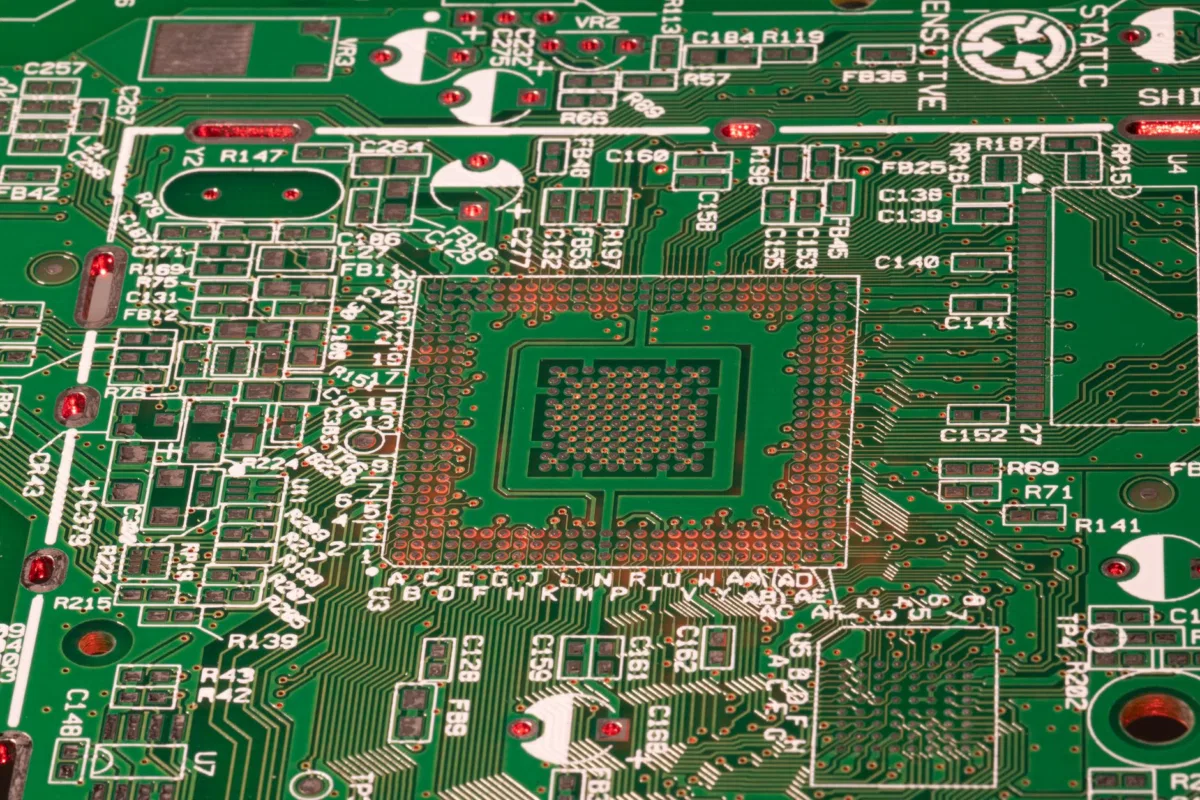
A strange pricing inversion has taken hold in the semiconductor market over the past eighteen months. Walk into the procurement office of a major aerospace contractor, a medical robotics firm, or a high-frequency trading desk, and you will find engineers engaged in bizarre negotiations. They are actively fighting to avoid buying the latest, most advanced artificial intelligence-optimized silicon. Instead, they are paying steep premiums—sometimes double the unit cost of state-of-the-art processors—to secure supplies of older, dramatically less sophisticated chips.
For the first time in the history of Moore’s Law, older technology is commanding a luxury markup. Wall Street analysts have begun referring to this phenomenon as the "deterministic premium." It represents a fundamental fracture in how the industrial economy views computational power. The relentless drive to make every piece of hardware "smart" has inadvertently made it legally and operationally radioactive for the most critical sectors of the economy.
The crisis stems from the architecture of modern processors. Over the last five years, chip designers have responded to the insatiable demand for machine learning by deeply integrating neural processing units (NPUs) and highly aggressive predictive execution pipelines directly onto the silicon. These modern chips are designed to guess what a user or a software program wants to do next, pre-calculate it, and dynamically allocate power and memory to speed up the process.
In a smartphone, this results in remarkably fast photo rendering and seamless voice translation. The system is fundamentally probabilistic. It operates on statistical likelihoods, prioritizing speed and adaptability over absolute, mathematical predictability. If a predictive branch guesses wrong, the chip simply flushes the memory and tries again, burning a fraction of a millisecond. The user never notices.
But the physical world does not tolerate probabilistic execution. If you are operating an autonomous heavy mining excavator, a robotic surgical arm, or a trading algorithm executing thousands of orders per microsecond, you do not want your processor "guessing" or dynamically allocating its attention. You need absolute determinism. You need the mathematical guarantee that an electrical signal sent at precisely 12:01:00.000 will result in a mechanical action exactly three milliseconds later, without exception, regardless of what the neural processor thinks might be more efficient.
As AI integrations migrated from the software layer down to the physical silicon layer, that guarantee evaporated. Modern chips are effectively black boxes. Even the engineers who design them cannot always predict exactly how power and clock cycles will be distributed across the die at any given microsecond.
This opacity has collided violently with the legal and insurance frameworks that govern heavy industry. By late 2025, commercial insurers underwriting industrial robotics and medical devices began demanding proof of deterministic execution before issuing liability policies. If a robotic welder on a Detroit assembly line miscalculates a joint and causes a catastrophic fire, the manufacturer’s insurance carrier requires a forensic audit of the failure. If the root cause traces back to an opaque, AI-optimized chip dynamically adjusting its load in an unpredictable way, the manufacturer faces unquantifiable liability. You cannot legally defend a black box.
Faced with the prospect of uninsurable hardware, heavy industry has revolted. Procurement officers are stripping modern, NPU-laden chips from their designs and replacing them with legacy silicon—chips designed on 28-nanometer or 14-nanometer nodes from a decade ago. These older chips are slow, power-hungry, and entirely "dumb." They execute instructions exactly as written, sequentially, with zero predictive intelligence.
In the eyes of a corporate risk officer, that stupidity is priceless. It means the chip's behavior can be mathematically proven, audited, and insured.
The semiconductor foundries have recognized this desperation and adjusted their pricing accordingly. Facilities owned by GlobalFoundries, TSMC, and Texas Instruments that manufacture these older, legacy nodes were once viewed as depreciating assets, churning out cheap microcontrollers for microwaves and automotive windows. Today, they are highly lucrative profit centers. By rebranding these older production lines as "high-reliability deterministic nodes," foundries have successfully decoupled the price of a chip from its computational power.
Buyers are no longer paying for transistors; they are paying for legibility. A chip that costs $4 to manufacture on a depreciated 28nm line is now being sold for $45 to medical device manufacturers, simply because it lacks the AI features of a $20 modern processor. The foundry margins on these "dumb" chips are quietly rivaling the margins on cutting-edge AI accelerators.
This dynamic is bifurcating the technology sector into two distinct spheres. The consumer, creative, and enterprise software markets are migrating entirely to the probabilistic internet, where speed, intelligence, and adaptability are paramount, and occasional errors or hallucinations are accepted as the cost of innovation.
Conversely, the industrial, financial, and life-safety markets are walling themselves off in a deterministic enclave. They are deliberately reverting to older, simpler hardware architectures to maintain a legal and operational firewall against the unpredictability of artificial intelligence.
There is a counterargument prevalent among Silicon Valley chip designers, who insist this regression is temporary. They argue that within the next decade, formal verification tools will advance enough to mathematically prove the behavior of even the most complex AI-integrated silicon. Once software can audit the black box, they claim, the industrial sector will happily abandon its expensive legacy chips and rejoin the march of progress.
This view misinterprets the nature of corporate risk. The industrial preference for simple, deterministic hardware is not a temporary technical hurdle; it is a structural legal defense. A system that is simple enough to be understood by a jury or an insurance adjuster will always carry lower liability costs than a system that requires a supercomputer to verify its safety.
For decades, the technology industry assumed that computational power and market value were perfectly correlated. The relentless pursuit of smarter, faster, more complex systems was the only accepted path to higher margins. The rise of the deterministic premium proves this assumption was flawed. As technology becomes increasingly opaque and autonomous, a massive, unserved market has emerged for things that simply do what they are told. The ultimate luxury in the hardware market is no longer artificial intelligence. It is the absolute guarantee of artificial stupidity.
Staff analysis by the Industry Pulse newsroom, edited by Viktor Peshekhonov, under our editorial policy.
More Analysis
Creative Industries · Industry Pulse Editorial Team
The Syntactic Franchise: Why Bestselling Authors Are Leasing Their Syntax to the Highest Bidder
Sports Industry · Industry Pulse Editorial Team
The Ligament Ledger: Why Wall Street Is Underwriting the Billion-Dollar Athlete
Real Estate · Industry Pulse Editorial Team
The Megawatt Premium: Why Wall Street Is Buying Electrical Grids Instead of Floor Space
Gaming · Industry Pulse Editorial Team
The Render Trap: Why Global Manufacturing is Hostage to Video Game Economics
Healthcare · Industry Pulse Editorial Team
The Phantom Cohort: Why Big Pharma is Buying ‘Digital Twins’ Instead of Treating Real Patients
Business · Industry Pulse Editorial Team
The Real Estate Strip-Mine: Why Wall Street is Quietly Demolishing the American Drive-Thru