
Business · Industry Pulse Editorial Team · · 5 min read
The Real Estate Strip-Mine: Why Wall Street is Quietly Demolishing the American Drive-Thru
Private equity is acquiring fast-food chains to separate their brand IP from prime suburban real estate, converting drive-thrus into last-mile logistics hubs.
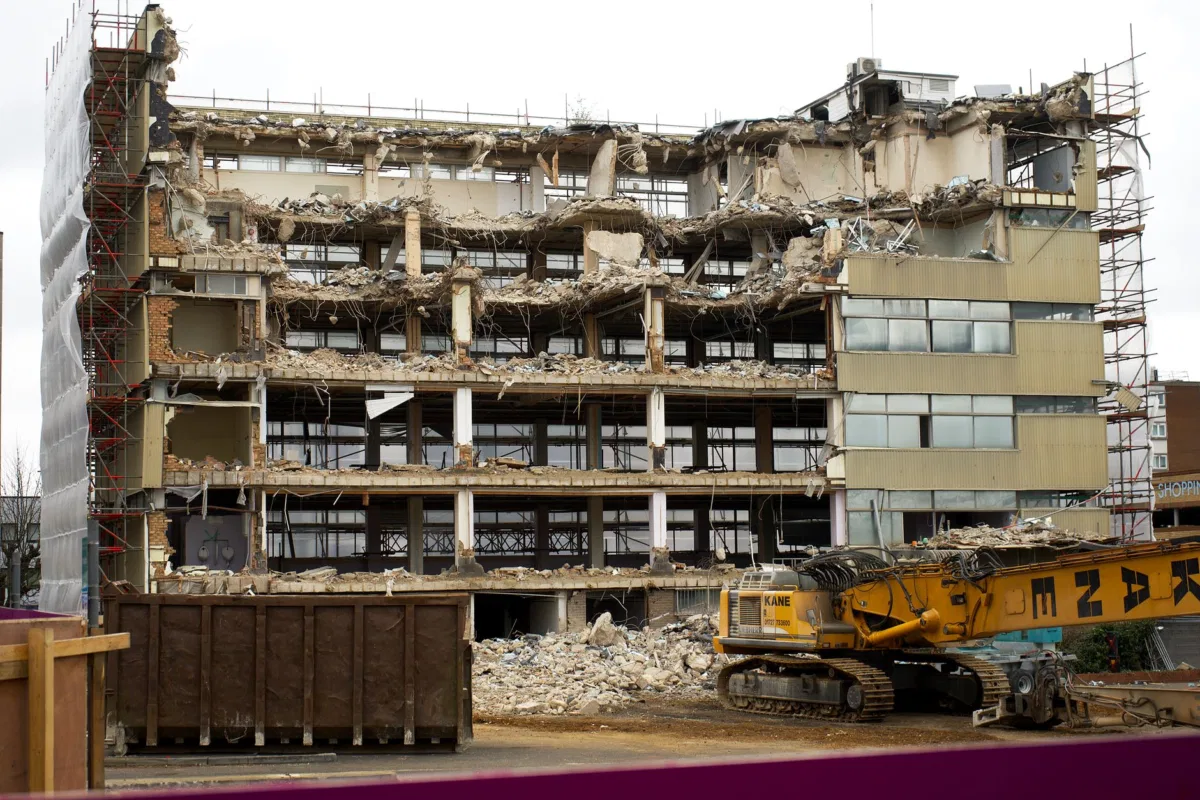
On a highly trafficked corner in suburban Columbus, Ohio, a decades-old quick-service restaurant recently met the wrecking ball. The closure of the local burger franchise did not make national headlines, nor did it signal a decline in the brand’s local popularity. Customers in the area can still order the exact same menu items through UberEats and DoorDash, delivered in the same branded packaging. The food simply arrives from a windowless industrial kitchen two miles away.
What replaced the physical restaurant is far more lucrative: a micro-fulfillment center operated by a last-mile logistics firm.
This sequence of events is repeating across the American sunbelt and Midwest, driven by a profound shift in how Wall Street values commercial space. Private equity firms and alternative asset managers are acquiring legacy fast-food chains, but their target is no longer operational cash flow from selling French fries. The strategy relies on a ruthless financial decoupling. Buyers are separating the brand's intellectual property from its prime physical real estate, liquidating the latter to industrial developers, and pushing the food production into highly automated, land-light delivery hubs.
The traditional American drive-thru is being financialized out of existence.
For half a century, the quick-service restaurant (QSR) model functioned as an accidental real estate empire. Ray Kroc famously understood that McDonald’s was in the business of buying prime corner lots and leasing them back to franchisees. The physical structure was the moat. But the macroeconomic environment of 2026 has inverted this logic. Squeezed by structurally higher wages, elevated food input costs, and shifting consumer habits that heavily favor app-based delivery, the operating margins of a physical restaurant have compressed severely.
Simultaneously, the value of suburban infill real estate—specifically, plots with heavy traffic visibility and easy arterial road access—has skyrocketed. E-commerce giants and third-party logistics providers are desperate for distribution nodes close to residential populations. A one-acre lot on a busy intersection is now vastly more valuable as a high-velocity staging ground for delivery vans than it is as a dining room.
The arbitrage opportunity is glaring. When a private equity sponsor takes a mid-tier restaurant brand private, the first maneuver is the classic OpCo/PropCo split. The operating company (OpCo) retains the brand equity, recipes, and digital storefronts. The property company (PropCo) takes the land. Historically, the PropCo would lease the land back to the OpCo or its franchisees. Today, the PropCo simply sells the land to industrial developers at a steep premium, effectively paying off the acquisition debt in a single stroke.
The operating company, completely unmoored from its physical footprint, then transitions into a pure-play licensing entity. It contracts with massive, multi-brand ghost kitchens located in cheap, low-visibility industrial parks. The food is prepared by a different, non-unionized workforce—often aided by robotic fry stations and automated assembly systems—and handed directly to gig workers.
This mechanism leaves traditional franchisees holding a remarkably weak hand. Thousands of independent operators who bought into these systems believed they were purchasing a protected geographic territory and a proven physical business model. Instead, as master lease agreements expire or buyout clauses are triggered, franchisees find their physical locations slated for demolition. The parent company offers them the "opportunity" to transition to a delivery-only territory, essentially downgrading them from local business pillars to glorified gig-economy dispatchers.
The financial logic is undeniable. Stripping out the land and physical maintenance costs dramatically alters the return on invested capital. A pure-IP restaurant brand requires minimal capital expenditure. There are no roofs to repair, no HVAC systems to replace, and no parking lots to repave. The brand exists as a digital ghost, living exclusively on the home screens of smartphones, while the underlying equity sponsors harvest the real estate windfall.
Zoning boards and municipal governments are slowly waking up to this transformation, often with alarm. Suburban commercial corridors rely heavily on retail sales tax and property tax assessments based on commercial use. Converting a vibrant, high-traffic restaurant into a restricted-access micro-fulfillment warehouse often blights the pedestrian experience and introduces heavy commercial van traffic into retail zones.
Municipalities are beginning to fight back. In parts of Texas and Florida, local councils are aggressively denying rezoning requests that attempt to shift parcels from retail to light industrial use. They recognize that a corner lot devoted entirely to loading Amazon or FedEx vans offers little civic value compared to a retail business that employs local teenagers and serves as a, albeit highly commercialized, community gathering point.
Yet, capital usually finds a way around local friction. Asset managers are deploying sophisticated legal strategies to classify these micro-fulfillment centers as "hybrid retail," arguing that because consumers could technically pick up a package at the facility, it qualifies under legacy zoning definitions.
The broader consequence of this trend is the hollowing out of the franchise middle class. For decades, franchising served as a reliable vehicle for upward mobility, allowing local entrepreneurs to build generational wealth through regional restaurant portfolios. By severing the connection between the brand and the physical community, private equity is capturing the entire value chain. The entrepreneur is replaced by an algorithm that optimizes delivery times from a centralized commissary.
Critics argue this model is inherently fragile. A restaurant brand completely divorced from a physical presence risks losing its cultural salience. Fast food is deeply tied to the visual cue of a towering sign on a highway exit, the smell of the grill, and the physical convenience of the drive-thru window. When a brand is reduced to just another tiled logo on a delivery app, competing against entirely virtual, AI-generated restaurant concepts, brand loyalty can evaporate overnight.
Investors currently ignore this risk, captivated by the immediate cash returns of the real estate liquidation. The underlying assumption is that consumer convenience will always override physical presence. As long as the delivery arrives in under twenty minutes and the packaging remains familiar, the theory goes, the customer will not care that the food was assembled in a windowless warehouse rather than a brightly lit dining room.
The ultimate takeaway for the retail sector is harsh but clear. Physical footprints are no longer evaluated on their ability to generate foot traffic or brand awareness. They are evaluated strictly on their highest and best use in a logistics-dominated economy. If a brand cannot generate more yield per square foot than a rack of server blades or a fleet of delivery drones, the building will be torn down. The American drive-thru is not dying because people stopped eating fast food; it is disappearing because the ground beneath it became too valuable to waste on hamburgers.
Staff analysis by the Industry Pulse newsroom, edited by Maksym Lobodiuk, under our editorial policy.
More Analysis
Technology · Industry Pulse Editorial Team
The Deterministic Premium: Why the Fortune 500 Is Paying Double for 'Dumb' Silicon
Creative Industries · Industry Pulse Editorial Team
The Syntactic Franchise: Why Bestselling Authors Are Leasing Their Syntax to the Highest Bidder
Sports Industry · Industry Pulse Editorial Team
The Ligament Ledger: Why Wall Street Is Underwriting the Billion-Dollar Athlete
Real Estate · Industry Pulse Editorial Team
The Megawatt Premium: Why Wall Street Is Buying Electrical Grids Instead of Floor Space
Gaming · Industry Pulse Editorial Team
The Render Trap: Why Global Manufacturing is Hostage to Video Game Economics
Healthcare · Industry Pulse Editorial Team
The Phantom Cohort: Why Big Pharma is Buying ‘Digital Twins’ Instead of Treating Real Patients