
Real Estate · Industry Pulse Editorial Team · · 6 min read
The Megawatt Premium: Why Wall Street Is Buying Electrical Grids Instead of Floor Space
Commercial property valuation has abandoned square footage. In the AI era, a building is only worth the size of its electrical hookup.
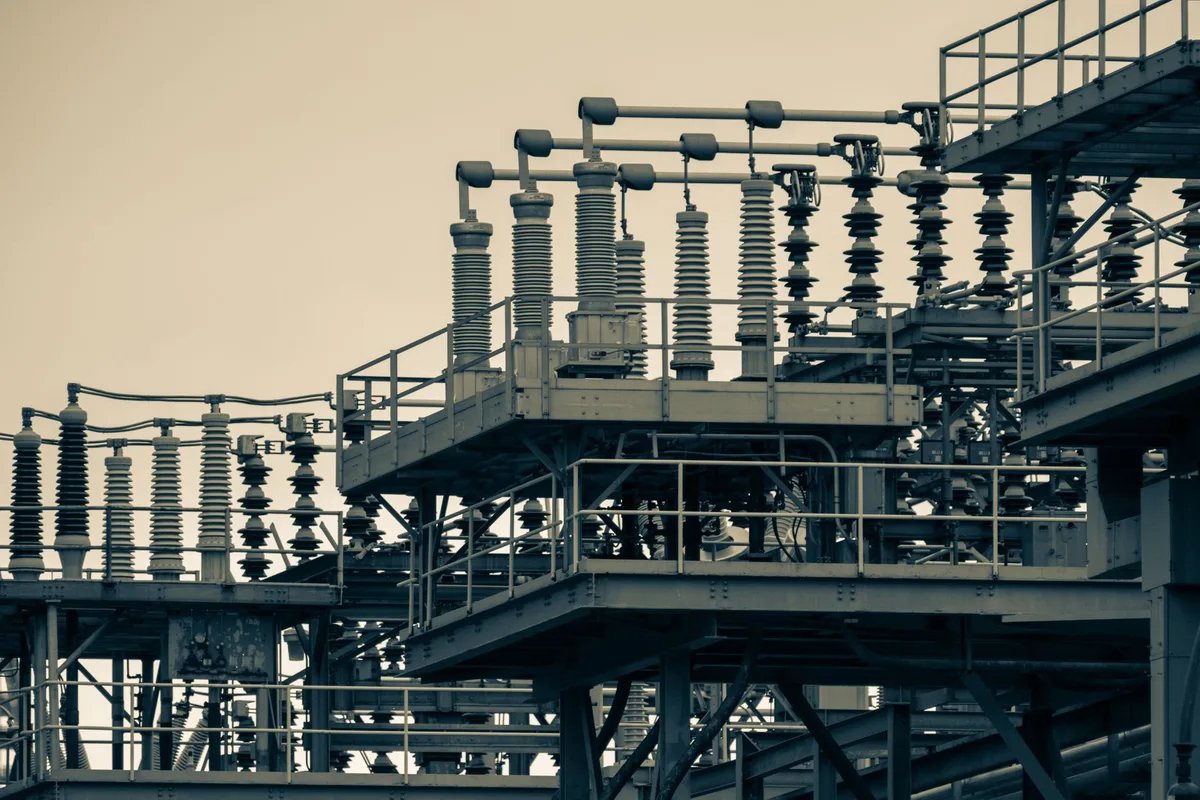
In early 2026, a peculiar transaction quietly closed in the suburbs of Columbus, Ohio. A defunct shopping mall, structurally compromised and largely vacant for a decade, sold to a major institutional real estate developer for a sum that defied all conventional cap rate mathematics. The buyer had no intention of revitalizing the retail space, nor were they planning to bulldoze the site to build luxury apartments. They were buying a copper wire.
Specifically, they were buying the right to draw 40 megawatts of continuous power from the local substation. The physical structure of the mall was merely a decaying wrapper around an infinitely more valuable asset: a grandfathered, high-capacity connection to the regional electrical grid.
Commercial real estate is undergoing a structural inversion. For a century, the industry evaluated assets based on foot traffic, highway access, floorplate efficiency, and zoning flexibility. Today, a completely different metric dominates the underwriting process for industrial and commercial acquisitions: electrical interconnection capacity. In an economy increasingly dominated by the voracious energy demands of artificial intelligence and advanced manufacturing, square footage has become a secondary commodity. The new unit of real estate value is the megawatt.
The Queue as the New Zoning
To understand why a crumbling big-box store might command a higher premium than a pristine Class-A office tower, one must look at the bottleneck choking the American energy grid. Regional transmission organizations—such as PJM Interconnection in the East, ERCOT in Texas, and CAISO in California—operate interconnection queues. If a developer wants to plug a new energy-intensive facility into the grid, they must apply for a study to ensure the system can handle the load.
Five years ago, this was a bureaucratic formality. Today, it is a multi-year purgatory.
The surge in data center construction, driven by the race to train generative AI models, has effectively drained the remaining surplus capacity of the U.S. electrical grid. A developer applying for a new 100-megawatt connection in Northern Virginia or central Ohio in 2026 can expect to wait anywhere from five to eight years before electrons actually flow.
Time is the one variable tech giants cannot afford. If a cloud provider delays deploying a new cluster of GPUs because they are waiting on a utility company to upgrade a transmission line, they risk losing billions in market share.
Consequently, the real estate market has reverse-engineered the problem. Instead of buying land and applying for power, developers are hunting for power that happens to have land attached to it. They are acquiring obsolete heavy industrial sites, shuttered textile mills, and failed malls—properties that were originally wired for massive electrical loads decades ago. By purchasing these sites, the buyer inherits the existing grid interconnection rights, effectively skipping the seven-year queue.
Valuing the Invisible Asset
This dynamic has birthed what industry insiders call the "Megawatt Premium." Real estate valuation models have historically relied on Net Operating Income (NOI) divided by a capitalization rate. But how do you value a dormant utility connection?
Financial engineers have developed shadow pricing for grid capacity. In highly constrained markets like Loudoun County, Virginia, or Santa Clara, California, the right to draw a single megawatt of power is now being priced independently of the land it sits on. We are seeing transactions where the underlying real estate is appraised at a negative value—requiring costly demolition and environmental remediation—yet the deal clears at record highs because the site possesses an active 50-megawatt substation hookup.
This has turned traditional commercial real estate brokers into amateur electrical engineers. Property listings that once highlighted ceiling heights and loading docks now prominently feature single-line diagrams, substation proximity, and utility tariff structures. The most valuable piece of paper in a due diligence folder is no longer the title deed, but the historical utility bills proving the site's peak load capacity.
Large real estate investment trusts (REITs) are quietly conducting portfolio-wide audits, searching their own balance sheets for dormant power capacity. A logistics operator might own a nationwide network of distribution centers. If ten of those warehouses are located in power-constrained grids, the REIT might realize that the most profitable use of the land is not storing cardboard boxes for e-commerce, but tearing down the warehouse and leasing the electrical tap to a hyperscale data center operator.
The Cannibalization of Industrial Space
The implications for the broader economy are profound. The aggressive acquisition of high-power sites by data center developers is displacing traditional industrial tenants.
Manufacturing companies, cold storage operators, and heavy logistics firms require significant electricity to operate assembly lines and refrigeration units. These businesses are suddenly finding themselves outbid for industrial leases by tech-backed real estate proxies willing to pay double or triple the prevailing market rent, solely to secure the electrical footprint.
This is creating a bizarre geographic distortion. Traditional industries are being pushed outward, away from major infrastructure hubs, into rural areas where power is less constrained but transportation costs are significantly higher. The tech sector is effectively strip-mining the electrical capacity of suburban industrial parks, leaving traditional tenants to bear the logistical friction.
Local municipalities are beginning to recognize the macroeconomic threat. A 500,000-square-foot manufacturing plant might employ six hundred local workers. If that plant is replaced by a highly automated data center drawing the exact same amount of power, the local employment drops to perhaps thirty technicians and security guards. The tax base shifts, but the economic velocity of the site collapses. Power, a finite civic resource, is being diverted from labor-intensive industries to capital-intensive server farms.
The Regulatory Countermeasure
Grid operators and utility commissions are not passive observers in this arbitrage. The hoarding of interconnection rights has triggered a fierce regulatory backlash.
Historically, utilities operated under a "use it or lose it" philosophy, but enforcement was lax. If a steel mill closed down, the utility rarely moved immediately to revoke its historical capacity rights, assuming another industrial tenant would eventually move in.
Now, regional transmission organizations are rewriting their tariff rules. PJM and ERCOT have begun aggressively auditing dormant industrial sites. If a property owner cannot prove they have utilized their maximum electrical load within the past twenty-four months, the utility reserves the right to claw back that capacity and assign it to the next applicant in the interconnection queue.
This regulatory shift introduces massive structural risk into the Megawatt Premium strategy. Real estate developers who paid exorbitant sums for bankrupt factories are suddenly discovering that the local utility views their acquired power rights as expired.
To circumvent this, some property owners are engaging in "load squatting." They install banks of electrical resistance heaters or operate small-scale cryptocurrency mining rigs inside empty warehouses, artificially drawing enough power to keep the utility connection active and defend their historical capacity rights until a lucrative data center lease can be finalized. It is a grotesque misallocation of energy, burned solely to maintain an administrative placeholder on a utility ledger.
A New Class of Asset
The commercial real estate industry has fundamentally misunderstood the nature of the buildings it owns. For decades, the industry treated utility connections as a generic utility—a service that was simply provided to a building, like water or broadband.
The AI boom has revealed the truth: in a heavily electrified, power-constrained economy, the grid is the primary asset. The building is merely an accessory.
We are witnessing the financialization of electrical throughput. Until the United States undertakes a generational expansion of its high-voltage transmission network, the real estate market will continue to price properties not by the shelter they provide, but by the energy they can extract.
The smartest institutional investors are no longer looking at maps of demographics or highway systems. They are looking at maps of transmission lines, hunting for the next decaying industrial asset sitting quietly on top of a dormant, multi-megawatt goldmine. The era of location, location, location has ended. The era of generation, transmission, and interconnection has begun.
Staff analysis by the Industry Pulse newsroom, edited by Stepan Kroka, under our editorial policy.
More Analysis
Technology · Industry Pulse Editorial Team
The Deterministic Premium: Why the Fortune 500 Is Paying Double for 'Dumb' Silicon
Creative Industries · Industry Pulse Editorial Team
The Syntactic Franchise: Why Bestselling Authors Are Leasing Their Syntax to the Highest Bidder
Sports Industry · Industry Pulse Editorial Team
The Ligament Ledger: Why Wall Street Is Underwriting the Billion-Dollar Athlete
Gaming · Industry Pulse Editorial Team
The Render Trap: Why Global Manufacturing is Hostage to Video Game Economics
Healthcare · Industry Pulse Editorial Team
The Phantom Cohort: Why Big Pharma is Buying ‘Digital Twins’ Instead of Treating Real Patients
Business · Industry Pulse Editorial Team
The Real Estate Strip-Mine: Why Wall Street is Quietly Demolishing the American Drive-Thru