
Torus Secures 500 Million Dollars to Deploy Modular Inference Data Centers
Salt Lake City-based Torus has secured 500 million dollars in funding to scale its Foundry modular computing system. As Interesting Engineering reports, the technology utilizes existing grid connections at industrial sites to bypass infrastructure delays, aiming to bring high-density inference capacity online in as little as 12 to 16 weeks.
Context from Industry Pulse
The launch of Foundry addresses a critical bottleneck in the AI sector where power scarcity and grid delays frequently stall expansion. According to Interesting Engineering, inference demand is projected to grow at a 35 percent compound annual rate through 2030, significantly faster than the 22 percent rate for model training. By shifting from centralized model training hubs to distributed inference sites, Torus aims to place compute resources closer to end-users. The 500 million dollar investment led by Magnetar highlights the industry's shift toward decentralized infrastructure that can be deployed within months rather than years, utilizing existing industrial electrical margins to satisfy immediate computational needs.
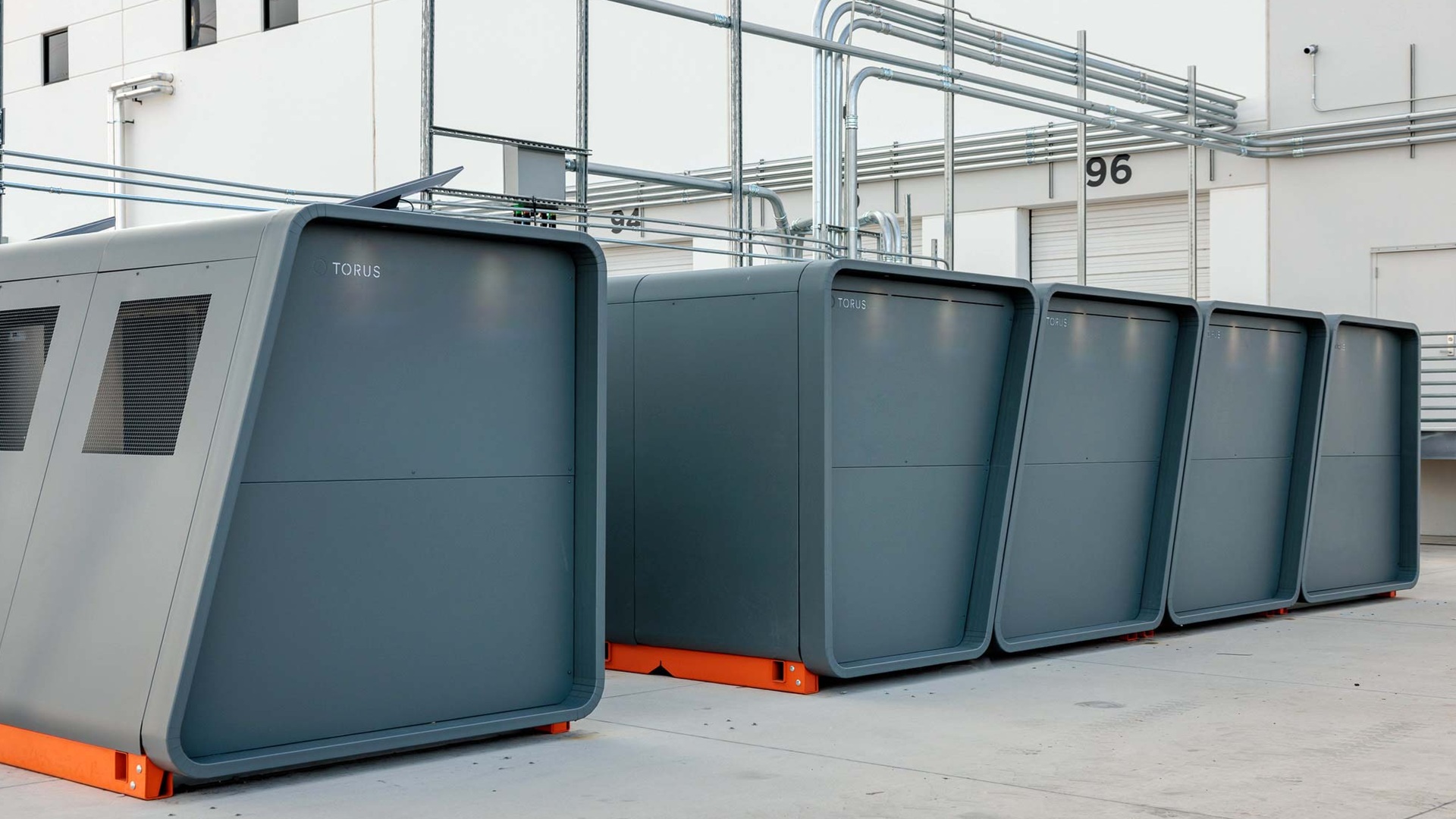
The new Foundry system integrates computing hardware, power management, and energy storage into prefabricated units designed for rapid deployment. According to Interesting Engineering, these modules are engineered to operate at commercial and industrial locations that already possess spare electrical capacity. By leveraging existing interconnections, the company avoids the multi-year wait times typically associated with large-scale data center construction and grid upgrades.
To manage the specific energy demands of these units, the firm utilizes a proprietary storage system called Torus Reserve. Interesting Engineering indicates that this technology uses a combination of battery storage and inertial-based systems to stabilize peak demand and provide backup power. This approach allows the modular units to support between 1 and 20 megawatts of capacity without compromising local grid stability or requiring immediate infrastructure expansions.
Manufacturing for the units takes place at a 545,000-square-foot facility in Utah known as GigaOne. The production line is currently built to support 500 megawatts of IT load, though the company plans to double that capacity to 1 gigawatt. Interesting Engineering notes that the environmental impact is managed through a closed-loop, waterless cooling method, which reportedly uses 95 percent less water than traditional evaporative systems.
The deployment strategy includes three distinct tiers to meet varying enterprise needs. These range from providing powered enclosures to fully integrated hardware configurations. Early customers like Hydra Host are already utilizing the technology, and the company intends to expand its fleet to over 47,000 GPUs by the end of 2027. This growth targets the rising demand for inference computing, which is expected to outpace model training growth through 2030.
The Industry Pulse Bottom Line
Torus is bypassing traditional data center bottlenecks by turning existing industrial power margins into modular compute hubs, significantly reducing deployment timelines for high-growth AI inference workloads through integrated storage and waterless cooling.