
Physicists Measure Record-Low Gravitational Force Between Silicon Wafers
A research team led by Shan-Qing Yang from Sun Yat-sen University has successfully detected the gravitational attraction between two silicon wafers weighing just 7.6 milligrams each. As Interesting Engineering reports, the experiment utilized a miniaturized torsion balance to record a force of 471 attonewtons, setting a new benchmark for gravity measurements at small mass scales.
Context from Industry Pulse
The measurement of gravitational forces at the milligram scale addresses a long-standing gap in experimental physics. While general relativity accurately describes gravity for massive celestial bodies, it has yet to be unified with quantum mechanics, which governs the behavior of subatomic particles. Previous milestones in this field included a 2021 study involving 92-milligram gold spheres, but the transition to 7.6-milligram silicon wafers demonstrates a significant increase in sensitivity. This progress is essential for testing the limits of Newtonian gravity. By refining the torsion balance and shielding techniques, researchers are moving closer to the regime where quantum effects might finally become detectable in gravitational interactions, potentially resolving conflicts between disparate physical theories.
"This study does not confirm that gravity is a quantum force, but it shows that Newtonian gravity is consistent with measurements made between low-mass objects."
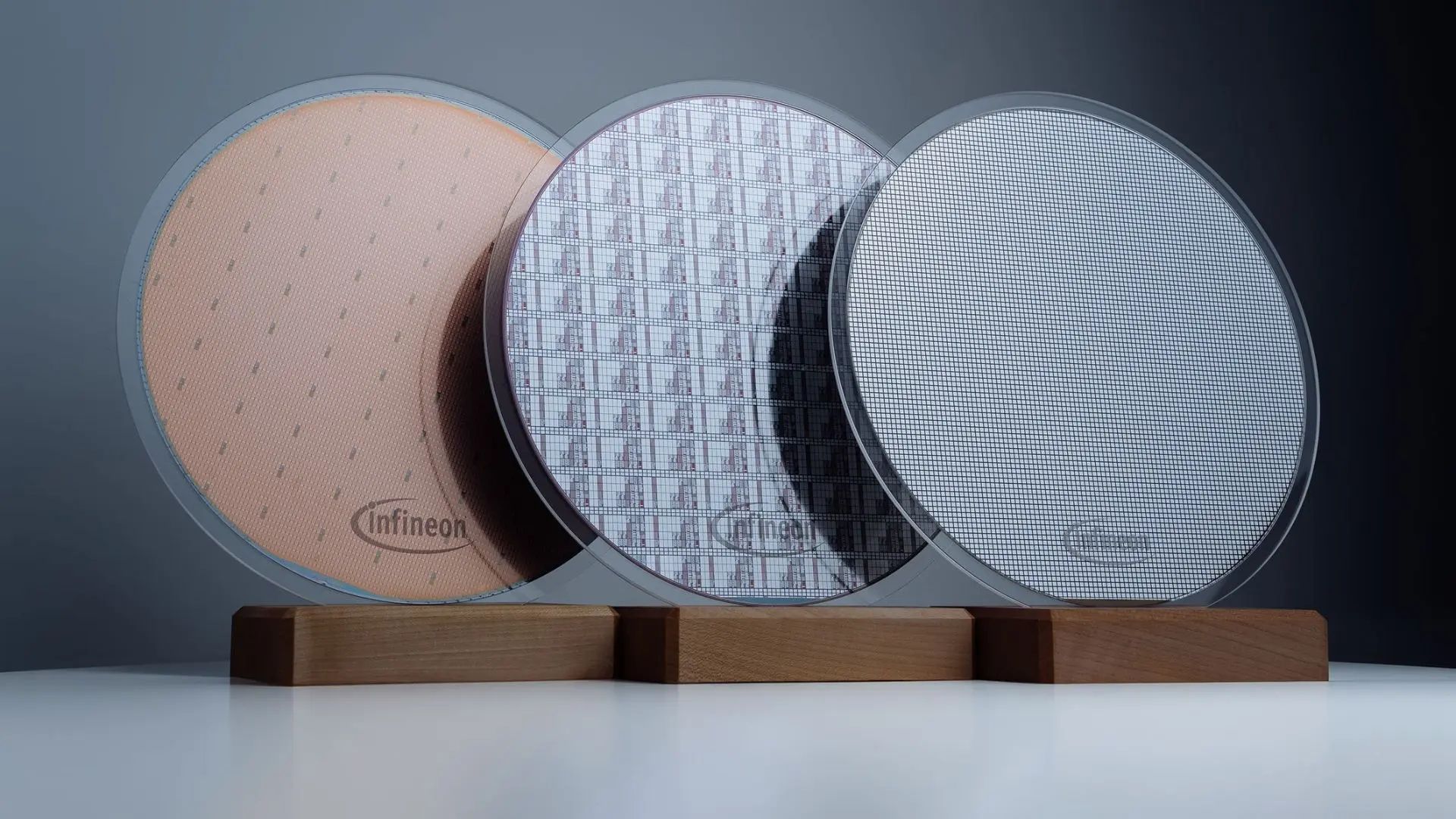
The experiment represents a significant technical advancement in the study of weak physical forces. According to Interesting Engineering, the researchers used deep silicon etching to construct a mini version of the traditional Cavendish torsion balance. The setup involved mounting a 7.6-milligram silicon wafer to a hanging rod while a rotating disc containing 16 identical wafers moved nearby. This configuration generated a periodic gravitational field that allowed the team to distinguish signal from background noise.
To ensure the accuracy of such a minute measurement, the apparatus was placed inside a vacuum chamber. Interesting Engineering notes that the physicists employed a gold-coated silicon membrane to shield the experiment from electrostatic interference. Additionally, an electronic feedback system held the torsion balance nearly stationary, allowing the scientists to calculate gravity based on the force required to counteract the attraction between the wafers.
The measured force of 471 attonewtons was recorded at a minimum distance of 0.654 millimeters. Interesting Engineering indicates this magnitude is approximately 20 billion times weaker than the weight of a single milligram of sand on Earth. Despite the extreme sensitivity required, the results remained consistent with Newtonian physics, yielding a gravitational constant calculation of 6.67 x 10⁻¹¹ m3 kg-1 s-2 with a 5.3 percent error margin.
While the current results sit within the classical domain of physics, the methodology offers a new pathway for exploring the intersection of general relativity and quantum mechanics. As Interesting Engineering explains, future iterations of this research may involve optical or magnetic trapping to further increase sensitivity. Such refinements could eventually allow scientists to observe the gravitational behavior of objects in quantum states, potentially revealing if gravity itself possesses quantum properties.
The Industry Pulse Bottom Line
This record-breaking measurement validates Newtonian gravity at unprecedentedly small scales. It establishes a technical foundation for future experiments aimed at observing quantum gravity, representing a critical step toward unifying the fundamental laws of physics.