
Bio-Inspired Scale-Rich Metamaterials Overcome Structural Chain Reactions
Engineers from MIT and Northeastern University have developed a new class of scale-rich metamaterials by incorporating controlled disorder into synthetic structures. According to Interesting Engineering, these materials mimic the irregular networks found in leaf vasculature and dragonfly wings to prevent the localized structural collapses common in traditional uniform lattice designs.
Context from Industry Pulse
The development of scale-rich metamaterials coincides with a broader engineering trend of utilizing biological blueprints to solve mechanical limitations. While recent innovations have seen robotics influenced by elephant trunks and medical drones utilizing dart-like delivery systems, this research applies network science to structural integrity. By abandoning the uniform grids that have defined metamaterials for decades, engineers are addressing the specific problem of propagation failure. The ability to tune stiffness through algorithmic parameters suggests a future where materials are customized for specific energy absorption needs, ranging from personal protective equipment to acoustic vibration management in sensitive environments.
"Unlocking this network design for materials really frees us to think of new microstructures and mechanical benefits that haven’t been possible before."
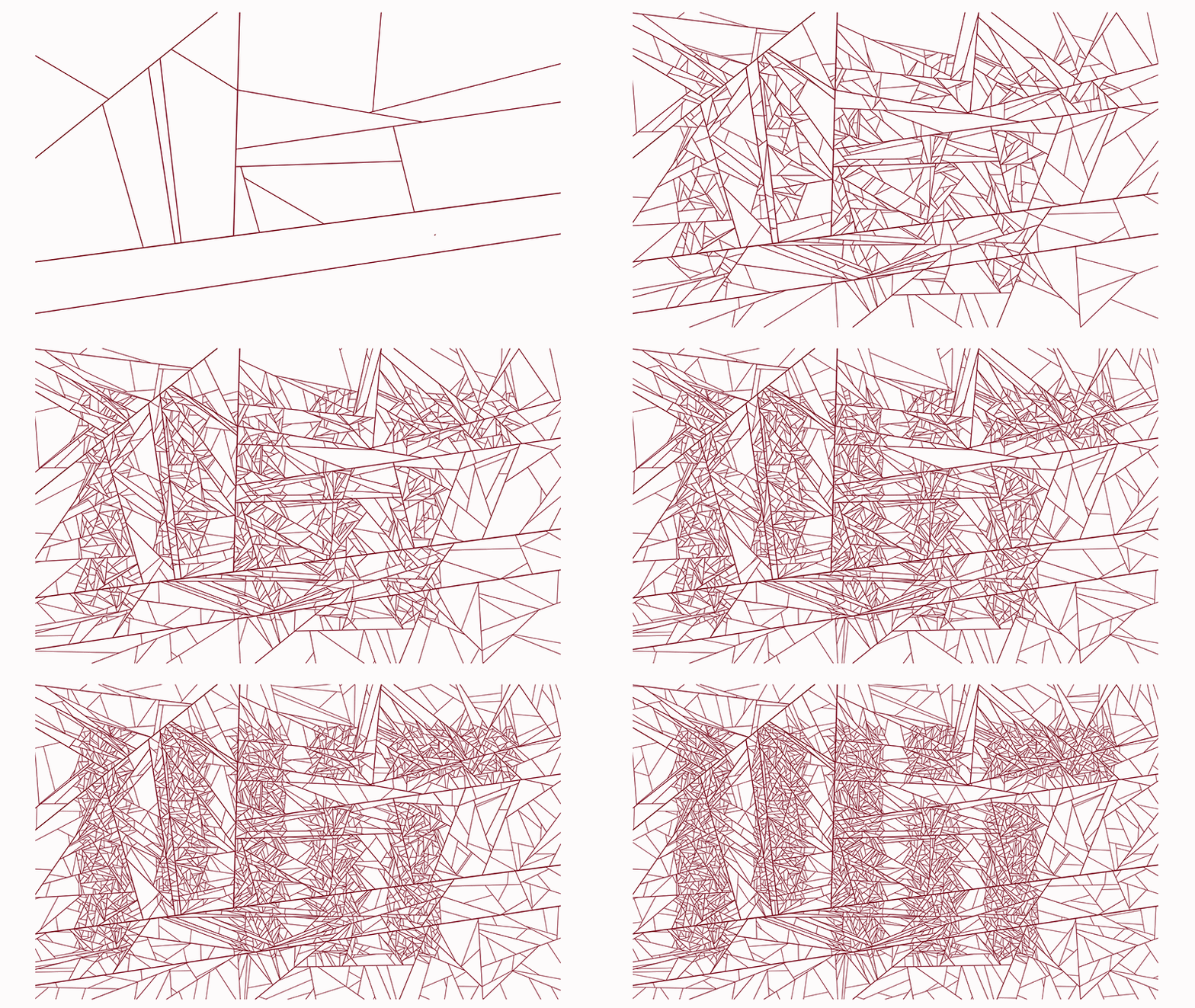
Traditional metamaterials rely on repeating microscopic building blocks like honeycombs or rigid grids. While these designs offer high strength, they possess a critical vulnerability where the failure of a single cell often triggers a chain reaction that compromises the entire structure. To address this, researchers developed an algorithm that creates non-repeating architectures by drawing random lines across a domain until they intersect with existing boundaries or beams.
As reported by Interesting Engineering, this process generates a dense web featuring support beams of varying sizes and thicknesses. The team, including experts in network science, transitioned abstract mathematical concepts into physical matter to see if irregular webs could resist collapse better than perfect geometric patterns. By adjusting the thickness of the initial lines and the rate at which subsequent lines narrow, the engineers can precisely tune the stiffness of the resulting material.
Physical testing involved 3D-printing polymer samples the size of credit cards, with internal beams ranging from microns to centimeters. Interesting Engineering notes that these chaotic networks outperformed ordered materials by absorbing violent impacts without buckling. The irregular architecture successfully protected fragile objects embedded within the samples, demonstrating superior cushioning capabilities compared to standard uniform lattices.
Potential applications for this technology span multiple industries, including the production of advanced sports helmets and lightweight body armor. Beyond physical protection, the researchers believe these structures could be used to create precision acoustic lenses capable of controlling sound waves and vibrations with high accuracy. The study, which was published in the journal Nature, marks a shift away from mathematical perfection toward bio-inspired disorder in material science.
The Industry Pulse Bottom Line
By replacing rigid geometric repetition with bio-inspired chaos, engineers have created a more resilient class of metamaterials that prevents structural chain-reaction failures while offering highly tunable mechanical properties.