
Allseas Launches Hybrid Support Vessel Echo at Wuchang Shipyard
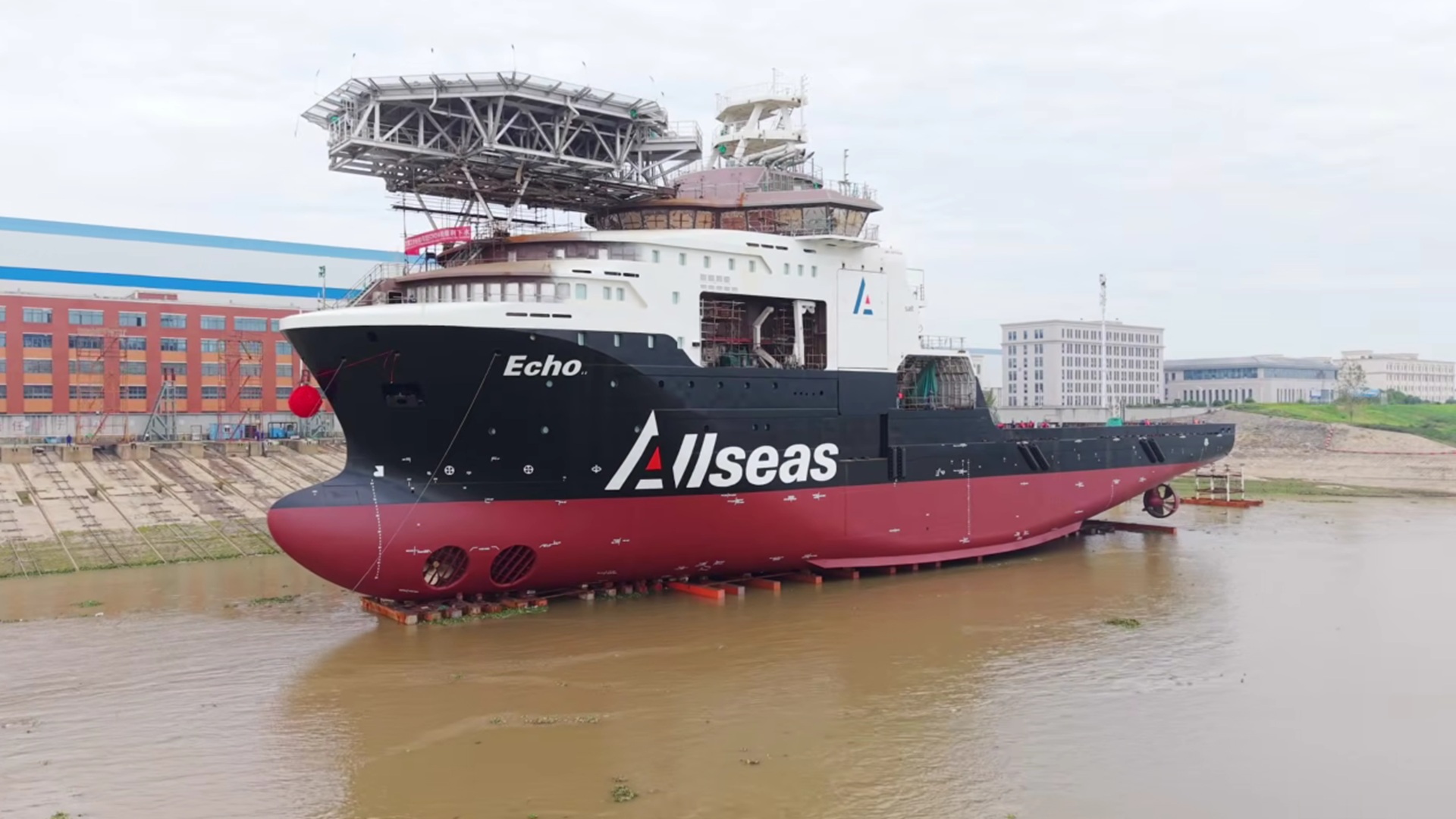
The Swiss offshore engineering firm Allseas has launched the first of two sister vessels, Echo, in Wuhan, China. According to reporting from Interesting Engineering, the 100-meter offshore construction ship features a 1,500-kWh hybrid battery system and is designed to handle subsea maintenance, inspections, and decommissioning to expand the company's global operational capacity.
Context from Industry Pulse
The launch of Echo and its sister ship Pulse represents a strategic shift for Allseas to optimize fleet utilization. By deploying 100-meter vessels equipped with 150-ton cranes and ROV hangars for maintenance and inspections, the firm can reserve its heavy-lift assets for larger construction contracts. The integration of 1,500-kWh batteries and methanol-ready propulsion reflects an industry-wide move toward hybrid power to reduce emissions in offshore operations. These technical upgrades, alongside DP2 positioning, allow the company to manage multiple subsea projects simultaneously across global markets, enhancing overall throughput as offshore wind and subsea infrastructure sectors continue to expand.
The Wuchang Shipbuilding Industry Group recently completed the side-launch of a new offshore construction vessel named Echo. As Interesting Engineering reports, the process took approximately four hours and involved a temporary pause to verify the watertight integrity of the hull. While the ship is now in the water, it remains at the Chinese facility for several months of final equipment installation and systems testing before its anticipated delivery in late 2026.
Built on the SALT 308 design, Echo is 100 meters long and 23 meters wide, featuring a cargo deck of roughly 1,100 square meters. Interesting Engineering notes that the vessel can accommodate a crew of 110 people. A second identical vessel, named Pulse, is currently under construction at the same shipyard and is expected to join the fleet in the first quarter of 2027. Both ships are intended to take over smaller subsea tasks, allowing the larger vessels in the company fleet to focus on heavier construction projects.
The technical specifications of these vessels emphasize stability and efficiency in deep-water environments. Interesting Engineering highlights the inclusion of a 150-ton active heave-compensated crane, which stabilizes loads against wave motion to prevent cable slack or shock during subsea installations. Furthermore, the ships are equipped with DP2 dynamic positioning technology, which uses automated systems to maintain a fixed location and heading without the use of anchors.
Environmental considerations are integrated into the propulsion and power systems. In addition to the 1,500-kWh hybrid battery, the vessels are designed with propulsion systems that can be adapted to use methanol as an alternative fuel source. For underwater operations, each ship features a dedicated hangar housing two work-class remotely operated vehicles. These submersible robots are essential for conducting detailed inspections and repairs on subsea infrastructure.
The Industry Pulse Bottom Line
The deployment of hybrid-powered, 100-meter support vessels allows offshore firms to scale operations by delegating maintenance tasks to specialized smaller ships, preserving heavy-lift capacity for complex subsea construction and decommissioning projects.