
ASUS Unveils Gallop Humanoid Robot for Precision Electronics Assembly Tasks
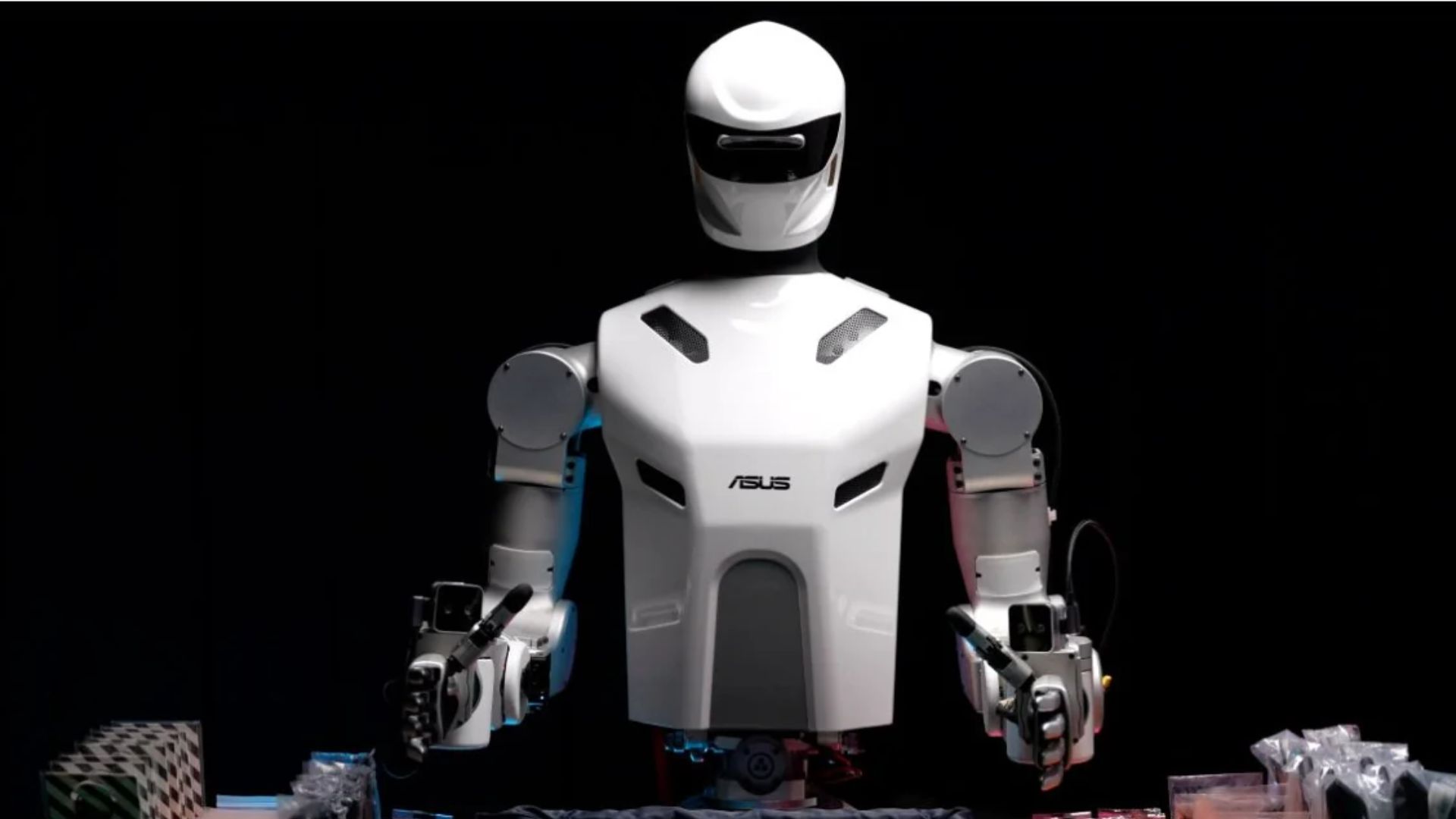
Taiwanese tech firm ASUS has introduced Gallop, a humanoid robot designed to automate complex, repetitive tasks within electronics manufacturing. According to reporting from Interesting Engineering, the robot is currently undergoing trials at a group factory where it is learning to pack motherboard accessories using a combination of human demonstrations and AI simulation.
Context from Industry Pulse
The development of Gallop represents a shift toward specialized physical AI tailored for the electronics sector. While many humanoid projects focus on general-purpose movement, ASUS is targeting the specific dexterity required for small-part assembly and packing. The modular software architecture is a strategic choice, ensuring the hardware remains viable as AI processing capabilities evolve. By focusing on the electronics manufacturing services environment first, ASUS is testing the robot in a high-volume, high-precision setting. This approach suggests that the primary value of humanoids in the near term lies in their ability to adapt to workstations originally designed for human ergonomics without requiring expensive factory floor reconfigurations.
"The architecture uses fixed interfaces between the different layers, allowing ASUS to replace AI models as improved versions become available without redesigning the entire robot."
The development of Gallop centers on achieving high-precision manipulation of small components, a task that often eludes traditional industrial robotics. As Interesting Engineering reports, the robot is currently being tested on its ability to handle 15 different motherboard accessories. Many of these items are housed in flexible transparent plastic bags, creating significant challenges for standard grippers that struggle with varying shapes and thin materials. The project aims to demonstrate that humanoid platforms can maintain consistent factory performance without needing constant human oversight.
ASUS has implemented a sophisticated training regimen that utilizes recorded data from factory workers. These employees wear head-mounted cameras to capture the exact movements required for component packing. This data is then processed through simulation software to account for environmental variations. Interesting Engineering notes that the training also involves virtual reality, where human operators use headsets and gloves to physically guide the robot through its tasks to refine its handling techniques.
To manage these complex operations, the robot utilizes a four-layer AI architecture encompassing planning, supervision, skills, and control. This modular design allows the company to upgrade individual AI models without overhauling the entire hardware system. The hardware itself features in-house developed dexterous hands equipped with tactile sensors, all powered by an internal NVIDIA Jetson AGX Thor computer. While the current prototype operates from a fixed base, a wheeled version is expected to debut within the next year.
The company has established ambitious performance benchmarks for the platform, targeting a 99.5 percent success rate. ASUS hopes the robot will eventually match the 20-second cycle time currently achieved by human workers. Interesting Engineering indicates that the project, which began in early 2026, will move toward customer pilot programs in 2027. Following these trials, the manufacturer intends to make the robot commercially available during the second half of 2028.
The Industry Pulse Bottom Line
ASUS is positioning Gallop as a tool for high-precision electronics assembly, focusing on tactile sensing and modular AI to bridge the gap between human dexterity and traditional robotic automation by 2028.