
Italian Research Team Develops Room Temperature Fluoride Exchange Membrane
As reported by Interesting Engineering, researchers at Politecnico di Milano have engineered a non-flammable polymer membrane that facilitates fluoride-ion transport at room temperature. This quasi-solid gel electrolyte addresses a critical stability hurdle, enabling experimental coin cells to maintain reversible operation over 50 cycles using abundant, lithium-free materials for potential high-density energy storage applications.
Context from Industry Pulse
The push for fluoride-ion technology coincides with a broader industrial effort to diversify energy storage beyond lithium-ion constraints. Interesting Engineering recently detailed several shifts in the energy landscape, including the activation of high-altitude solar thermal plants in China and the development of underwater drones capable of host-ship recharging. These advancements, alongside the new Italian polymer membrane, reflect an engineering focus on autonomy and resource independence. While lithium-ion remains the current standard, the theoretical 600 Wh/kg capacity of fluoride-ion systems offers a roadmap for high-endurance applications like aviation and stationary grid storage, provided researchers can translate these early 50-cycle lab successes into durable, mass-produced battery architectures.
"The researchers describe the membrane as the first fluoride-exchange membrane developed for this type of battery, drawing on the established concepts of proton-exchange and anion-exchange membranes."
Engineers in Italy have introduced a fluoride-exchange membrane designed to operate within battery electrolytes at ambient temperatures. According to Interesting Engineering, the development from Politecnico di Milano utilizes a perfluorosulfonic amide ionomer base integrated with tetraalkylammonium fluoride groups. This configuration aims to replace lithium-dependent chemistries with fluoride, an element noted for its high abundance and theoretical energy potential.
To achieve functional ionic movement, the team applied a specific mixture of dimethyl sulfoxide and 1,3-dioxolane solvents to the polymer. This combination causes the ionomer to swell, creating the necessary pathways for fluoride ions to migrate through the quasi-solid material. Interesting Engineering notes that electrochemical impedance spectroscopy verified an ionic conductivity of 1.3 millisiemens per centimeter, while molecular dynamics simulations confirmed the role of dimethyl sulfoxide as a polar swelling agent.
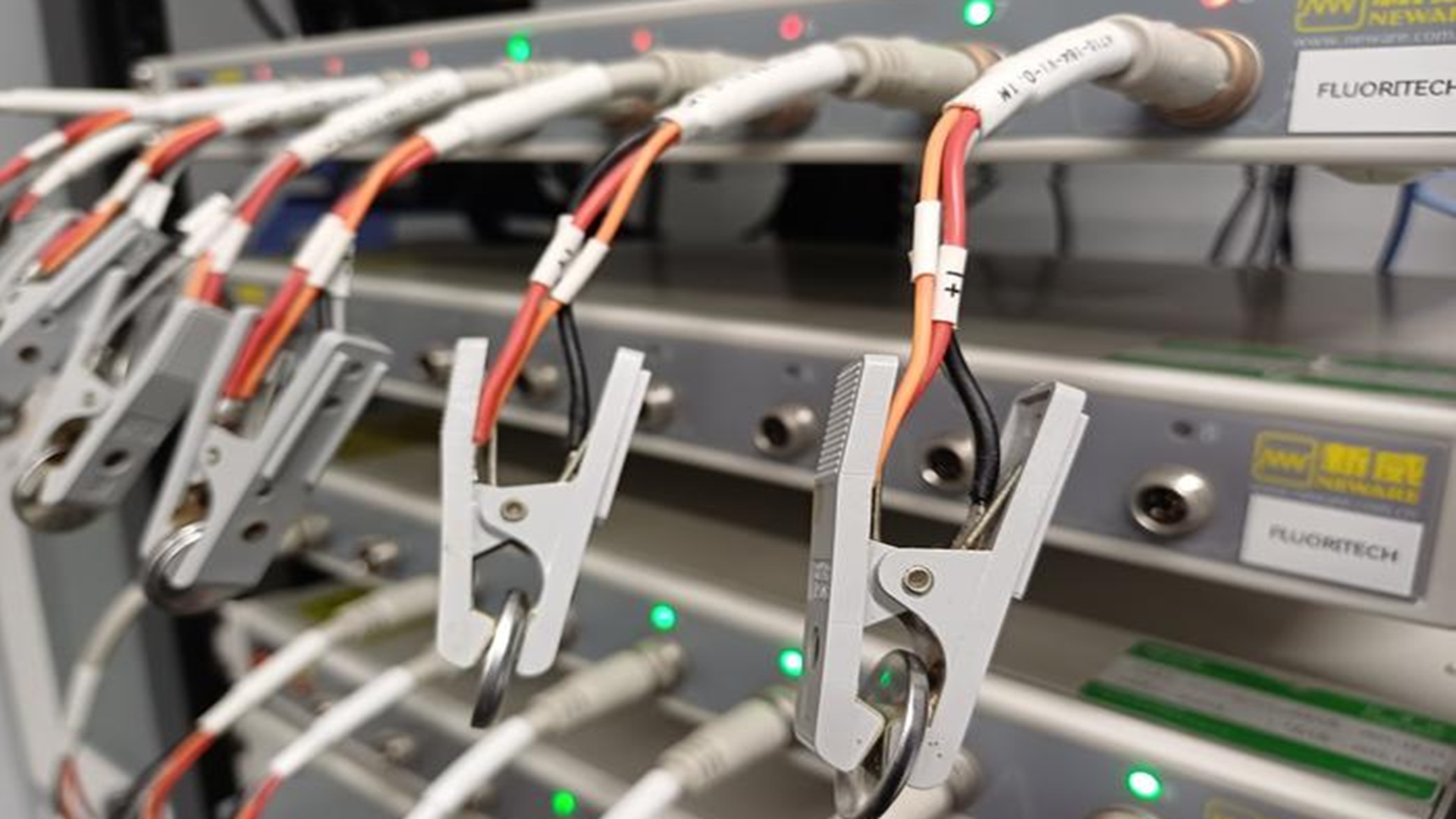
Practical validation involved testing the electrolyte within coin cells utilizing lead and lead fluoride electrodes. These experimental units successfully demonstrated reversible fluorination and defluorination during charging and discharging phases. As Interesting Engineering reports, the cells remained stable for more than 50 cycles at room temperature with a current density of 0.1C. The researchers highlighted that the quasi-solid nature of the membrane provides a non-flammable alternative to traditional liquid electrolytes, potentially increasing safety in large-scale deployments.
While the technology is still in the early stages of development, its theoretical energy density is significant. Interesting Engineering indicates that fluoride-ion systems could reach 600 watt-hours per kilogram, a substantial increase over the 150 to 250 watt-hours per kilogram typically offered by standard lithium-ion batteries. Future applications could include aviation and electric vehicles, though researchers must still address challenges regarding electrode stability and overall cycle life before commercial competition is viable.
The Industry Pulse Bottom Line
This fluoride-exchange membrane marks a pivotal shift toward room-temperature, lithium-free batteries. If the non-flammable gel can scale, it offers a path to doubling current energy densities while utilizing more abundant raw materials.