
Chinese Air Force Medical University Unveils Remote Injection Drone for Combat Casualties
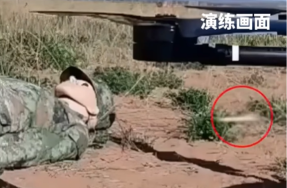
The Air Force Medical University in China has developed an unmanned aerial vehicle designed to administer intramuscular injections to wounded personnel from a distance. According to Interesting Engineering, the system utilizes projectile darts to deliver stabilizing medication in high-threat environments where traditional medical evacuation teams cannot safely operate.
Context from Industry Pulse
The integration of unmanned systems into Chinese military medicine reflects a broader push toward autonomous battlefield logistics. By deploying robotic dogs and thermal-imaging UAVs alongside injection-capable drones, the People’s Liberation Army is seeking to mitigate the risks faced by human medical personnel in high-intensity conflict zones. These developments target the specific challenges of modern urban and asymmetric warfare, where traditional evacuation routes are frequently compromised. While the primary focus remains military, the potential for these platforms to assist in civilian infrastructure failures or natural disasters suggests a dual-use strategy for remote medical technology. However, the complexity of autonomous patient handling means that human medics remain essential for the final extraction phase of rescue operations.
The newly revealed drone system represents a significant shift in how tactical medicine is delivered in contested environments. As Interesting Engineering reports, the aircraft is the first of its kind for the Chinese military, combining casualty-search capabilities with remote medical delivery. The drone can fire dart-like projectiles directly into the muscle tissue of a soldier, allowing for the administration of emergency treatments like pain relief or stabilization drugs without requiring a medic to be physically present at the site of injury.
This technology addresses the growing complexity of modern warfare where front lines are increasingly blurred. Interesting Engineering notes that recent global conflicts have shown that casualties often occur in areas that are difficult for conventional rescue teams to reach. By using autonomous or remotely piloted systems to provide initial care, the military aims to buy critical time for wounded personnel until a full medical evacuation can be safely coordinated.
Beyond the injection-capable UAV, Chinese researchers are expanding the scope of robotic assistance in the field. Interesting Engineering highlights recent exercises involving the PLA Joint Logistic Support Force, which utilized thermal-imaging drones for search operations and smaller cargo drones to ferry supplies into inaccessible zones. These drills also featured robotic dogs designed to navigate narrow passages, demonstrating a multi-platform approach to casualty management.
Despite these advancements, the transition to full robotic evacuation remains in experimental stages. Interesting Engineering points out that engineering hurdles persist regarding the physical retrieval and loading of injured soldiers onto unmanned platforms. Currently, the system functions primarily as a bridge to stabilize patients before human intervention is possible. Potential future applications for this technology include civilian disaster response, such as providing aid during floods or landslides where ground access is blocked.
The Industry Pulse Bottom Line
China's dart-firing drone marks a pivot toward remote stabilization in tactical medicine, aiming to reduce medic exposure while addressing the logistical difficulties of providing immediate care in non-linear combat environments or disaster zones.