
Fraunhofer 3D-Printed Polymer Hinges Reduce Satellite Weight by 93 Percent
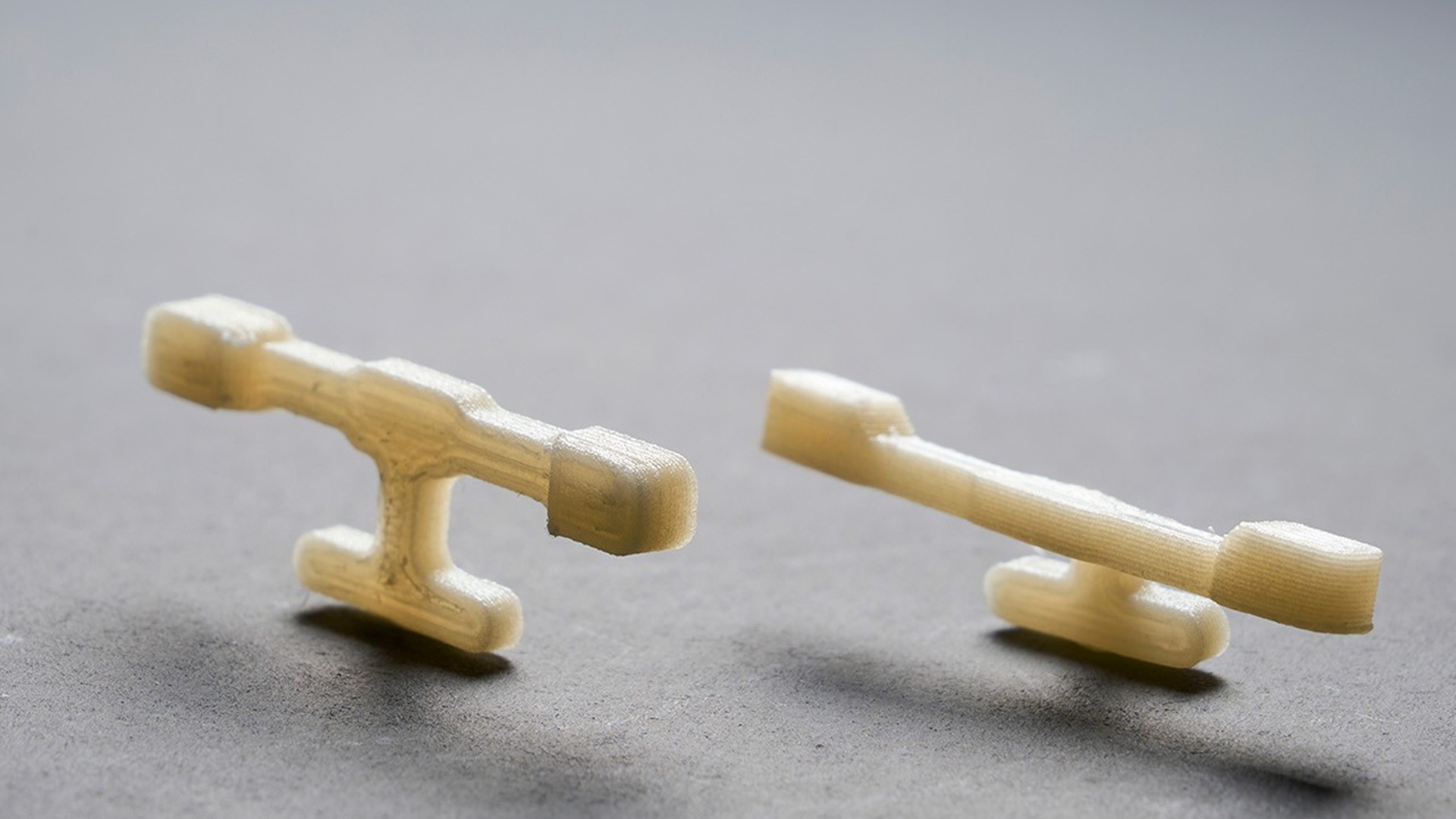
Researchers at the Fraunhofer Institute for Applied Polymer Research have designed 3D-printed hinges for satellite solar panels that weigh just 1.4 grams. According to reporting by Interesting Engineering, these shape-memory polymer components eliminate heavy mechanical hardware by using thermal triggers to unfold equipment in orbit, potentially transforming deployment efficiency for small spacecraft.
Context from Industry Pulse
The AM-SPACE project represents a shift toward functional materials in aerospace manufacturing, moving away from complex mechanical assemblies. By utilizing 4D printing to embed programmed responses directly into polymer structures, researchers are addressing the critical constraints of launch mass and production speed. The participation of German Orbital Systems suggests a transition from laboratory validation toward commercial orbital testing. If successful in space, these shape-memory polymers could become standard for small satellite antennas and solar arrays. This development aligns with broader trends in additive manufacturing where material properties, such as thermal shape recovery, are leveraged to replace multi-part mechanical systems, thereby reducing potential points of failure in unmanned spacecraft.
"The approach could reduce the need for conventional mechanical actuation systems, which add weight and complexity to satellite deployment structures."
The development stems from the Additive Manufacturing of Solar Panels for space applications project, a collaboration involving multiple German research institutes and industry partners. These components utilize shape-memory polymers that can be programmed to hold a temporary state and return to an original form when exposed to heat. By replacing traditional mechanical actuation systems with these 1.4-gram hinges, engineers reduced the weight of the deployment assembly by approximately 93 percent compared to standard hardware.
Interesting Engineering notes that the deployment process is activated by a heating element that raises the temperature of the hinge from roughly 73 degrees to 284 degrees Fahrenheit. In laboratory settings, this thermal trigger allows the folded solar panels to unfurl in about 60 seconds. Beyond the hinges, the team produced hold-down and release mechanisms designed to secure satellite parts during the high-stress launch phase before releasing them once the vehicle reaches its destination.
Manufacturing efficiency is a core advantage of this approach. Standard 3D printing for a hinge takes 15 minutes, with an additional 30 minutes required to program the shape. However, the researchers also utilized a 4D-printing method that integrates the shape-changing response directly into the fabrication phase. This refined process allowed the team to manufacture release mechanisms in only five minutes, significantly accelerating the production cycle for specialized aerospace components.
While the technology has successfully navigated cleanroom testing, thermal cycling, and vacuum-chamber experiments, it has not yet faced the rigors of space. Interesting Engineering reports that the materials have passed outgassing tests required for aerospace use, but long-term reliability in orbit remains to be proven. Future efforts will likely focus on an in-orbit demonstration to evaluate how these polymers handle the extreme conditions of the space environment over extended periods.
The Industry Pulse Bottom Line
The transition to 3D-printed shape-memory hinges offers a massive reduction in satellite mass. By replacing mechanical actuators with thermally triggered polymers, manufacturers can decrease deployment hardware weight by 93 percent while accelerating production.