
Mach 2 Rocket Experiment Captures High-Altitude Parachute Deployment
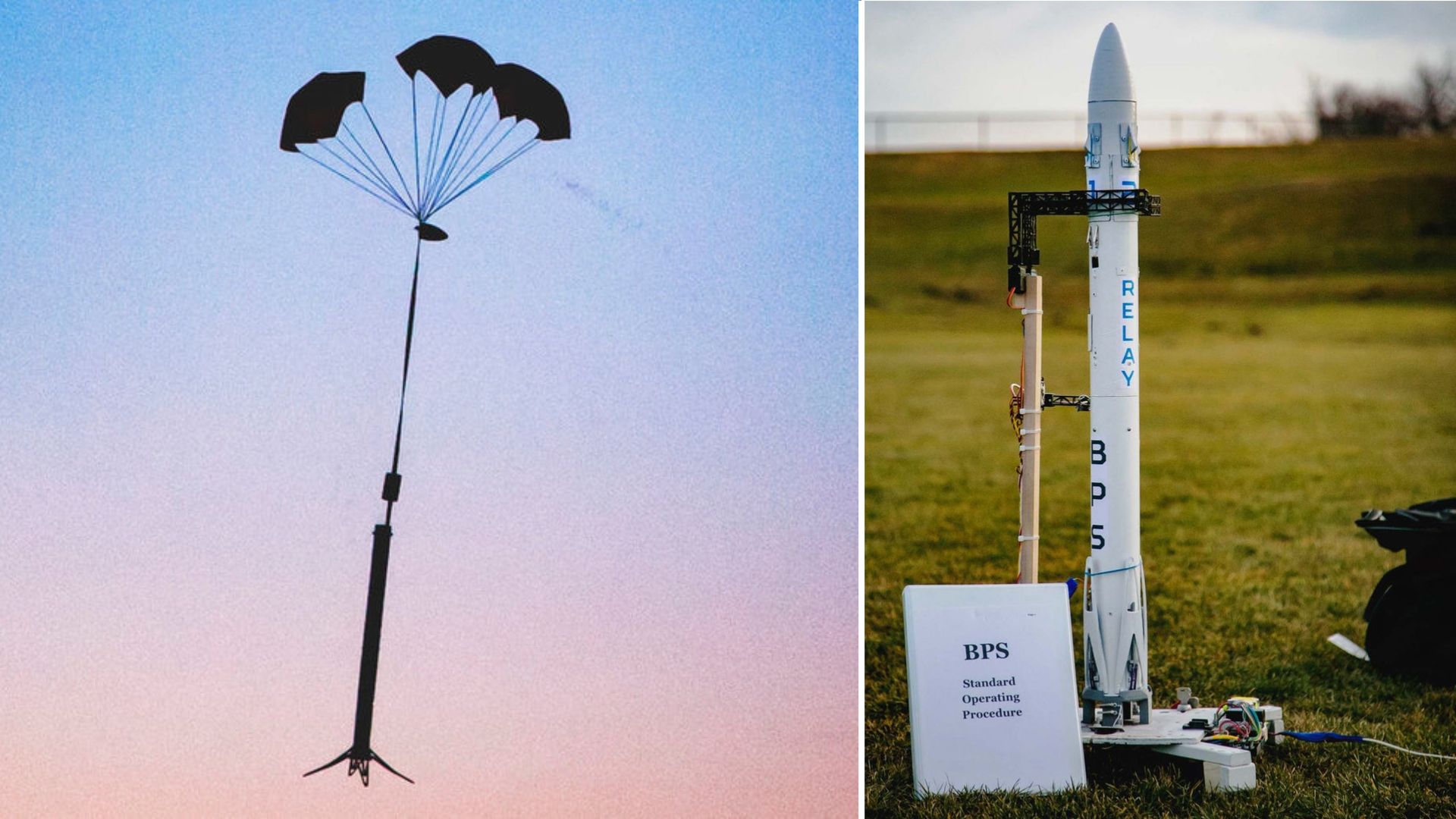
Joe Barnard, a self-taught rocketry specialist, recently launched a custom-built vehicle to nearly 30,000 feet near Randsburg, California. As Interesting Engineering reports, the mission successfully utilized a stabilized camera pod to film the vehicle at supersonic speeds, though a computer error led to a premature emergency deployment that shredded the recovery parachutes.
Context from Industry Pulse
The success of the camera pod stabilization marks a notable achievement in amateur rocketry, where capturing external views at supersonic speeds is rarely accomplished due to extreme forces. The use of carbon fiber and multi-layered fiberglass reflects a growing trend of utilizing industrial-grade materials in private experiments to survive high-impulse launches. However, the failure of the Fluctus system highlights the ongoing challenges of sensor calibration in high-velocity environments. Rapid air pressure changes can easily mimic crash conditions, demonstrating that even reinforced hardware remains vulnerable to software logic errors during the volatile transition to supersonic flight.
"The spinning gyroscope helped prevent it from tumbling, allowing it to keep the camera aimed at the rocket and capture smooth footage of the parachutes deploying."
The experimental flight relied on a highly customized airframe designed to withstand the extreme pressures of Mach 2 travel. Interesting Engineering notes that the rocket featured an upper section reinforced with nine layers of fiberglass to maintain structural integrity despite a large opening for the camera housing. The lower booster utilized a carbon fiber tube and a high-impulse engine capable of producing 2300 newtons of average thrust. Barnard also formulated a custom propellant mixture to power the ascent.
To capture the desired footage, Barnard modified a GoPro Hero 12 by dismantling the unit, extending its sensor cables, and installing custom firmware to record at 240 frames per second. This hardware was housed in a 3D-printed pod equipped with a motorized gyroscope and a spinning wheel. These stabilization components were essential for maintaining the camera's orientation toward the rocket after ejection, preventing the pod from tumbling in the thin upper atmosphere.
Flight operations were managed by an onboard computer system dubbed Fluctus. This system was responsible for monitoring altitude, speed, and pressure to time the ejection of the camera pod and the deployment of the recovery systems. According to Interesting Engineering, the pod successfully separated and recorded aerial footage before being located 350 meters from the launch site via a GPS tracker and a specialized streamer recovery system known as Repris.
Despite the successful recording, the mission encountered a significant technical failure during the high-speed phase. The Fluctus computer misinterpreted fluctuations in air pressure as a catastrophic failure, triggering an emergency apogee sequence while the rocket was still traveling at 700 mph. The resulting aerodynamic forces were too intense for the recovery hardware, causing the parachutes to be torn apart instantly. While the landing footage was lost, the pod remained intact and preserved the supersonic flight data.
The Industry Pulse Bottom Line
This mission demonstrates that while gyroscopic stabilization can provide unprecedented high-altitude visuals, the reliability of flight-control software remains the primary hurdle for successful vehicle recovery in supersonic amateur rocketry.