
Artificial Intelligence Targets ROI Through Design for Manufacturing Optimization
According to Engineering.com, only five percent of custom AI pilots reach full production at large manufacturing firms. Industry experts suggest that focusing on Design for Manufacturing provides a high-ROI entry point for automation because it leverages existing historical data and integrates into established review workflows without requiring massive changes to engineering culture.
Context from Industry Pulse
The push for AI-driven manufacturing efficiency arrives as the broader engineering sector explores specialized materials and automated robotics. Recent developments include MIT scientists developing impact-resistant materials inspired by natural structures and the creation of elephant trunk-inspired robots that work in teams. While these innovations focus on physical performance, the move toward automated DFM addresses the underlying logistical and economic bottlenecks in production. As the industry sees increased output through AI-generated code and designs, the speed of hardware review must evolve to prevent experts from becoming the primary constraint in global supply chains.
"One global manufacturer has made DFM one of its top five priorities. Another is investing seven figures in systemizing it with AI."
Large manufacturers are increasingly looking toward Design for Manufacturing as a primary entry point for artificial intelligence integration. As Engineering.com reports, many custom AI pilots fail due to misaligned scope and the difficulty of scaling solutions across thousands of employees. By focusing specifically on DFM, organizations can address a high-value problem that utilizes decades of existing internal standards and past design data that otherwise remains siloed within individual business units.
The financial incentives for automating design checks are significant at enterprise volumes. Engineering.com notes that reducing the bill of materials for a single mass-produced part by just one dollar can result in millions in savings. Beyond material costs, poor design choices often lead to expensive tooling, increased scrap rates, and extended lead times. These issues frequently worsen in global organizations where manual checks across multiple plants are difficult to enforce consistently.
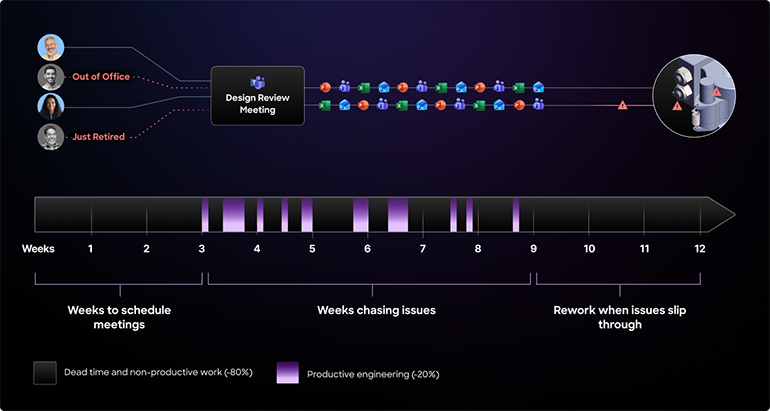
Practical implementation often begins with narrow, high-impact applications. For example, an automotive supplier recently focused on guidelines for injection molded parts, converting written rules into automated checks performed directly on 3D models. This allows designers to catch errors while designs are still flexible, rather than waiting for an expert review bottleneck that typically occurs later in the development cycle. Engineering.com indicates that these automated checks are becoming essential as AI-generated designs increase the volume of hardware that requires human or systemized review.
Traditional methods like checklists and manual oversight struggle to scale alongside modern production demands. Experts who can conduct comprehensive reviews are a limited resource, and feedback often arrives too late to prevent production kickoff issues. By systemizing these rules through AI, manufacturers can ensure that every design adheres to company standards regardless of which team or plant is responsible for the project.
The Industry Pulse Bottom Line
Manufacturers should prioritize AI projects that automate existing rule-based checks. By focusing on DFM, firms can secure immediate financial returns and reduce production errors without disrupting core engineering workflows.