
Farsoon Debuts Modular Multi-Laser PBF System for Large-Scale Polymer Production
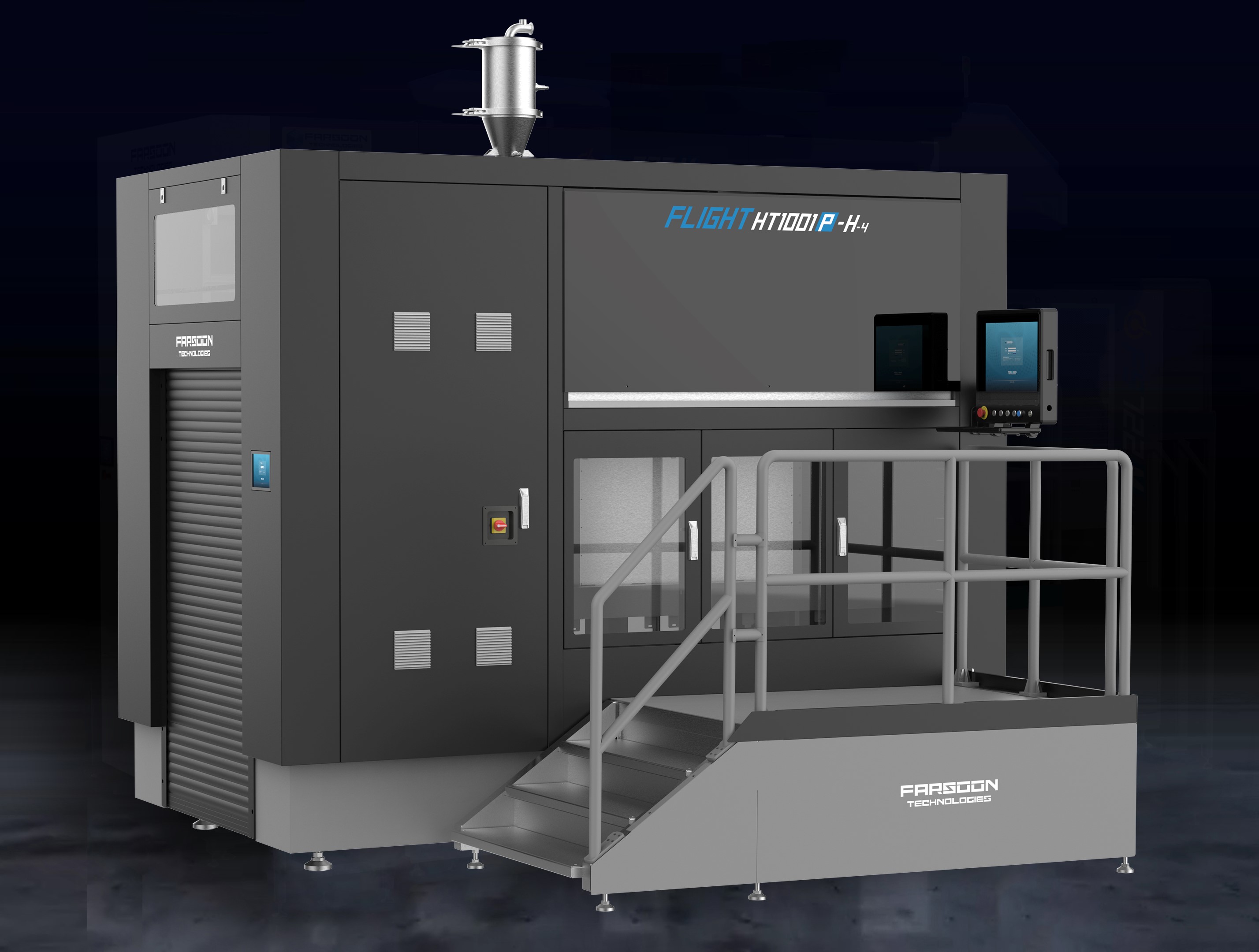
Farsoon Technologies has launched the Flight HT1002P-CAMS, a large-format polymer powder bed fusion platform designed for industrial series production. According to reporting from Engineering.com, the system utilizes four 300 W fiber lasers and a modular architecture to streamline additive manufacturing workflows for automotive ducts, interior trim, and other industrial components.
Context from Industry Pulse
The introduction of the Flight HT1002P-CAMS occurs as industrial sectors seek to move additive manufacturing from prototyping to high-volume production. By integrating four fiber lasers, Farsoon aims to surpass the throughput limits of traditional CO2-based polymer systems. The modular CAMS architecture addresses a common bottleneck in additive workflows by decoupling the printing process from cooling and part extraction. This aligns with broader engineering trends where large-format capacity is paired with automation to improve equipment utilization. The inclusion of specialized build modes highlights a growing requirement for process certification in sectors like automotive and aerospace, where part consolidation must be balanced against rigorous quality standards.
"The platform combines a 325-liter build volume, four 300 W fiber lasers and thermal management features with a modular Continuous Additive Manufacturing Solution (CAMS) concept."
The Flight HT1002P-CAMS represents a significant expansion of Farsoon’s large-format polymer additive manufacturing capabilities. As Engineering.com reports, this new platform features a build envelope of 1,000 by 500 by 650 millimeters, offering a total volume of 325 liters. This capacity allows for the fabrication of long, single-piece components or high-density batch production. The system is an evolution of the company’s previous 1001 and 1001-H platforms, incorporating feedback from users focused on series-production environments.
To drive throughput, the system employs four 300 W fiber lasers capable of scanning speeds reaching 20 meters per second. Engineering.com notes that the platform offers two distinct operating modes to balance speed and precision. Production Mode utilizes overlapping laser fields to maximize output, while Premium Mode restricts scanning to a single laser within a specific working zone for applications requiring strict certification and tighter process control. This versatility enables manufacturers to tailor the build process to specific quality requirements.
Thermal management is a critical focus for maintaining consistency across the large build area. According to Engineering.com, the platform reaches a maximum chamber temperature of 220 degrees Celsius. It utilizes a multi-zone heating architecture alongside infrared thermal monitoring to ensure temperature uniformity. These features, combined with dynamic process adjustments and specialized cooling for optical assemblies, are designed to support repeatable results throughout extended production cycles.
The system’s modular Continuous Additive Manufacturing Solution, or CAMS, architecture is intended to minimize equipment idle time. Engineering.com explains that the design features exchangeable build cartridges and a bidirectional conveyor system for automated loading and extraction. By separating preheating, building, cooling, and breakout stations, the workflow allows printing to continue while finished parts are processed. Additional automation options include closed-loop powder recycling and integration with manufacturing execution systems to further scale industrial operations.
The Industry Pulse Bottom Line
Farsoon’s modular PBF platform addresses industrial scaling challenges by combining large-format build volumes with multi-laser throughput and automated workflow options to reduce machine downtime in series production.