
AMD EPYC Processors Selected to Power Google Cloud TPU 8tx Infrastructure
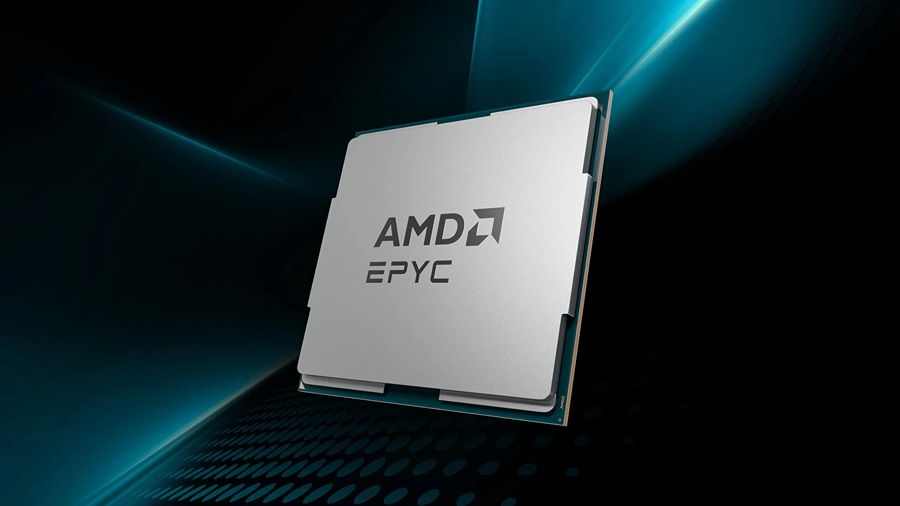
According to Engineering.com, AMD and Google Cloud have expanded their partnership to launch the TPU 8tx, the first cloud Tensor Processing Unit system featuring hardware-enforced confidential computing. Utilizing 5th Gen AMD EPYC processors, the platform allows organizations to execute sensitive artificial intelligence workloads at scale while maintaining rigorous data protection through hardware-rooted security.
Context from Industry Pulse
The collaboration between AMD and Google Cloud addresses a growing industry demand for secure processing environments as enterprises transition sensitive AI workloads to the cloud. By integrating 5th Gen EPYC processors with TPU 8tx systems, the companies are tackling the vulnerability of data while in use—a stage often left exposed in traditional computing models. This development utilizes AMD Infinity Guard and Secure Encrypted Virtualization to create a trusted execution environment that spans both the CPU and specialized accelerators. Such hardware-rooted security is essential for hyperscalers and frontier labs that require x86 software compatibility while deploying custom silicon or GPUs for high-performance reasoning and agentic AI tasks.
The integration of 5th Gen AMD EPYC processors into Google Cloud infrastructure marks a shift toward more secure AI deployment. Engineering.com reports that these processors manage critical tasks including workload orchestration, data preparation, and high-throughput communication with TPU accelerators. By utilizing AMD Secure Encrypted Virtualization capabilities, the system extends protection beyond the central processing unit to include connected accelerators. This ensures that sensitive information remains isolated during execution and transit.
Hardware-level security is becoming a priority for enterprises handling reasoning and agentic AI applications. As Engineering.com explains, the system verifies the identity and security configuration of an accelerator before permitting access to protected memory. This process keeps model weights, customer prompts, and intermediate data encrypted within the memory and during movement between the host and the accelerators. This architecture is designed to support inference, fine-tuning, and reinforcement learning workloads without compromising the integrity of the underlying data.
The deployment reinforces the role of x86-compatible processors in specialized AI environments. Engineering.com notes that AMD EPYC CPUs currently serve as the host processing foundation for more than ten major hyperscalers and AI labs. These processors are used across various systems featuring GPUs and custom application-specific integrated circuits. Their primary function in these setups is to coordinate complex workloads and manage communication protocols between the main system and specialized hardware accelerators.
This latest launch builds upon a long-term technical collaboration between AMD and Google Cloud that spans several processor generations. Engineering.com highlights that the two companies have previously partnered on a range of virtual machines for compute-intensive and storage-intensive tasks. Additionally, Google security experts have conducted deep reviews of AMD security processor firmware at the corporate level to ensure robust protection across the broader Google Cloud confidential computing portfolio, which includes managed services for Apache Spark and Dataflow.
The Industry Pulse Bottom Line
The deployment of 5th Gen AMD EPYC processors in Google Cloud TPU 8tx systems establishes a new benchmark for confidential AI, ensuring that sensitive model data and prompts remain encrypted throughout the entire hardware execution cycle.