
Tatiana Bilbao Estudio Debuts Eroding Rammed-Earth Columns at Art Omi
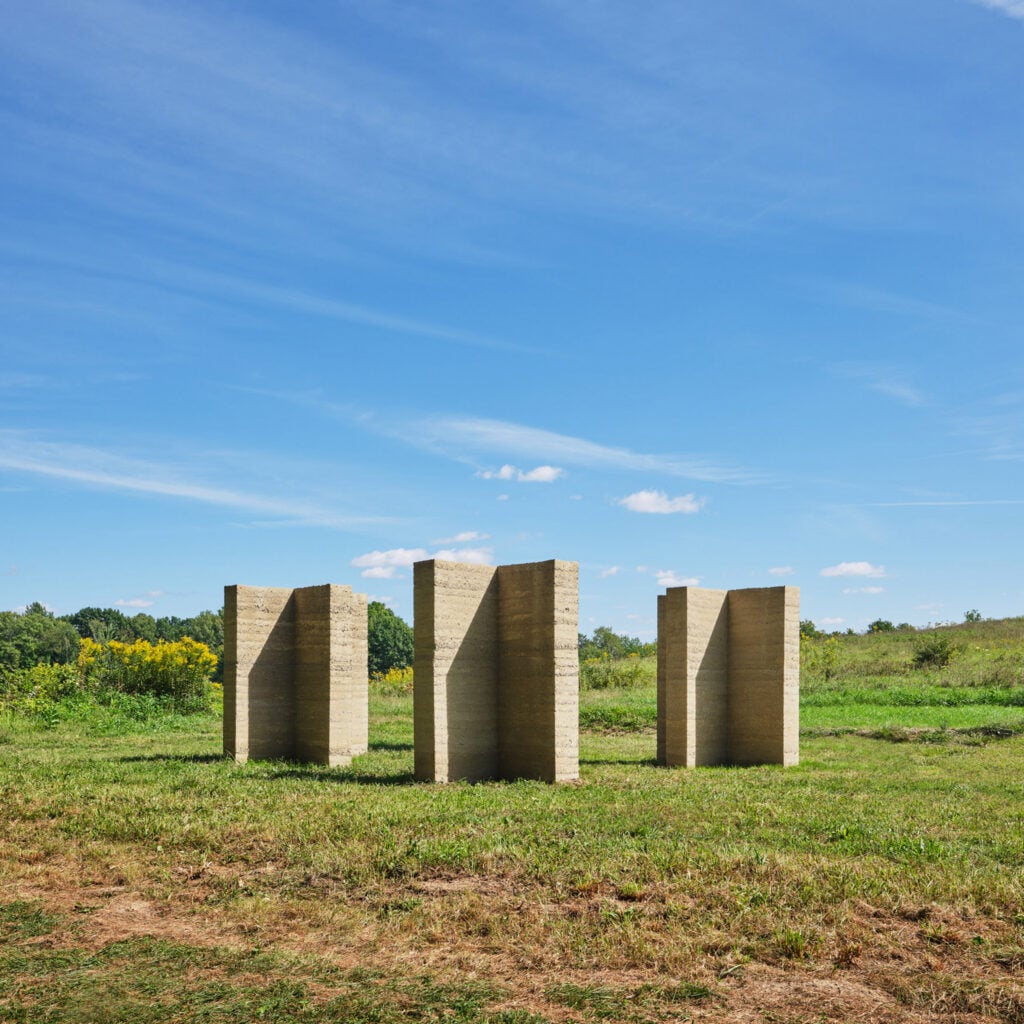
As Dezeen reports, Mexico-based Tatiana Bilbao Estudio has installed a site-specific work titled Borrowed Earth at the Art Omi sculpture park in Ghent, New York. The project utilizes locally sourced soil to form cruciform structures that are intentionally designed to decay and return to the landscape over an estimated two-year period.
Context from Industry Pulse
The Borrowed Earth installation by Tatiana Bilbao Estudio highlights a growing interest in ephemeral architecture and local materiality within the creative sector. By utilizing soil from the immediate Hudson Valley vicinity, the project minimizes the carbon footprint associated with material transport while engaging with the specific geology of the site. This approach follows other recent experimental works at Art Omi, such as aluminum sculptures by MOS Architects and timber pavilions by Young Projects. Bilbao’s focus on the life cycle of the installation, rather than its permanence, reflects a shift toward circular design principles where the eventual disappearance of a structure is as significant as its initial construction.
"It is definitely soft. It crumbles. It's lovely and tactile in that when you touch it, you really feel that sense that erosion can happen pretty easily."
The installation at the 120-acre Hudson Valley campus consists of four large columns standing 7.5 feet tall arranged around a smaller central element that functions as a seating area. According to Dezeen, the design utilizes a repeatable cruciform unit that provides structural stability for the medium. While the project initially explored different geometries, the team settled on the cross shape to address the specific engineering requirements of working with compacted earth.
Materiality was a primary driver for the project, which was constructed on-site using soil harvested from a nearby construction area. Dezeen reports that the studio collaborated with a specialized consultant from Mexico to refine the mixture, which combined the local earth with sand and lime. This composition was then manually packed into wooden formwork to build the structures layer by layer. The resulting pillars feature a tactile surface that invites interaction despite their eventual fragility.
Curators at Art Omi described the project to Dezeen as a controlled experiment in environmental erosion. Because the installation lacks permanent protective coatings, it is susceptible to the region's weather patterns, which will dictate the speed of its decomposition. This temporary nature aligns with the studio's broader interest in materials that reflect the passage of time and the relationship between architecture and its immediate surroundings.
The project joins a diverse collection of outdoor works at the New York arts center, which has recently hosted experimental structures by MOS Architects and Young Projects. Dezeen notes that while the columns feel stable to the touch, they are intended to crumble gradually. This degradation process is a core component of the work, emphasizing the temporary loan of natural resources for artistic expression before they reintegrate with the soil.
The Industry Pulse Bottom Line
Tatiana Bilbao Estudio’s latest work demonstrates how architects can utilize traditional rammed-earth techniques to create modern, site-specific installations that challenge the industry's standard focus on permanence and durability in favor of environmental integration.