
Houston Deploys Modular Cooling Toolkit to Enhance Pedestrian Streetscapes
Landscape architecture studio SWA has introduced a modular infrastructure system in Houston designed to lower ground temperatures and improve walkability. As Dezeen reports, the Cool and Connected Corridors project utilizes shade structures, lighting, and drought-tolerant planting to retrofit urban sidewalks ahead of the 2026 FIFA World Cup.
Context from Industry Pulse
The Houston initiative aligns with a growing urbanist focus on climate-responsive design and pedestrianization. While cities like London pursue the full pedestrianization of major thoroughfares such as Oxford Street, Houston’s approach utilizes modular retrofitting to adapt existing infrastructure. The use of mesh pavilions and drought-tolerant landscaping addresses the specific thermal challenges of the Texas climate. By prioritizing cooling infrastructure and improved lighting, the city is preparing for high-traffic international events like the 2026 FIFA World Cup. This modular toolkit strategy allows for rapid deployment and scalability across various downtown districts, providing a flexible model for other heat-prone urban centers looking to improve street-level comfort.
The new urban intervention serves as the initial phase of Houston’s Public Realm Action Plan. According to Dezeen, the system is designed to be highly adaptable, allowing architectural elements to be integrated into diverse existing sidewalk conditions. The first installation covers a 15-block area on Texas Avenue, featuring a combination of aesthetic and functional components aimed at mitigating the city’s heat.
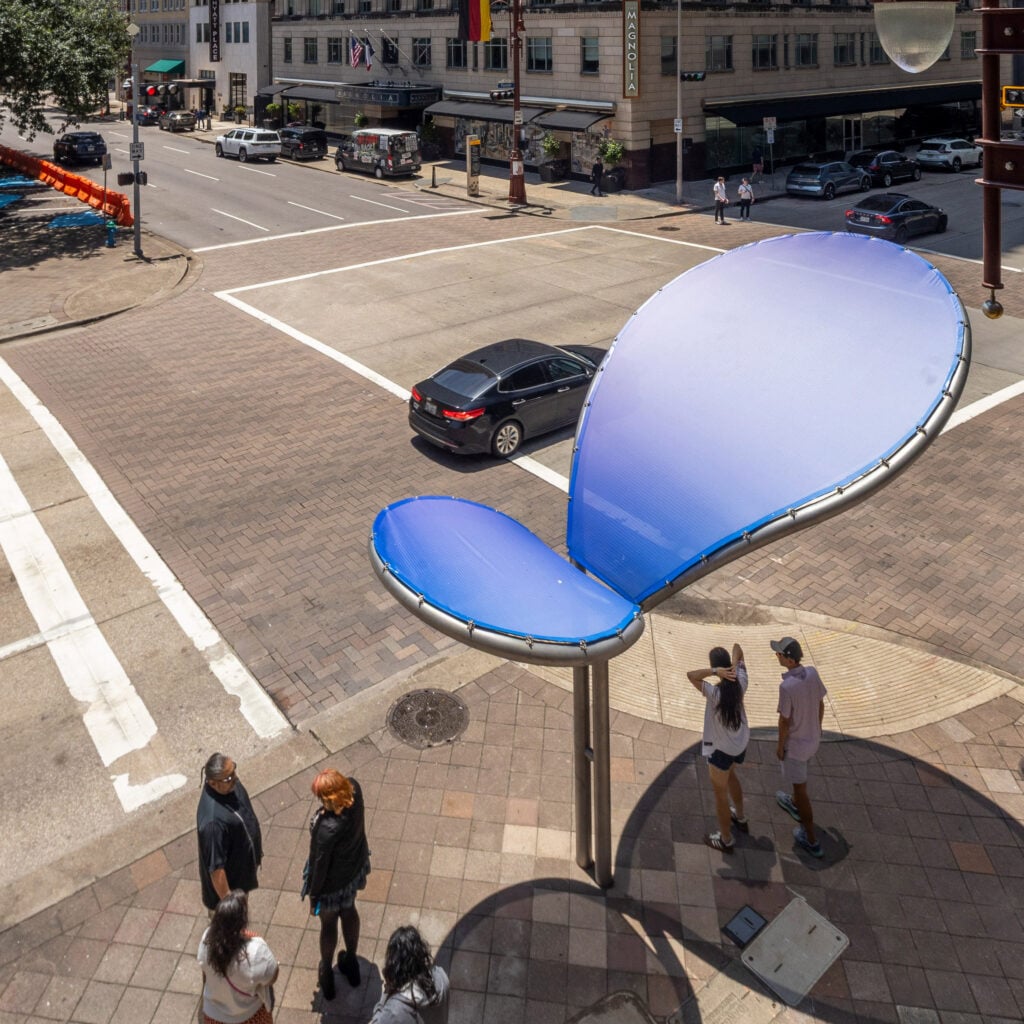
Central to the design are petal-shaped cooling pavilions created by Höweler and Yoon. These structures utilize bead-blasted stainless steel and mesh membranes in varying shades of blue, green, and purple. As Dezeen notes, these pavilions can stand alone or be grouped into clusters to provide significant shade at street corners. Thermal readings reported by SWA indicate that ground surfaces beneath these structures have seen temperature drops averaging 10 degrees Fahrenheit, with some areas cooling by as much as 30 degrees.
Safety and navigation are addressed through a specialized lighting system that draws inspiration from a 2023 municipal master plan. Dezeen reports that globe and line-form lights descend from the tree canopy to illuminate the streetscape at night. The toolkit also includes modular planting beds filled with pollinator-supportive and drought-resistant vegetation, alongside new wayfinding elements and replacement trees to bolster the local ecosystem.
Following the successful rollout on Texas Avenue, the city intends to expand the modular system to other downtown corridors, including McKinney and Preston Streets. This initiative reflects a broader effort to transform Houston’s urban core into a more comfortable and accessible environment for residents and visitors alike. The project demonstrates how standardized, cost-efficient components can be deployed to solve complex environmental challenges in a dense city setting.
The Industry Pulse Bottom Line
SWA’s modular system proves that targeted, scalable architectural interventions can significantly reduce urban heat and improve pedestrian safety, offering a cost-effective template for cities facing increasing temperatures and upcoming global events.