
Oxman Studio Trials Bacterial Pigmentation for Synthetic Biology Textile Design
Designer Neri Oxman has unveiled a prototype textile dyeing method that utilizes living organisms to color 3D-knitted silk. According to Dezeen, the project investigates the intersection of material systems and synthetic biology, offering a biological alternative to traditional chemical processes that require significant resources to produce fabric colors.
Context from Industry Pulse
Neri Oxman, who established a New York studio in 2024, continues to push the boundaries of material ecology through computational and biological experimentation. This latest textile research follows the studio's recent work with AI-designed architecture and high-tech material systems. While Oxman is a prominent figure in the design world, her career has seen both innovation and scrutiny, including past allegations regarding her academic work at the Massachusetts Institute of Technology. The Vigils project aligns with a broader industry interest in bio-fabrication, as seen in concurrent explorations of how natural organisms like worms and bees might reshape architectural and material standards.
The experimental project, titled Vigils, utilizes a specific strain of Escherichia coli to generate pigments directly on silk fabric. As Dezeen reports, the process begins by treating Tussah silk with chemicals that are sensitive to bacteria, effectively turning the textile into a bioreactor. Designers then apply a spray solution containing the BL21 strain of E. coli, which is a common tool in biotechnology research. The density and location of the spray determine the eventual growth patterns of the culture.
Over a 24-hour incubation period, the bacteria multiply into billions of cells across the fabric. As the culture grows, it leaves behind amino acids that tint the silk with shades of pink and indigo. Once the desired aesthetic is achieved, the fabric is washed and dried to remove the living organisms, though the resulting pigments remain embedded in the material. This method allows the biological activity of the bacteria to function as an active component of the design process itself.
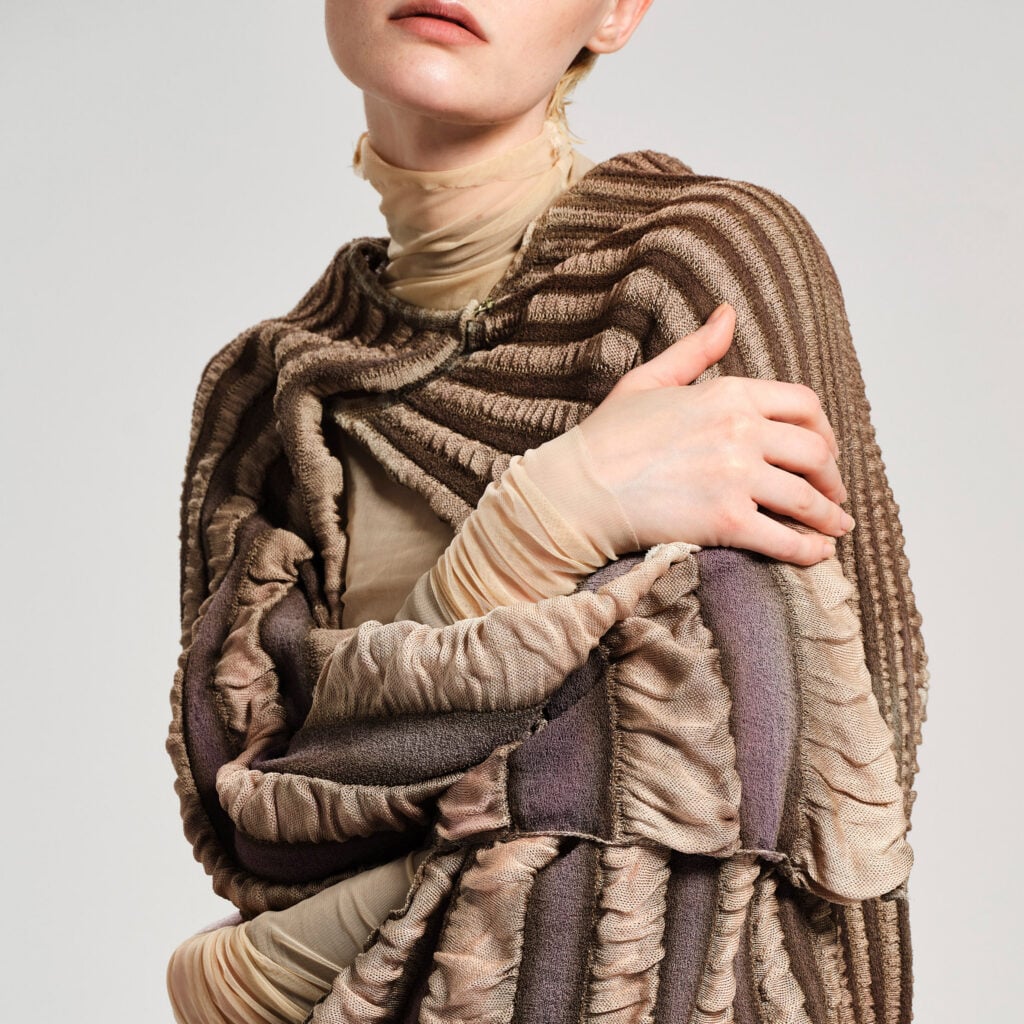
To showcase the potential of this technique, the Oxman lab produced a series of four capes featuring the muted colors and unique variations created by the bacteria. Dezeen notes that the resulting patterns are distinct from those produced by conventional dyeing methods because they reflect the natural growth path of the living culture. The studio intends for these pieces to demonstrate a new form of material expression where the process of creation is visible in the final aesthetic.
While the project presents a possible future for more sustainable manufacturing, it remains in the prototype phase. According to Dezeen, the studio has not yet conducted an extensive Life Cycle Assessment to fully measure the environmental impact of the process. Rather than providing a ready-to-use industrial solution, the initiative serves as a research-driven exploration into how synthetic biology can be integrated into material systems.
The Industry Pulse Bottom Line
Neri Oxman's Vigils project demonstrates that bacterial cultures can serve as both a dye and a design tool, potentially reducing the resource intensity of textile manufacturing through synthetic biology.