
MVRDV and Escofet Launch Modular Barcode Collection to Challenge Rigid Urban Design
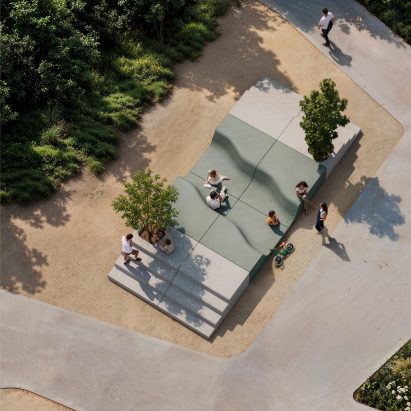
Architecture firm MVRDV has partnered with Spanish manufacturer Escofet to release a series of concrete modules intended to disrupt standard public seating layouts. According to Dezeen, the Barcode collection uses three distinct shapes—slopes, steps, and tables—to allow urban planners to assemble custom social hubs in eight different colors.
Context from Industry Pulse
The Barcode collection reflects a broader design shift toward adaptive urbanism, where functional infrastructure doubles as a site for social interaction. While recent high-profile projects like the Neom Stadium have faced delays, smaller-scale interventions like these modular blocks or the nature-focused residential designs seen in Vietnam suggest a pivot toward localized, human-centric environments. This movement mirrors a trend in creative spaces where traditional functions are being reimagined, similar to the transformation of historic Parisian nightlife venues into luxury hospitality. Designers should watch how these modular systems handle the wear of public use, as they represent a growing demand for infrastructure that moves beyond the static, one-size-fits-all bench.
The Industry Pulse Bottom Line
By moving away from fixed seating, MVRDV is handing design agency back to the public. For developers, this modularity offers a cost-effective way to create high-impact social spaces without the need for bespoke, site-specific permanent structures.