
Licht Kunst Licht Revitalizes Cologne Cathedral with Integrated LED Facade Lighting
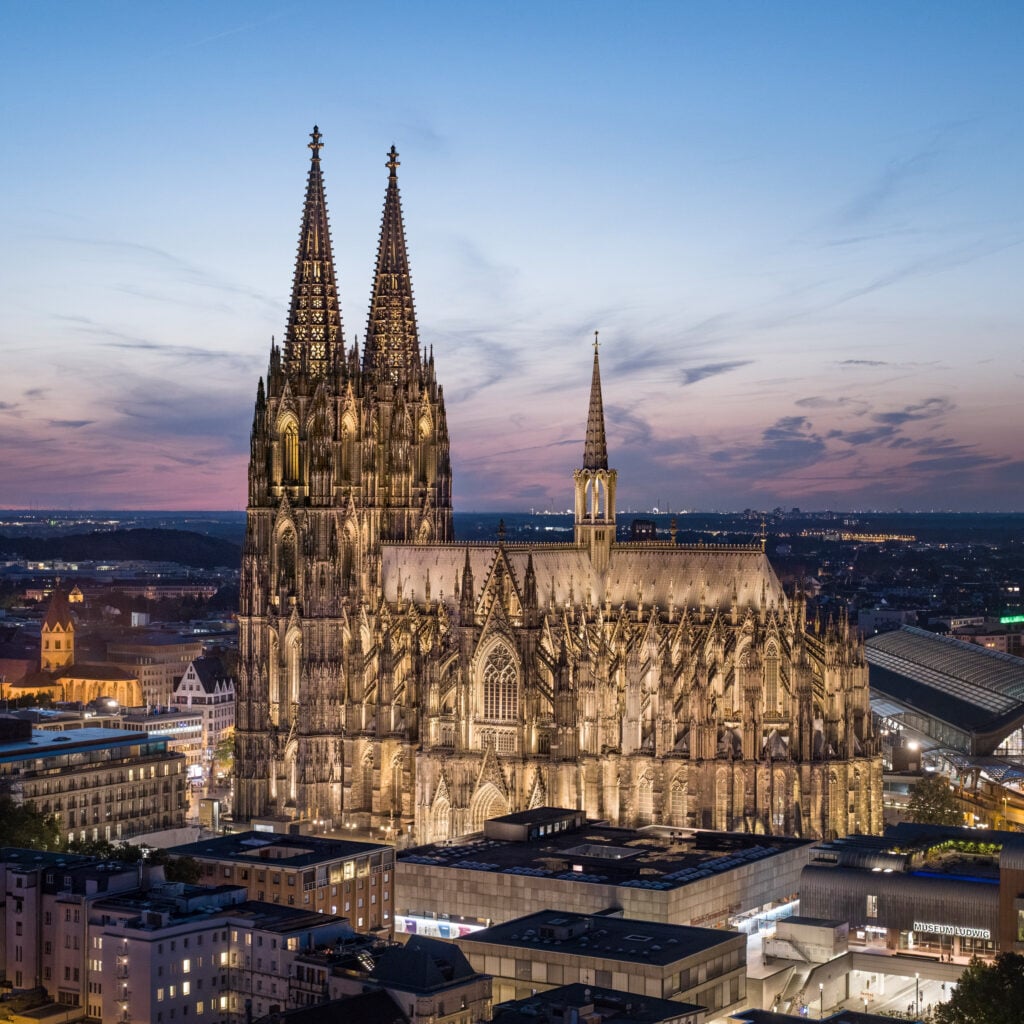
Lighting design firm Licht Kunst Licht has installed a new illumination system for the Cologne Cathedral, as Dezeen reports. The project replaces outdated building-mounted floodlights with more than 700 energy-efficient LED fixtures. Using custom clamps to avoid drilling into the historic stonework, the studio achieved a sculptural nighttime appearance while reducing energy consumption by 80 per cent.
Context from Industry Pulse
Cologne Cathedral represents a unique architectural timeline, with construction spanning from 1248 to 1880. As a UNESCO World Heritage site and the seat of the Archbishop of Cologne, any modern intervention must balance visibility with preservation. This project reflects a shift in heritage lighting from external floodlighting to integrated, sculptural systems. By utilizing bespoke clamps rather than invasive drilling, the designers addressed the tension between modern LED infrastructure and 13th-century masonry. The project highlights a growing industry focus on ecological responsibility, specifically regarding long-wave light to protect nocturnal wildlife and massive energy reductions in public monuments.
The restoration workshop Dombauhütte Köln and utility provider RheinEnergie partnered with the design studio to overhaul the lighting for Germany's most popular landmark. According to Dezeen, the previous lighting scheme relied on 1,000-watt metal halide lamps located on surrounding structures. This older approach consumed significant power and produced a flat, neutral white glow that lacked architectural depth. The new design focuses on a light follows architecture philosophy, emphasizing the verticality and intricate Gothic features of the world's tallest cathedral.
To preserve the delicate masonry, the team developed bespoke multifunctional poles and stainless-steel pylons that attach via specialized clamps. This installation method ensures no holes were drilled into the UNESCO World Heritage site, allowing the entire system to be dismantled without leaving permanent marks. These fixtures are designed to be nearly imperceptible during daylight hours, blending into the facade while providing dimmable, adaptable lighting at night. The system can be adjusted for specific seasons, events, or ecological requirements, such as minimizing disruption to local nocturnal species.
Technical precision was a major hurdle during development because the historical structure lacked comprehensive digital plans. As Dezeen notes, the design team spent years conducting on-site empirical tests to determine the best angles and optics for the LEDs. By moving the majority of light sources directly onto the building, the studio reduced light scatter. Previously, 80 per cent of the illumination came from distant fixtures, whereas that figure has now dropped to just 10 per cent.
The project has received significant industry recognition, winning a public vote for lighting design of the year. It is currently under consideration for a major award by a jury that includes prominent figures such as Norman Foster and Jaime Hayon. Beyond aesthetic improvements, the transition to warm-spectrum LEDs significantly lowers the environmental impact of the cathedral's nighttime presence while highlighting the depth and rhythm of its historic facade.
The Industry Pulse Bottom Line
The Cologne Cathedral project demonstrates that high-performance LED technology can be integrated into sensitive heritage sites without structural damage, successfully merging significant energy savings with enhanced architectural storytelling.