
Mexican Residential Design Integrates Mesoamerican Logic with Modernism
As reported by Dezeen, writer Su Wu explores the enduring influence of Mesoamerican architectural principles on contemporary Mexican residential projects. In her new book, Wu highlights how ancient concepts of monumentalism, patio-centric layouts, and cosmic alignment continue to inform modern construction techniques and material choices in homes built from the 1970s through the present year.
Context from Industry Pulse
The trend of Mesoamerican Modernism represents a shift in Mexican residential architecture from purely functional modernism toward a culturally grounded aesthetic. By favoring the logic of ancient building forms over superficial iconography, architects like Fernanda Canales and Mauricio Rocha are redefining the relationship between the domestic environment and the natural landscape. This movement coincides with a broader regional interest in using indigenous materials, such as earth-tinted cement, to create sustainable and contextually relevant structures. These projects illustrate that the monumentalism of pre-Columbian architecture persists through modern typologies like the cantilevered volumes of Casa Mobius or the stepped platforms of Casa Monte, bridging the gap between historical heritage and contemporary living requirements.
Architectural trends in Mexico are increasingly defined by the synthesis of ancient structural logic and modern execution. According to Dezeen, this movement moves beyond the simple use of symbols to focus on underlying principles such as the manipulation of light and shadow as physical objects. This approach is exemplified in historical works like the 1973 Casa Amalia, where architect Agustin Hernandez utilized geometric and cosmic rhythms to inform convex forms inspired by seashells and ocular motifs.
Spatial organization in these residences often mirrors the complexity of ancient ceremonial sites. As Dezeen reports, the 2019 Casa Cometa by Taller Mauricio Rocha and Gabriela Carrillo employs overlapping platforms and vertical private spaces to reflect the multiple planes of existence found in Mesoamerican cosmology. This design philosophy utilizes walkways and orthogonal platforms to create a rhythmic transition between communal and private living areas.
Central to this architectural identity is the traditional patio, which functions as a transitional space between the interior and the exterior environment. Dezeen notes that in Fernanda Canales' 2018 Casa Terreno, an interlocking series of courtyards was used to expand the perceived space of a home built on formerly overgrazed land. This technique relies on the undefined function of outdoor rooms to integrate the landscape directly into the residential floor plan.
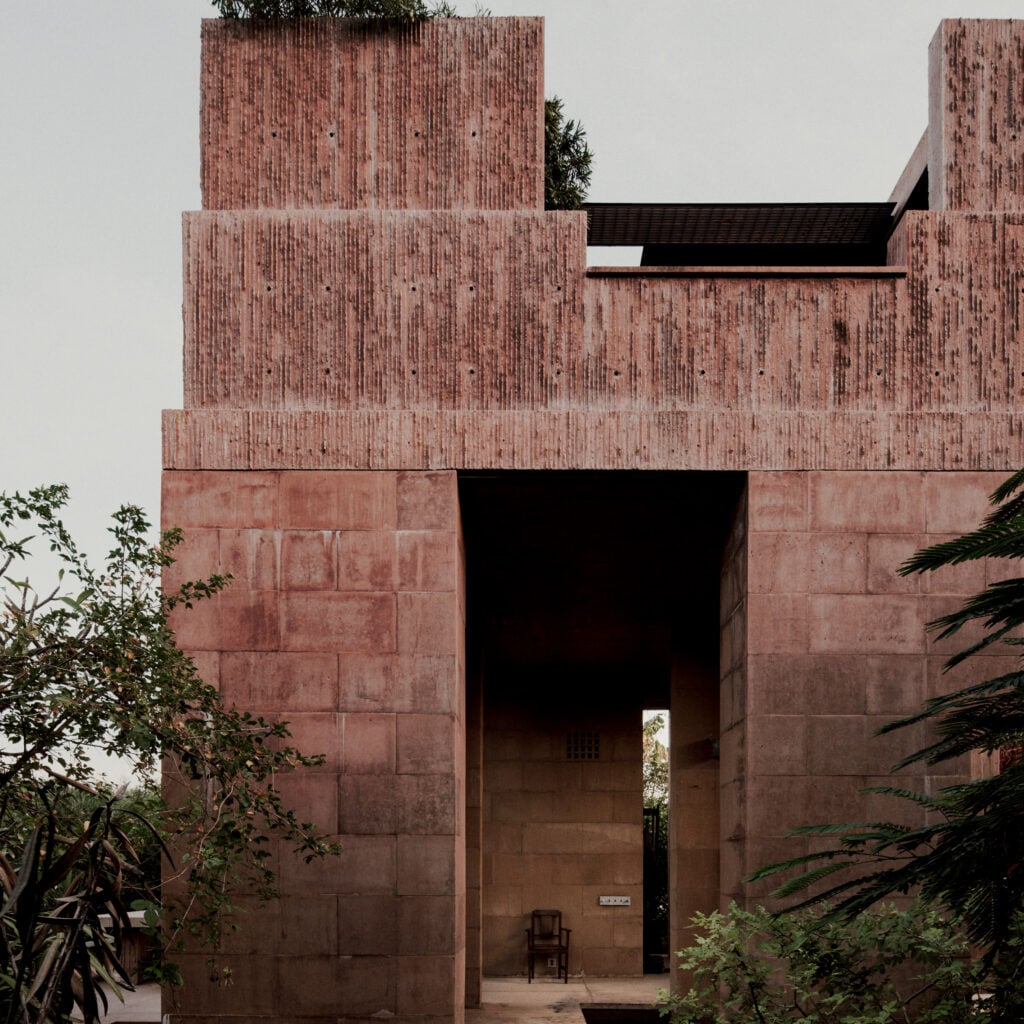
Modern material innovation also plays a critical role in maintaining this cultural continuity. In the 2024 Casa Monte project, designer CH Matos utilized earth-tinted cement cast directly on-site to create a fortress-like structure elevated on a stepped platform. This method allows the building to engage with its jungle surroundings while maintaining a sense of monumental separation. By fitting hundreds of individual forms together, the project demonstrates how handmade craft remains an essential element of contemporary Mexican construction.
The Industry Pulse Bottom Line
Modern Mexican residential design is moving toward a deeper integration of ancient structural logic, proving that Mesoamerican spatial principles and handmade craft remain vital tools for solving contemporary architectural challenges.