
Alter Exhibition Showcases 75 International Designers at Designart Tokyo 2026
As reported by Dezeen, the second edition of the Alter design exhibition has launched at Nihonbashi Mitsu Hall as part of the tenth Designart Tokyo. The showcase features seventy-five international creators, primarily in their twenties and thirties, who are presenting experimental works that challenge the perceived rigidity and homogeneity of the current global product design landscape.
Context from Industry Pulse
The Alter exhibition arrives at a time when the Tokyo design landscape is being critiqued by its own participants for becoming increasingly homogenous. By focusing on creators in their 20s and 30s, the event serves as a platform for challenging industrial rigidity through tactile and experimental methods. The integration of environmental data and AI into the traditional tea ceremony, alongside the economic reassessment of Japanese cedar, suggests a shift toward design that is both technologically driven and socially conscious. This second iteration of Alter reinforces a growing movement within Designart Tokyo to prioritize material honesty and local craftsmanship over standardized mass production.
The exhibition highlights a diverse range of material experiments, including the At First Contact series curated by Tim Teven. This segment features a lung-shaped polyurethane rubber lamp by LS Gomma and a vibrant green vessel by Audrey Large. These pieces emphasize surface textures and the visible effects of fabrication, drawing parallels to traditional Japanese craft where the physical history of an object remains part of its aesthetic value. Other notable contributions include a mirrored cabinet by Teun Zwets made from lacquered split wood.
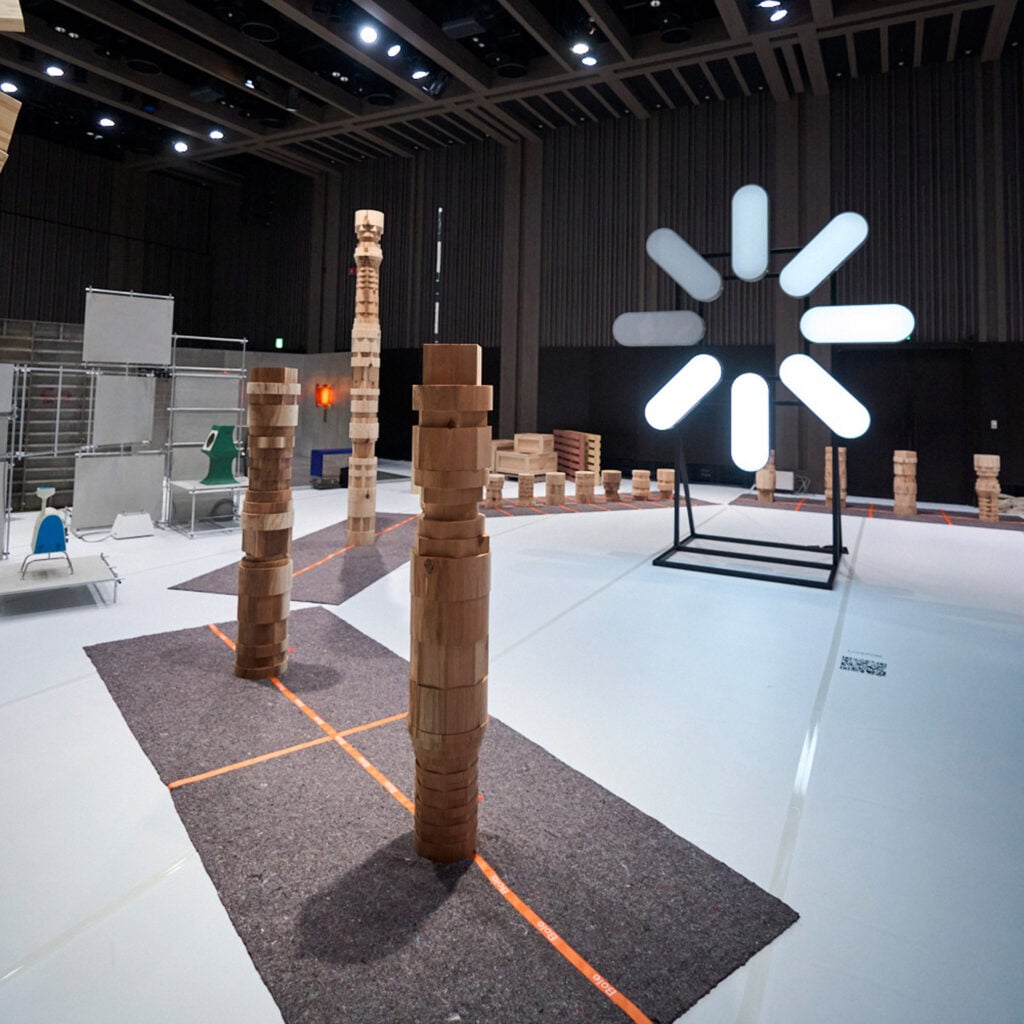
Sustainability and forestry economics are addressed through the Bole project, a collaboration involving Pan Projects, Morisho, and Morisuke Mei Tree Industry. The project utilizes every part of Japanese cedar logs to create stools, which are displayed as a tall column. According to Dezeen, the initiative responds to a market imbalance in Japan where the value of timber is frequently lower than the cost of the labor required to maintain the forests. By maximizing the utility of each log, the designers aim to redirect value back to forest management.
Technology and tradition merge in the Tariki Research Institute installation, which presents a tea ceremony facilitated by artificial intelligence. Rather than relying on a traditional host, sensors collect environmental data from global locations. An algorithm then translates this data into organic forms that are blow-molded into unique drinking vessels. This automated process inverts the conventional ritual where a human master selects specific ceramics for guests.
Material innovation continues with the Capillary Drift project, where designers Yuma Kano, Gen Taniguchi, and Kurara Omichi explore the structural potential of washi paper. Moving beyond the material's traditional use as a flat surface, the team treats the paper as a network of fibers to create three-dimensional stools and vessels. This experimentation aligns with the broader goal of the Alter exhibition to revive the local design scene through non-traditional applications of heritage materials and modern technology.
The Industry Pulse Bottom Line
Alter 2026 demonstrates that the next generation of designers is leveraging AI and heritage crafts to solve economic imbalances and push back against the standardization of global product design.