
AutoFlight Completes World First Autonomous Formation of Five eVTOL Aircraft
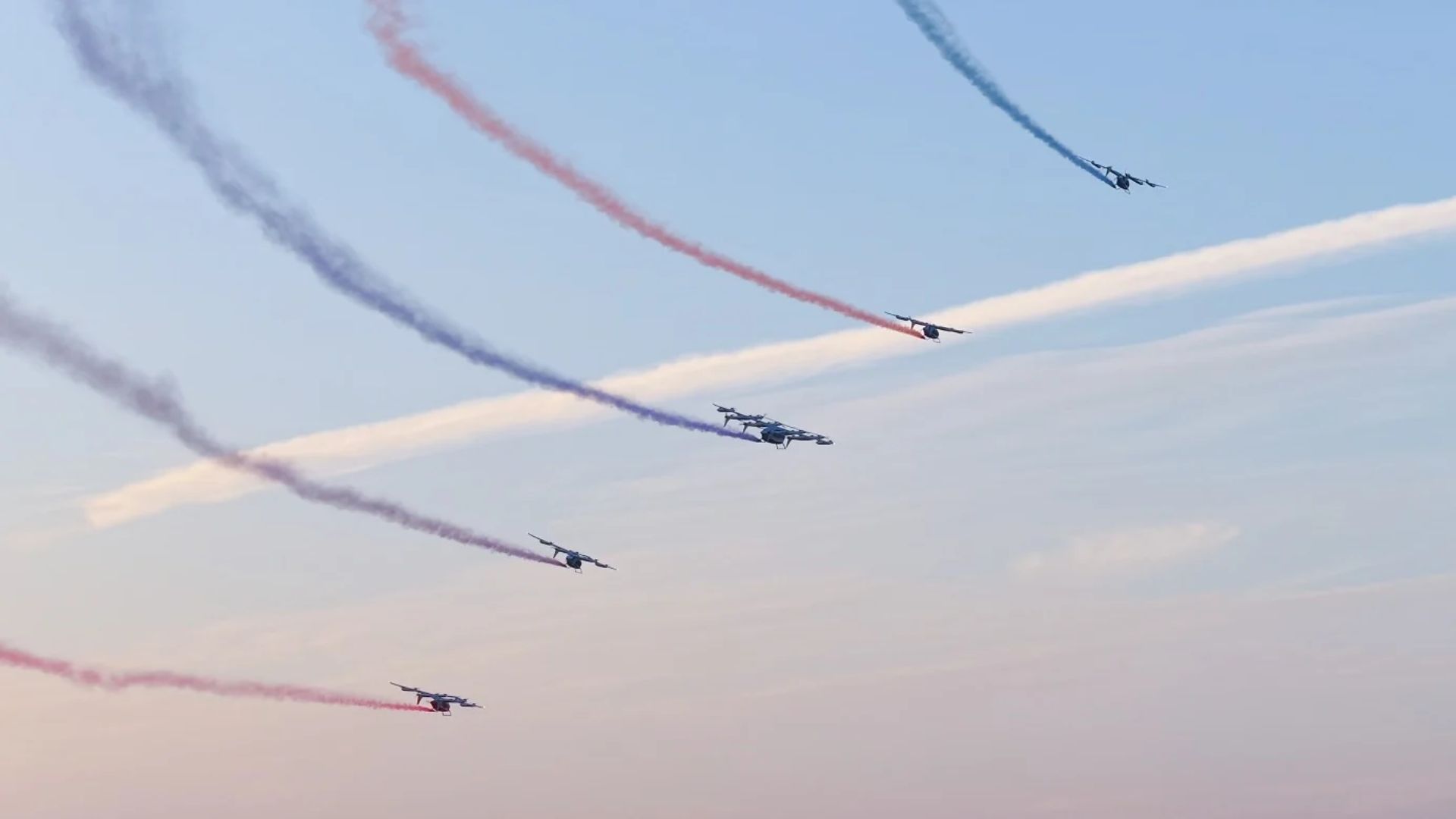
According to reporting from Interesting Engineering, Chinese developer AutoFlight has successfully demonstrated a coordinated autonomous flight involving five electric vertical takeoff and landing aircraft. The formation, which covered 83 miles over 47 minutes, included mixed weight classes and models to test complex navigation and communication systems within future low-altitude air mobility networks.
Context from Industry Pulse
The AutoFlight demonstration represents a shift from individual aircraft testing toward systemic airspace management. As reported by Interesting Engineering, the inclusion of three distinct variants—cargo, firefighting, and heavy-lift—validates the software required to manage diverse mission profiles simultaneously. This progress in autonomous coordination addresses the complexity of future low-altitude networks, which must handle varying weights and speeds to be viable. By successfully navigating different airframes through a shared 83-mile route, the test proves that autonomous systems can handle environmental variables like wind while maintaining safety protocols without human pilots.
The demonstration occurred between late October and early November at the Bailian Lake Flight Test Base in Kunshan, China. As Interesting Engineering reports, the formation consisted of one heavy-lift V5000 Matrix and four smaller aircraft from the V2000 series. The V2000 group included the CarryAll cargo variant and a specialized firefighting model. During the 47-minute flight, the lead aircraft traveled approximately 133 kilometers without manual intervention, maintaining precise horizontal and vertical separation despite encountering strong wind conditions.
Technological challenges for this mission extended beyond simple route following. According to Interesting Engineering, flight-control systems had to manage varying speeds, altitudes, and flight behaviors across different weight classes. The V2000 series aircraft have a maximum takeoff weight of 2,000 kilograms and utilize a lift-and-cruise design that combines vertical rotors for takeoff with fixed wings for efficient forward flight. In contrast, the V5000 Matrix is a 5-ton platform capable of cruising at 280 km/h for passenger or heavy-logistics applications.
This exercise builds on a smaller three-aircraft formation conducted in May 2026. Interesting Engineering notes that the recent expansion to five aircraft served as a rigorous test for route planning and safety management software. The successful coordination of different models suggests progress toward integrated aerial logistics networks where various aircraft sizes serve specific roles based on payload needs and journey lengths.
While currently a technology demonstration, the ability to automate mixed-fleet operations is a significant step for Advanced Air Mobility. Interesting Engineering indicates that AutoFlight is also investigating intermodal connections, such as linking air travel with water-based infrastructure. The company displayed this potential by hosting observers at a water-based vertiport during the flight tests, highlighting the broader utility of these electric systems in regional transport.
The Industry Pulse Bottom Line
AutoFlight’s five-aircraft formation demonstrates that autonomous software can effectively coordinate mixed-weight eVTOL fleets, a critical requirement for scaling commercial aerial logistics and regional air mobility networks beyond individual flight paths.