
Open-Source 3D-Printed Robot Uses Edge AI for Autonomous Fetch Games
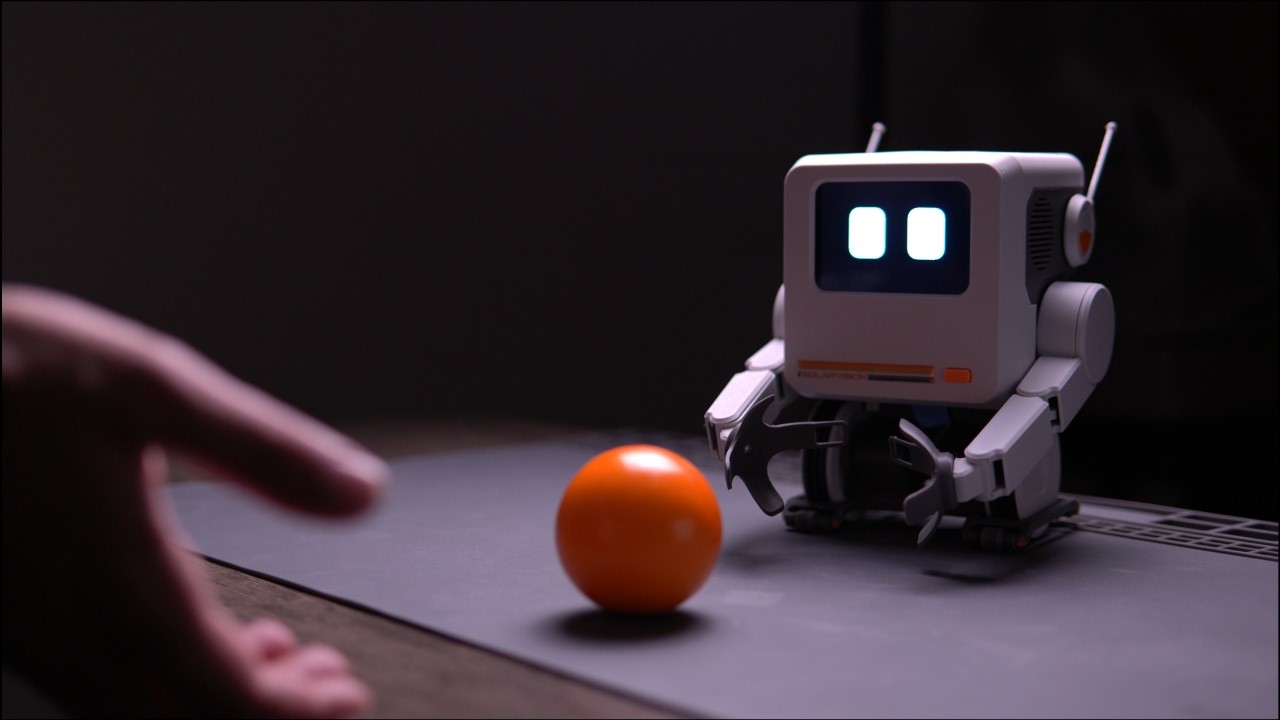
A YouTuber known as Sector 07 has developed Fetch, an autonomous robot capable of playing ball games without human intervention. According to Interesting Engineering, the device utilizes an offline hardware stack driven by Arduino logic and computer vision to identify objects and respond to specific human gestures in real-time.
Context from Industry Pulse
The development of Fetch aligns with broader engineering trends toward decentralized, offline autonomous systems. Similar to the US Navy's recent initiatives to repair equipment without internet access, Fetch operates on a strictly offline hardware stack, demonstrating the increasing capability of edge computing on low-power microcontrollers. The integration of 3D-printed components and open-source code mirrors the accessibility seen in contemporary robotics, where computer vision models like YOLO-Pro are being miniaturized for consumer-grade hardware. This project highlights a shift where complex human-robot interaction, previously reserved for high-end research labs, is becoming reproducible through hobbyist platforms and accessible AI training tools.
"The robot can spot an orange ball and, with no input from a human, go get it and return it back to the owner."
The hardware architecture of this autonomous system relies on an Arduino UNO Q board equipped with a camera module. As Interesting Engineering reports, the robot utilizes a dual-processor configuration to manage its operational tasks. One processor is dedicated exclusively to analyzing visual data and identifying objects, while the second unit manages the mechanical controls for the motorized wheels, servos, and 3D-printed arms.
To enable navigation and object interaction, the developer employed Edge Impulse to train a YOLO-Pro computer vision model. This software allows the robot to distinguish between an orange ball and a human hand by processing images across various lighting conditions and backgrounds. Interesting Engineering notes that the model was trained using 400 total images taken directly from the robot's onboard camera to ensure reliability in diverse indoor environments.
Functionality is managed through a closed-loop system that requires no external internet connection. When the robot identifies an orange ball, it calculates the distance and adjusts its wheels to move toward the target. The 3D-printed arms then secure the object before the system scans the room for the owner. The robot is programmed to recognize a raised hand as a signal to return and release the ball at the owner's location.
The design incorporates several interactive features to enhance its personality, including animated eyes, movable ears, and voice responses generated via ElevenLabs audio clips. While early testing encountered difficulties with high-intensity lighting and grip timing, these issues were resolved by recalibrating motor speeds and detection sensitivity. Interesting Engineering confirms that the project has been released as open-source, with build files and code available on the Arduino Project Hub.
The Industry Pulse Bottom Line
Fetch demonstrates that sophisticated computer vision and autonomous behavior can now be achieved on bare-metal Arduino hardware, providing a blueprint for low-cost, offline edge AI applications in consumer robotics.