
HII and Thales Demonstrate Fully Autonomous Naval Mine Countermeasure Workflow
A collaborative exercise between HII and Thales has successfully demonstrated an end-to-end autonomous mine-clearing mission, as reported by Interesting Engineering. The operation utilized an integrated network of unmanned underwater vehicles and specialized software to detect, identify, and neutralize naval threats without requiring crewed platforms to enter hazardous areas.
Context from Industry Pulse
Naval mine countermeasures are shifting toward decentralized, autonomous frameworks to address persistent maritime threats. The HII and Thales demonstration aligns with broader defense trends, such as BAE Systems’ development of containerized naval guns for merchant ship protection and the US Navy’s push for self-sufficient equipment repair capabilities. By utilizing NATO-compliant open architecture, these underwater systems allow for cross-manufacturer integration, mirroring the modular approach seen in modern lunar power delivery and Mars exploration tools. This movement toward unmanned, multi-platform networks aims to minimize human exposure in high-risk zones while maintaining operational speed across global shipping lanes.
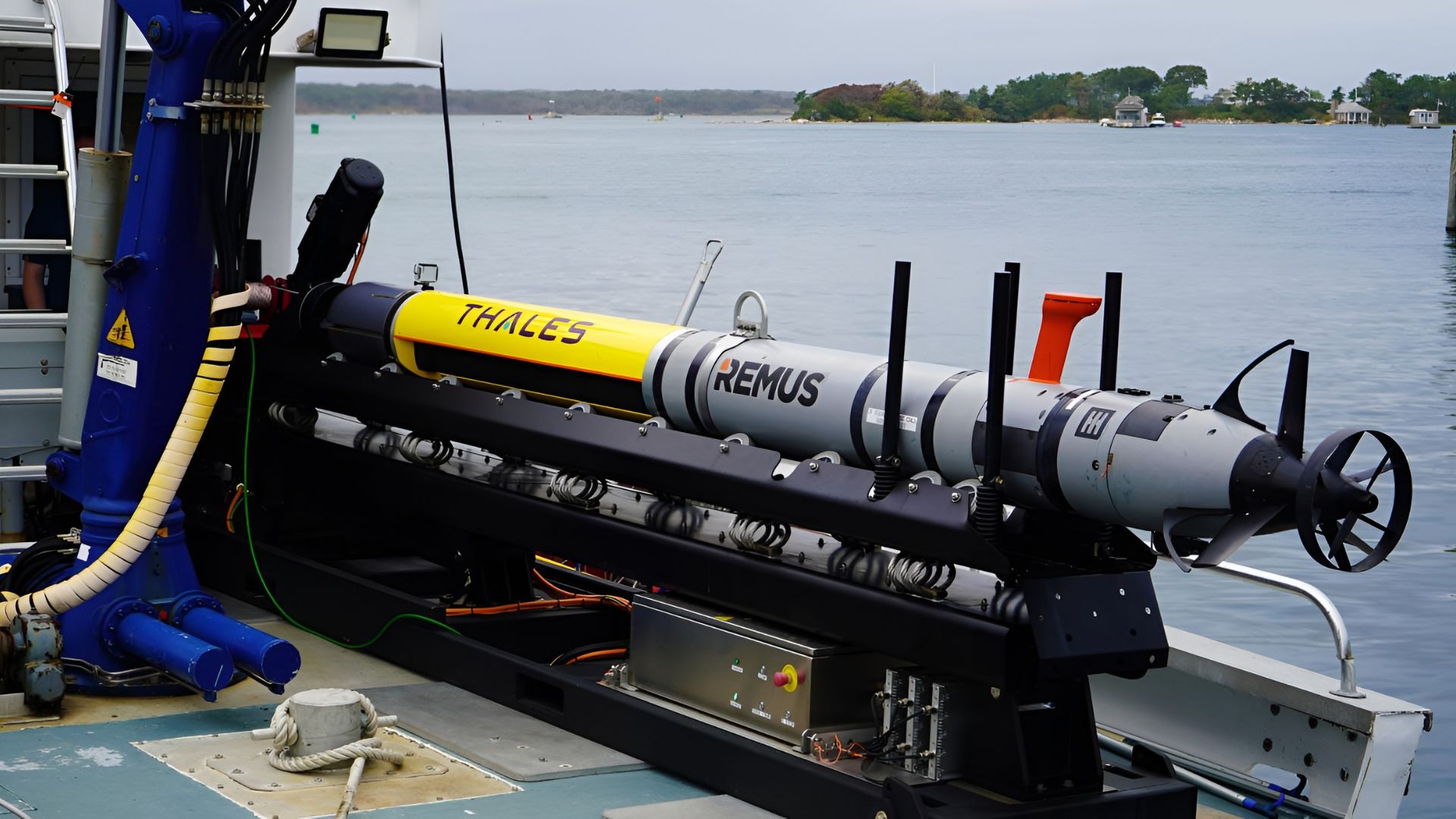
The demonstration utilized HII’s REMUS 620 unmanned underwater vehicle integrated with Thales’ Expeditionary PathMaster architecture to execute a comprehensive mission cycle. According to Interesting Engineering, the workflow encompassed three primary stages designated as find, fix, and finish. The process began with the REMUS 620 scanning the seabed using a SAMDIS 600 multi-aspect sonar to locate potential explosives. This initial detection phase is critical for maintaining maritime shipping routes and protecting warships from hidden threats.
Data management for the mission relied on a centralized hub known as the Expeditionary Portable Operation Center. As Interesting Engineering reports, this hub hosted both HII’s Odyssey mission management solution and Thales’ sonar analysis software. The system employed automatic target recognition technology to classify objects, though human operators maintained oversight of the final identification and tactical decisions. This unified operational picture allows for faster processing compared to traditional mine-clearing methods that often require multiple deployments and manual confirmation.
Neutralization of the identified threats was handled by the ANGLER underwater effector from Thales Advanced Acoustic Concepts. Interesting Engineering notes that a remotely operated vehicle was deployed to reacquire the targets and conduct visual inspections before the ANGLER system engaged the mines. This final step completes the chain of destruction while keeping sailors at a safe distance from the explosives. The exercise also showcased the Sea Launcher system, which automated the deployment and recovery of the primary underwater vehicle.
The underlying architecture of the system is designed to be open and NATO-compliant. Interesting Engineering indicates that this framework allows for the integration of equipment from various manufacturers, facilitating cooperation between allied navies. By combining different sensors and autonomous platforms into one cohesive network, the technology offers a flexible and scalable solution for expeditionary mine warfare that reduces the time personnel are exposed to high-risk environments.
The Industry Pulse Bottom Line
The successful integration of the REMUS 620 and SAMDIS 600 sonar marks a shift toward modular, autonomous mine-clearing, reducing personnel risk and increasing the speed of maritime threat neutralization.