
Berkeley Researchers Develop Safety-Enhanced LEAP Robotic Hand for Object Manipulation
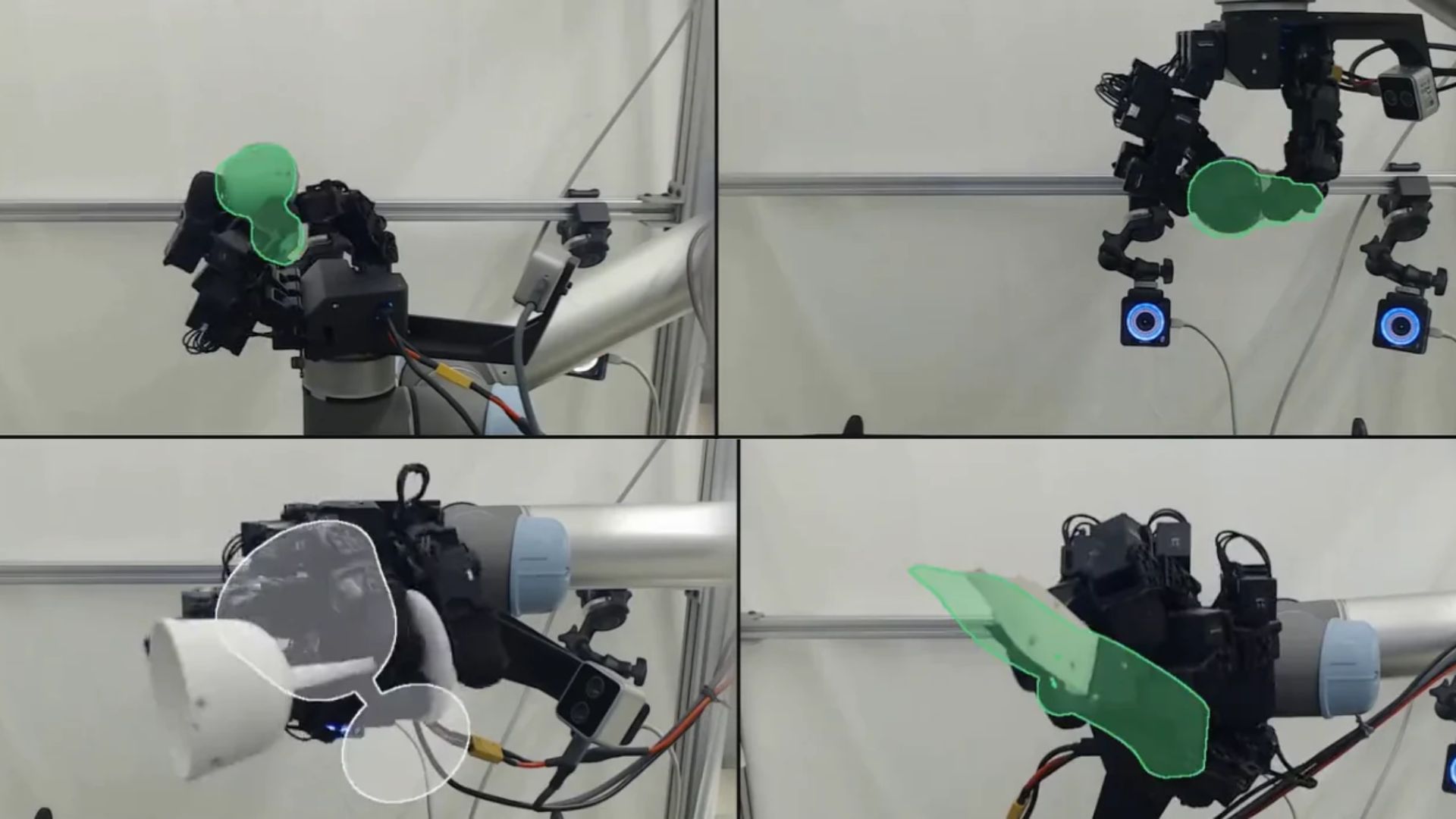
Engineers from the University of California, Berkeley and Davis, have developed a robotic hand capable of rotating objects without dropping them. As reported by Interesting Engineering, the team integrated a specialized software-based safety system into a 16-joint robotic hand to manage finger pressure and prevent falls during complex repositioning tasks.
Context from Industry Pulse
The advancement of robotic dexterity is a critical component of broader automation trends, as seen in recent demonstrations by Xiaomi where humanoid robots managed car part sorting for eight-hour shifts. While industrial robots are increasingly proficient at repetitive factory tasks, the Berkeley research addresses the specific difficulty of handling delicate or irregularly shaped objects without human intervention. This work complements other engineering efforts to improve remote and autonomous operations, such as the US Navy’s focus on equipment repair without expert assistance. By balancing grip security with task accuracy, this LEAP robotic hand research moves closer to creating machines capable of manipulating fragile items in unpredictable environments.
"the safety settings can be adjusted independently of the task performance and thus a balance can be found between the goal of a secure grip and successful object manipulation."
Developing robots that can mimic human dexterity requires solving the problem of maintaining a secure grip while moving an object between fingers. Interesting Engineering reports that researchers used a LEAP robotic hand equipped with 16 joints to address this challenge. The system was trained exclusively through computer simulations rather than human demonstrations. To achieve realistic results, the simulation model incorporated data from the behavior of real-world robotic motors.
The training process involved millions of simulated grasping scenarios. Initially, the researchers artificially increased the friction between the fingers and the objects to facilitate easier grasping. As the artificial intelligence performance improved, the friction was gradually reduced to match real-world physical conditions. Interesting Engineering notes that the final physical testing utilized 3D-printed plastic items, including a light bulb, a duck, a wine glass, and a knife.
A key component of this research is a dedicated safety controller that operates independently from the main task controller. This safety mechanism is designed to adjust movements to secure the grip without knowing the final target position. According to Interesting Engineering, during a series of 1,200 tasks, the safety mechanism significantly reduced the frequency of dropped objects from 16 down to 4.
However, the inclusion of the safety system resulted in a minor trade-off regarding accuracy. Data provided by Interesting Engineering indicates the success rate was 95.2 percent without the safety mechanism, compared to 91.5 percent with it active. Success was defined by the robot's ability to keep the object within two centimeters and 23 degrees of the target within a ten-second window. The team successfully demonstrated the robot's ability to pick up, rotate, and install a light bulb into a socket until it turned on.
The Industry Pulse Bottom Line
This dual-controller approach proves that independent safety protocols can prevent costly drops in robotic handling, though engineers must still calibrate the balance between secure grip stability and precise target accuracy for delicate tasks.