
Humanoid Traffic Robot Patrols 2026 Hangzhou Marathon Crowd
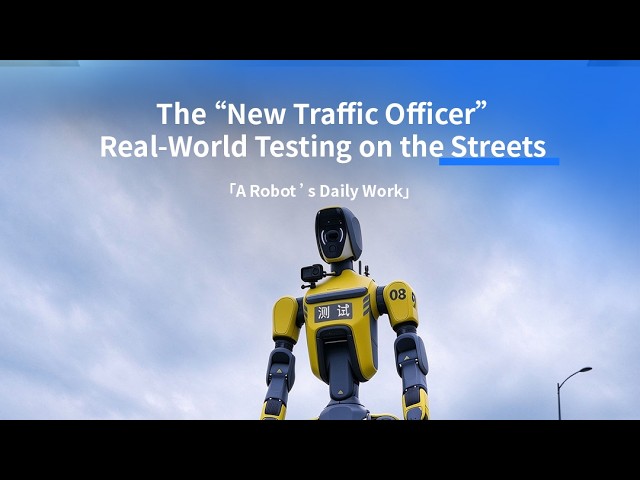
A humanoid robot recently served as a mobile traffic officer during the 2026 Hangzhou Marathon in China. Developed by DEEP Robotics, the machine assisted local authorities by monitoring intersections and directing pedestrians. According to Interesting Engineering, the deployment represents a shift toward using autonomous systems for repetitive security tasks in dense public environments.
Context from Industry Pulse
The deployment of the DR02 humanoid follows a series of robotics advancements in China focused on public safety and logistics. Earlier this year, similar machines were utilized at the Beijing Yizhuang Half Marathon to direct participants. Competitors like Unitree Robotics are also expanding the sector with models like the H2-X, designed for rescue and security roles including heavy lifting or shielding individuals. Analysts suggest that the commercial value of these humanoids currently centers on augmenting human capabilities in clearly defined, high-density scenarios. This move into traffic management signals an effort to refine autonomous motion control and multi-sensor perception in unpredictable public spaces, moving beyond the controlled environments of factory floors.
The 178-centimeter-tall robot, identified as the Hangxing No. 2, is based on the DR02 model from Hangzhou-based DEEP Robotics. During the marathon event, the unit was integrated into a four-point patrol team to manage crowd flow near the Huanglong Sports Center. Interesting Engineering reports that the machine is designed to handle diverse environmental conditions, featuring an IP66 rating that protects its internal components from heavy rain, high-pressure water jets, and dust. It maintains operational stability in temperatures ranging from minus 20 to 55 degrees Celsius.
To navigate the complex environment of a major sporting event, the robot utilizes a 275 TOPS computing unit. Its sensor suite includes LiDAR, a wide-angle camera, and a depth camera to perceive surroundings in real time. As Interesting Engineering notes, the primary goal of the deployment was to provide mobile surveillance in areas that traditional fixed security cameras might miss. By following preset routes, the robot could move between guard posts to monitor for traffic violations such as unauthorized vehicle entry or improper pedestrian crossings.
Beyond simple observation, the machine is programmed to perform standard traffic-control gestures and broadcast safety advisories automatically. This functionality is intended to reduce the workload of human officers by managing the repetitive aspects of roadside crowd control. Interesting Engineering indicates that the robot also served as an information point, answering questions from the public during an event that saw approximately 36,000 active runners and over 300,000 total registrations.
Industry experts view the use of humanoids at large-scale events as a transition from laboratory demonstrations to practical application. While previous deployments have occurred at other Chinese races, such as the Beijing Yizhuang Half Marathon, this latest instance focused on creating a standardized model for traffic management. According to Interesting Engineering, while the robot provided eye-catching assistance, the specific number of violations flagged and the level of human oversight required for its operation remain undisclosed by the manufacturer.
The Industry Pulse Bottom Line
The use of IP66-rated humanoids at major marathons highlights a growing trend of utilizing mobile, sensor-rich robotics to fill surveillance blind spots and automate repetitive public safety tasks in high-density urban environments.