
Blue Origin Debuts 3D-Printed Northstar Engine for Heavy-Lift Booster Power
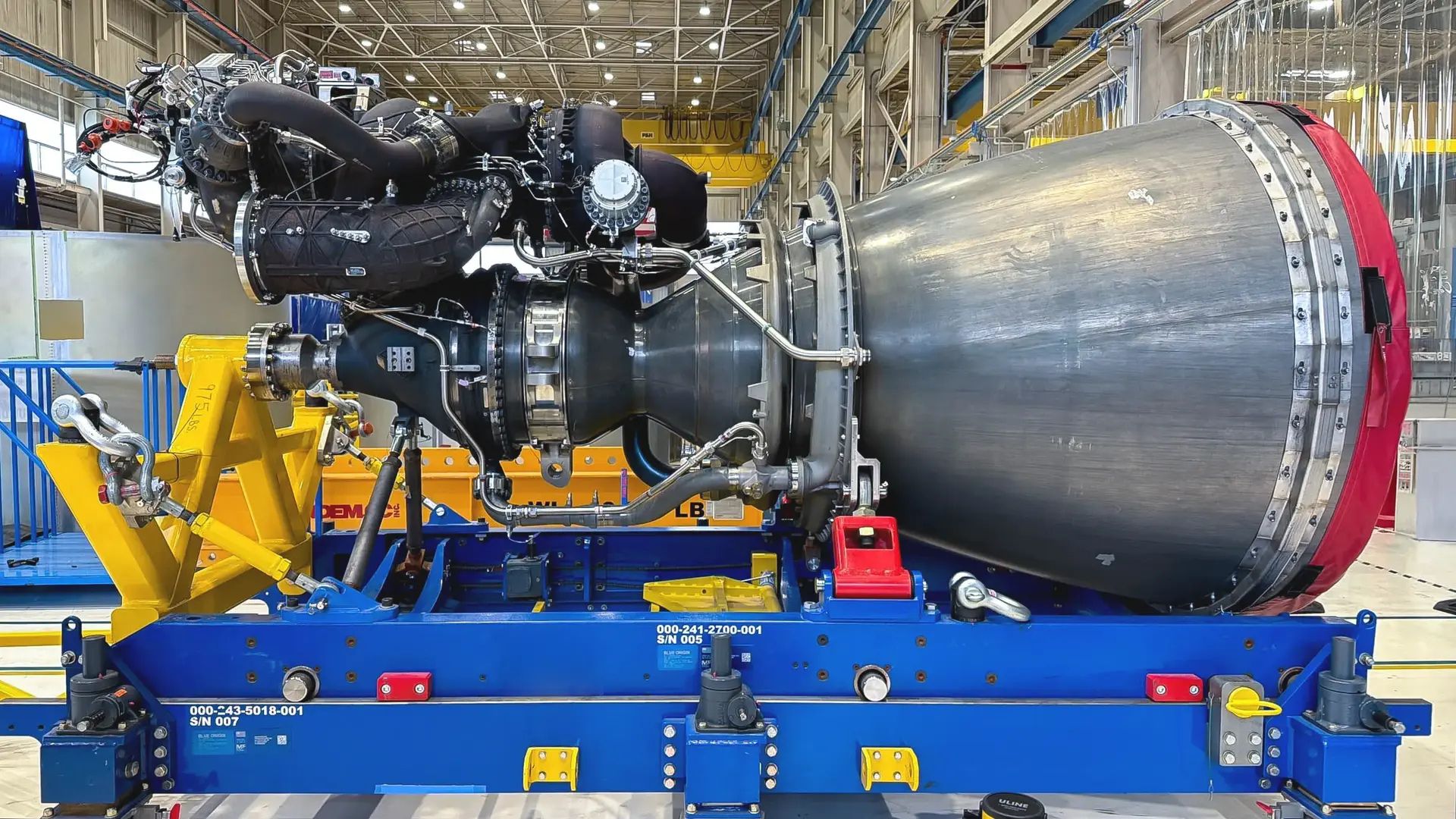
Blue Origin has unveiled Northstar, a liquid oxygen and natural gas-fueled engine featuring a 30 percent mass reduction over previous models. As Interesting Engineering reports, the booster utilizes additive manufacturing for over 65 percent of its parts, allowing technicians to complete assembly in under 24 hours while generating 715,000 pounds of thrust.
Context from Industry Pulse
The introduction of Northstar and the GS3 third stage marks a significant expansion of Blue Origin's orbital capabilities. By achieving a 50 percent reduction in part count through 3D printing, the company is addressing traditional bottlenecks in rocket manufacturing. The GS3 stage specifically targets high-energy missions, with the ability to transport 14 to 20 metric tons to geostationary or trans-lunar orbits depending on the New Glenn configuration. With a contracted cislunar mission set for 2028 and successful pressure testing of composite tanks, these developments indicate a transition from theoretical design to hardware-ready systems for demanding commercial and government flight profiles.
"Additive manufacturing accounts for more than 65% of its production. This approach allows engineers to consolidate components that traditionally require separate manufacturing and assembly processes."
Blue Origin is advancing its propulsion capabilities with the introduction of Northstar, a booster engine that leverages additive manufacturing to achieve high performance with a simplified design. According to Interesting Engineering, the engine produces 715,000 pounds-force of thrust, exceeding the 640,000 pounds-force generated by the company’s existing BE-4 model. Despite this increase in power, the new hardware is 30 percent lighter and contains 50 percent fewer parts than its predecessor.
The development of Northstar highlights a shift toward rapid iteration and consolidated manufacturing. Interesting Engineering reports that more than 65 percent of the engine components are 3D-printed, which streamlines the production process by merging parts that traditionally required separate fabrication. This approach has significantly impacted assembly timelines, as technicians can now put the engine together in less than a day. The program reached the testing phase just 11 months after receiving formal approval.
Technically, the Northstar engine maintains continuity with the company's established architecture by utilizing an oxygen-rich staged combustion cycle. It operates on a mixture of liquid oxygen and liquefied natural gas delivered via a single-shaft turbopump. While Blue Origin has not yet identified which specific launch vehicle will debut the engine, the system is designed to strengthen the company’s broader portfolio of booster and upper-stage propulsion options.
Simultaneous with the engine news, the company introduced the GS3 third stage for the New Glenn rocket. As Interesting Engineering notes, this new stage utilizes the BE-7 engine and is designed for complex orbital maneuvers, including direct insertion into geostationary orbit. The GS3 has already undergone rigorous structural verification, including pressure tests on its composite liquid hydrogen tank that reached 150 percent of the maximum expected operating pressure.
The Industry Pulse Bottom Line
Blue Origin’s Northstar engine demonstrates that additive manufacturing can simultaneously reduce mass by 30 percent and accelerate assembly to under one day, potentially setting a new standard for rapid rocket production cycles.