
Struggling Big Ten Giants Face Financial Scrutiny After Home Losses
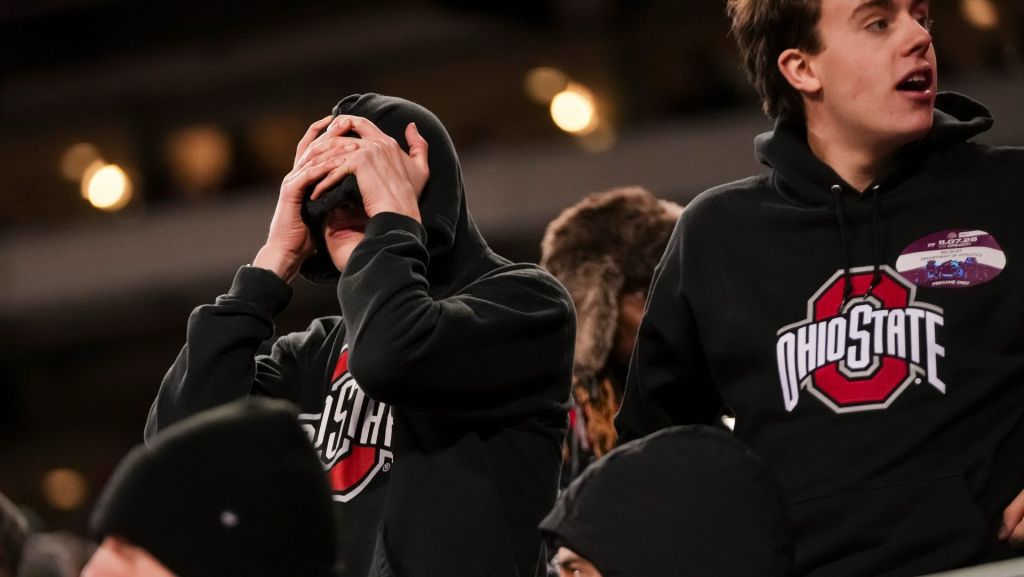
According to Front Office Sports, college football powers Ohio State and Michigan are facing significant setbacks despite massive financial investments in rosters and coaching staffs. Both programs suffered home defeats on Saturday, effectively ending their playoff aspirations and sparking questions regarding the return on investment for their high-priced operations.
Context from Industry Pulse
The struggles of Ohio State and Michigan highlight a growing gap between financial input and competitive output in the Big Ten. Ohio State’s 41-28 loss to Oregon and Michigan’s defeat by a previously winless Michigan State program demonstrate that high-priced coordinator tandems and lucrative player deals do not guarantee stability. With Ohio State spending over $92 million on operations and Michigan investing heavily in a $5.7 million coordinator pairing, both schools are underperforming relative to their budgets. This downturn occurs while teams like Utah and Notre Dame find success elsewhere, suggesting that the massive buyouts and roster investments at these Big Ten institutions may currently be assets that are failing to provide a competitive hedge.
The financial commitment to football at Ohio State has reached unprecedented levels, yet the on-field results are failing to meet expectations. Front Office Sports reports that the Buckeyes lead the Big Ten in football operations spending with a fiscal year 2025 budget exceeding 92 million dollars. Despite maintaining a roster valued at approximately 50 million dollars and employing the highest-paid defensive coordinator in the country, the team has now suffered consecutive regular-season losses for the first time in over a decade. This slump has caused the program to drop to its lowest AP poll ranking since the inception of the playoff era.
Michigan is facing similar turbulence during a disappointing 2026 campaign. As detailed by Front Office Sports, the university recently fired its offensive coordinator, who was the highest-paid individual at that position nationally. The Wolverines currently maintain the fifth-highest football operations budget in the conference at over 61 million dollars, yet the team sits in the bottom half of the Big Ten standings over its last eleven games. Offensive production has stagnated, with the unit ranking near the bottom of all collegiate programs in both total yards and scoring.
Quarterback instability has further complicated the outlook for both organizations. Ohio State is navigating the loss of a Heisman finalist to injury, forcing a true freshman into a starting role that has produced some of the team's lowest scoring outputs. Michigan similarly benched a high-profile recruit who had signed a lucrative deal in favor of a freshman alternative, but the change has not yielded a significant increase in touchdowns or offensive efficiency.
Leadership at both schools remains under heavy financial protection due to substantial contract buyouts. Front Office Sports notes that the head coach at Ohio State is tied to a deal worth 12.5 million dollars annually with a 75 million dollar buyout clause. Meanwhile, Michigan's first-year head coach is in the early stages of a 41 million dollar contract. These financial obligations create a complex environment for athletic departments as they attempt to reconcile historical spending with substandard performance on the field.
The Industry Pulse Bottom Line
Massive spending on coaching and rosters is failing to protect Big Ten brands from historic lows, leaving Ohio State and Michigan with expensive buyouts and limited playoff prospects as their financial investments fail to yield on-field results.