
Big Ten Enacts $49 Million Athlete Spending Cap Amid High-Stakes Matchup
The Big Ten Conference has implemented a $49 million annual cap on student-athlete NIL and revenue sharing payments. As Front Office Sports reports, the move comes as No. 12 Ohio State and No. 23 Oregon prepare for a critical Saturday game featuring two rosters previously projected to cost $50 million each.
Context from Industry Pulse
The Big Ten’s decision to self-regulate spending reflects a strategic pivot toward financial predictability in an era of uncapped NIL valuations. By setting a $49 million limit, the conference is attempting to establish a structured salary environment independent of federal intervention, which has become less certain following recent midterm election results. This move forces elite spenders like Ohio State and Oregon to reconcile their massive investments with a new regulatory ceiling. The immediate implementation of these rules suggests the conference aims to curb bidding wars for talent, even as major programs grapple with underperformance on the field and significant injuries at the quarterback position that have already impacted their playoff resumes.
Big Ten presidents and chancellors have unanimously adopted a new conference rule that restricts institutional involvement in athlete compensation. According to Front Office Sports, the policy sets a $49 million ceiling per school, combining $27.5 million for third-party name, image, and likeness agreements with $21.58 million in revenue sharing as outlined by the House settlement. This regulation takes effect immediately, forcing programs to adjust their financial strategies to remain compliant.
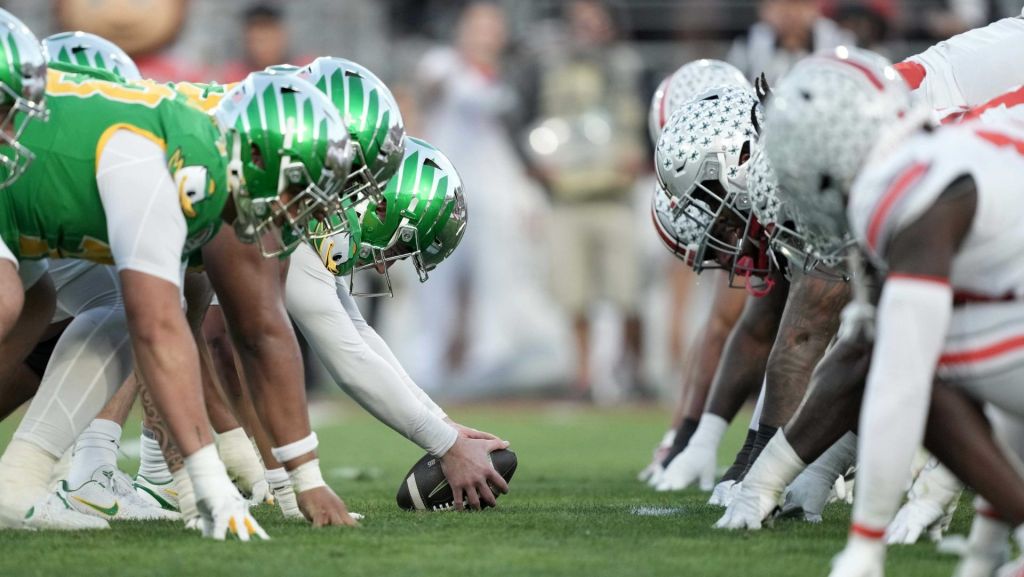
The timing of the decision coincides with a pivotal meeting between Ohio State and Oregon in Columbus. Both programs invested heavily in their rosters during the offseason, with each initially expected to exceed the newly established spending limit. Despite their significant financial commitments, both teams have struggled to meet preseason expectations. Front Office Sports notes that the Buckeyes and Ducks entered the season with 54 of 69 first-place votes in the AP poll, yet they currently have five combined losses and sit outside the top playoff positions.
Injuries to star quarterbacks have further complicated the season for both schools. Ohio State lost Heisman finalist Julian Sayin to an arm injury, forcing true freshman Luke Fahey into the starting role. Oregon is without Dante Moore following a concussion sustained in September, leaving the Ducks to rely on Dylan Raiola. These setbacks have contributed to a high-stakes environment where a loss for either team could derail their remaining postseason aspirations.
While the Big Ten designed this spending cap to mirror the proposed federal Protect College Sports Act, the legislative future of that bill is now uncertain. Front Office Sports highlights that Democrats regained control of both the House and Senate in recent midterm elections, potentially stalling the momentum the act previously enjoyed. Despite the political shifts, conference leadership maintains that the proactive cap is necessary for member institutions to plan future budgets and roster structures effectively.
The Industry Pulse Bottom Line
The Big Ten is moving toward a formalized salary cap model, prioritizing institutional budget control and conference-wide parity over the previously unrestricted spending seen at the top of the college football market.