
Automation Hurdles and Weather Resistance Slow Autonomous Trucking Adoption
As Fast Company reports, the transition to fully driverless freight remains stalled by technical limitations despite the potential for improved fuel economy and safety. While developers continue testing on controlled routes in California and Texas, engineers suggest a hybrid model of human-machine cooperation is the most likely path forward for the industry in the near term.
Context from Industry Pulse
The autonomous trucking sector is currently navigating a period of consolidation and realistic recalibration. While the promise of 24-hour operation and enhanced safety remains a powerful incentive for logistics companies, the high-profile exit of several startups in 2023 underscores the difficulty of moving beyond testing phases. Currently, the most successful implementations are restricted to predictable environments, such as the flat highways of Texas. This cautious approach contrasts with the broader enterprise AI boom, suggesting that physical logistics face unique safety and regulatory hurdles that software-only solutions do not. Until developers solve the vision problems associated with inclement weather and chaotic urban traffic, the industry will remain focused on assisted driving rather than full autonomy.
Freight shipping is undergoing a significant technological shift as manufacturers integrate artificial intelligence and machine learning into heavy-duty trucks. According to Fast Company, these automated systems combine computer vision and adaptive decision-making to optimize vehicle performance. Proponents suggest that autonomous fleets could reduce crash severity, lower carbon emissions by eliminating engine idling, and help mitigate the ongoing shortage of qualified long-haul drivers.
However, significant environmental and infrastructure obstacles prevent widespread deployment. Fast Company notes that current sensors and radar systems struggle with visibility during rain or snow, which limits operations to regions with consistent weather. Construction zones also present hazards, as missing lane markers and unpredictable traffic cones often confuse the onboard algorithms. Furthermore, human drivers in passenger cars have shown a statistical tendency to collide with autonomous vehicles at higher rates than with human-operated rigs.
Market stability has also shifted as several prominent startups have recently exited the sector. Fast Company highlights that firms like Embark and TuSimple closed operations in 2023, while others have pivoted away from trucking to focus exclusively on passenger cars. Remaining players, such as Aurora and Kodiak, have narrowed their scope to specific, uncomplicated routes like the flat corridor between Houston and Dallas or private industrial roads.
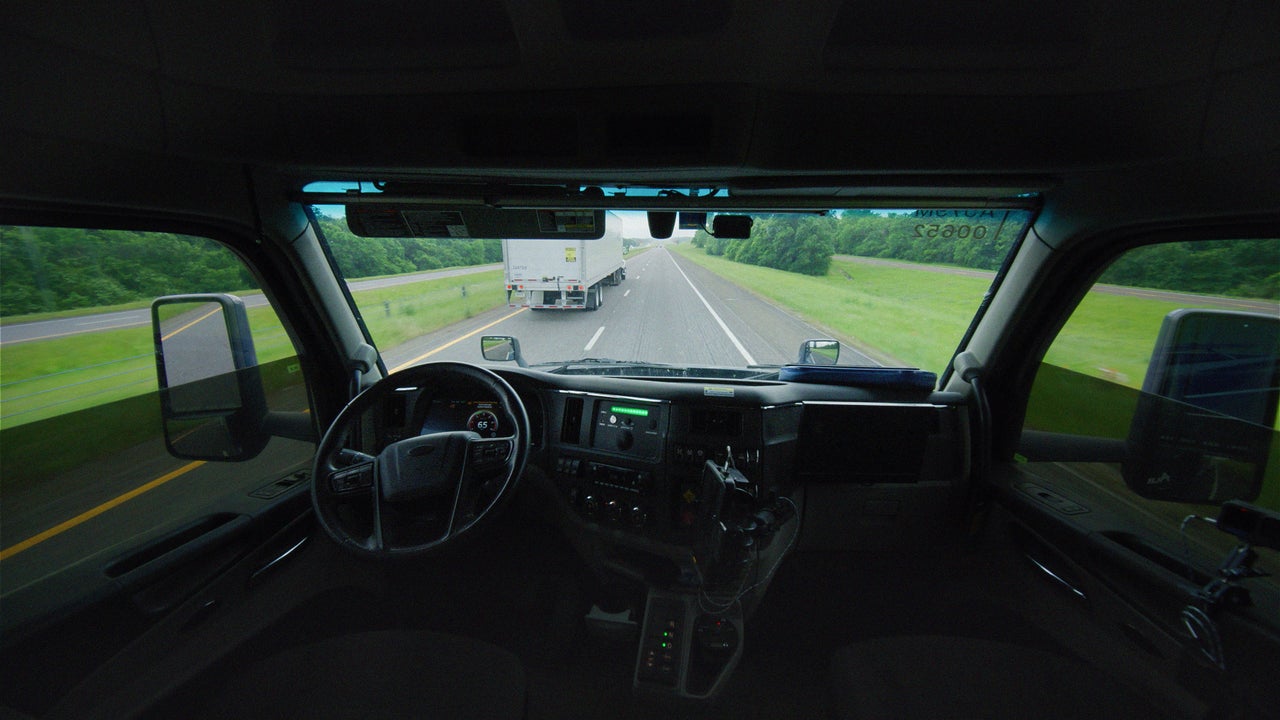
The future of the industry likely involves a symbiotic relationship between humans and machines rather than total replacement. As Fast Company explains, a human driver may manage the complex first mile and last mile of a journey through crowded urban streets, while the AI handles the long stretches of interstate highway. This transition requires sophisticated interfaces, such as vibrating seats or head-up displays, to alert drivers when they must regain manual control.
The Industry Pulse Bottom Line
While driverless technology promises long-term efficiency gains, technical limitations in variable weather and complex traffic mean human-machine collaboration will remain the standard for the foreseeable future.