
Tyrrell Studio and Emily McDaniel Debut Immersive Water Installation at Powerhouse Parramatta
Tyrrell Studio has launched Overflow at Powerhouse Parramatta, a large-scale installation that recreates the tidal landscapes of First Nations Water Country. As Designboom reports, the Wiradjuri-led exhibition utilizes sandstone and shifting water levels to explore the geological and cultural history of the Parramatta River, integrating films by Kamilaroi filmmaker Ivan Sen.
Context from Industry Pulse
The Overflow installation at Powerhouse Parramatta represents a significant intersection of architecture, indigenous knowledge, and environmental storytelling. By contrasting the pre-settlement tidal systems with the contemporary controlled riverbanks, Tyrrell Studio highlights how urban infrastructure has historically obscured natural ecological functions. The collaboration with organizations like the Gamay Rangers and Joonga Land and Water Aboriginal Corporation ensures that the physical experience is grounded in specific First Nations practices, such as water monitoring and cultural water rights. This project aligns with a broader creative movement to prioritize indigenous land and water management principles within permanent architectural and museum environments in Australia.
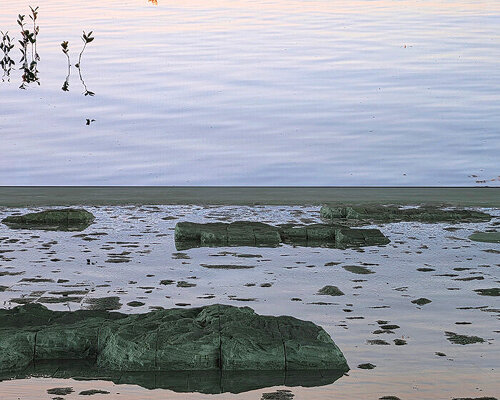
Designboom reports that the new installation occupies a 60 by 40-meter gallery, featuring a shallow pool that flows over an abstracted sandstone shelf. This stone structure serves as a physical reference to the geological terrain beneath Parramatta, which has been carved by river activity over tens of thousands of years. The exhibition invites visitors to remove their shoes and walk through a tidal environment where the water level rises and retreats throughout the day, altering the visibility of the sculpted stone surface.
According to Designboom, the project is a response to the historical containment of the Parramatta River. Before European settlement, the waterway functioned as a complex system of floodplains and shifting sediments rather than a controlled channel. The installation uses gathering and withdrawing water to make these ancient natural processes perceptible once again within the museum setting. Natural daylight and reflections of the building structure further contribute to the shifting atmosphere of the gallery.
The cultural framework of the exhibit was developed by Wiradjuri woman Emily McDaniel. Designboom notes that the project incorporates knowledge from seven Aboriginal organizations across New South Wales. These groups contributed stories regarding species care, cultural water rights, and flood mitigation. These narratives are brought into the space through films by Ivan Sen, which are projected onto the water and sandstone, creating fragmented imagery that reforms across the bodies of visitors and the gallery surfaces.
Designboom highlights that the indoor installation is a continuation of Tyrrell Studio’s outdoor riverfront work, Ngurra Budyari Ngalawagulang. This 3,000-square-meter public space was developed alongside Baramadagal elders and Dharug community representatives. Both the exterior landscape and the interior gallery use similar materials, such as sandstone paths and rain gardens, to allow nature and weather to dictate the visual and sensory experience of the site.
The Industry Pulse Bottom Line
Overflow demonstrates how large-scale creative installations can serve as vital tools for reclaiming historical landscapes, using physical mediums like water and stone to reconnect urban audiences with First Nations environmental stewardship.