
Parallel World Installation Explores Elephant Hawkmoth Vision Through Light
Artist Adrien Lucca has debuted Parallel World, an immersive living garden at the 2026 Ars Electronica Festival. As Designboom reports, the installation utilizes computer-controlled LED systems to simulate how nocturnal pollinators like the elephant hawkmoth perceive floral color and contrast under shifting wavelengths of light that differ significantly from human visual perception.
Context from Industry Pulse
The Parallel World project underscores a growing intersection between biological research and creative light design. By utilizing findings from 2002 and 2021 studies published in Nature, Lucca bridges the gap between scientific observation and sensory experience. The installation’s focus on the elephant hawkmoth reveals how specific artificial light spectra, such as narrow-band orange lighting, can impair pollinator navigation. This creative investigation highlights a critical environmental tension: while human-centric lighting designs provide safety and visibility for people, they simultaneously alter the visual landscape that nocturnal species rely on for survival and reproduction, potentially destabilizing local ecosystems through reduced pollination rates.
"the colors we associate with a garden are only one interpretation of what exists there. The same arrangement of plants can appear very different to another living creature."
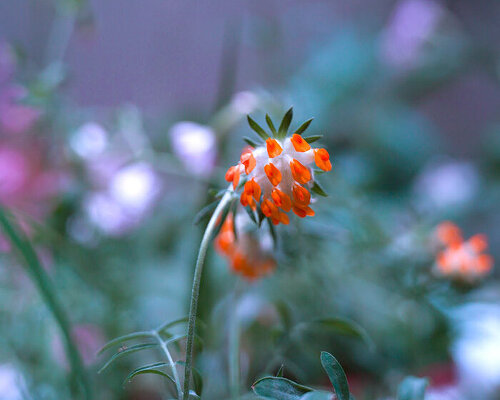
The installation features a living indoor meadow where delicate stems and pink blossoms are subjected to a programmable spectrum of illumination. According to Designboom, the project translates the visual capabilities of the elephant hawkmoth, a nocturnal insect that can identify colors in conditions as dim as starlight. While humans lose color perception in the dark, these moths detect ultraviolet, blue, and green wavelengths, allowing them to navigate the environment when the sun sets.
Working with color scientists and biologists, Lucca designed the lighting system to simulate these alien perspectives for human viewers. Designboom notes that under specific bluish light, standard green foliage appears nearly black or brown, making floral blossoms stand out with unusual intensity. This visual shift demonstrates that the colors humans associate with nature are merely one interpretation of physical reality, determined by the wavelengths reflected back to the eye.
Beyond the aesthetic experience, the work addresses the ecological impact of modern artificial lighting. Designboom cites research indicating that streetlights and other man-made light sources can disrupt the visual signals flowers send to pollinators. Studies show that nocturnal flower visits can drop by over 60 percent in artificially lit areas, as certain light spectra make it harder for insects to distinguish flowers from surrounding leaves.
Parallel World represents an extension of Lucca’s previous experiments with plant pigmentation and light sculptures. By substituting visible red light for ultraviolet wavelengths that humans cannot see, the artist allows gallery visitors to grasp the complexity of insect vision. The project highlights the evolutionary relationship between plants and pollinators, showing how floral characteristics have adapted specifically for the eyes of creatures that operate in the dark.
The Industry Pulse Bottom Line
Lucca’s work demonstrates that creative lighting design must evolve beyond human aesthetics to consider ecological impacts, as artificial spectra can fundamentally disrupt the vital visual communication between plants and pollinators.