
Adam Miklosi Unveils Glyph (1) Screenless AI Concept for Nothing Brand
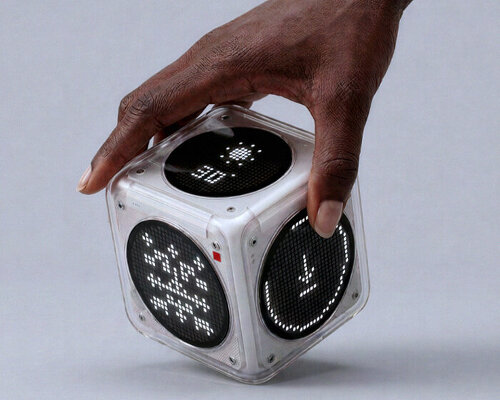
Industrial designer Adam Miklosi has introduced Glyph (1), a speculative AI hardware concept designed to mirror the aesthetic of consumer technology brand Nothing. As Designboom reports, the transparent cube utilizes a tactile interface and LED matrices to replace traditional smartphone screens with a distraction-free, orientation-based interaction model.
Context from Industry Pulse
The introduction of Glyph (1) arrives as creative practices undergo a broader shift toward experimental hardware and specialized material applications. Recent industry developments include Neri Oxman’s research into bacteria-based fabric pigments and the integration of carbon fiber in boutique automotive design. While larger brands like Nintendo reflect on the evolution of software history, independent designers are increasingly focused on tactile, analog-inspired interactions. This trend is visible in the move away from screen-heavy interfaces toward objects that blend industrial design with ambient technology, such as hand-crafted mirrors or brutalist residential transformations. Miklosi’s concept aligns with this movement by prioritizing physical form and minimalist lighting over the traditional high-resolution display.
"the compact cubic device establishes an analog, rotational interface based on orientation: rotating the hardware so a specific facet faces upward automatically activates its programmed digital mode."
The conceptual device, titled Glyph (1), reimagines the interaction between humans and artificial intelligence by removing the reliance on conventional digital displays. According to reporting from Designboom, the hardware is housed in a six-sided polycarbonate shell featuring rounded edges. This transparent exterior allows the internal electronics and a textured inner chassis to remain visible, adhering to the minimalist design language often associated with modern tech hardware.
Interaction with the device is managed through a physical, rotational interface rather than complex software menus. Designboom notes that internal sensors detect the orientation of the cube, allowing users to activate specific modes simply by turning a chosen facet upward. This analog approach is intended to provide a more spatial and tactile experience, moving away from the typical scrolling motions required by smartphones.
Each of the six faces contains an independent, programmable LED matrix. These lighting arrays serve as the primary communication method, displaying telemetry, notifications, and custom graphic indicators. As Designboom explains, users can map different sides of the cube to distinct digital operations. These functions include managing smart-home systems, controlling audio playback, setting task timers, or interacting with an ambient voice assistant.
The project is presented in both monochrome black and white variants, emphasizing a high-contrast aesthetic that highlights the internal components. By utilizing matrix lighting and orientation-based triggers, Miklosi aims to offer a functional companion that reduces digital clutter. The design prioritizes physical movement and light-based feedback to keep users engaged with their physical environment while maintaining access to essential digital tools.
The Industry Pulse Bottom Line
Miklosi’s Glyph (1) represents a shift toward screenless hardware, leveraging tactile orientation and transparent aesthetics to create a dedicated AI companion that minimizes digital distractions through physical interaction.