
Peter Morris Completes Pastel Cloud House Arches in North London
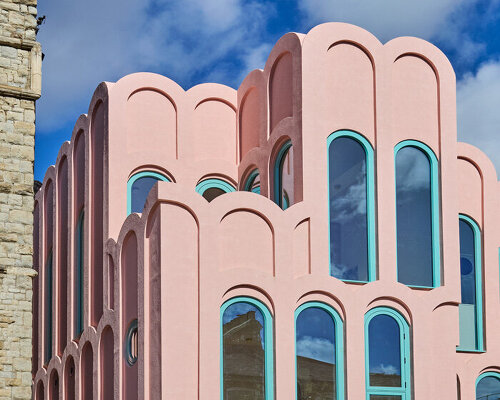
Architect Peter Morris has transformed a North London street with the completion of Cloud House, a pink residential project in Gospel Oak. According to Designboom, the development consists of two homes featuring oversized arches and turquoise accents, blending Miami Art Deco aesthetics with local Gothic influences found in the neighborhood's historic architecture.
Context from Industry Pulse
The completion of Cloud House in late 2026 highlights a persistent trend in residential architecture where architects utilize postmodernist influences to challenge urban uniformity. By synthesizing local Gothic motifs with international Art Deco palettes, the project demonstrates how recyclable materials like dense polystyrene can be used to create complex, non-traditional geometries at a residential scale. This development coincide with a period of significant cultural activity reported by Designboom, including major museum openings like Powerhouse Parramatta and large-scale public art installations in Mexico City. The decade-long timeline for Cloud House also underscores the lengthy regulatory hurdles often faced by architects attempting to introduce sculptural, color-forward designs into historic London conservation contexts.
"Directly opposite stands the Grade I-listed St Martin’s Church, whose elaborate arches Morris has enlarged and simplified into the building’s defining feature."
The project serves as a stark visual departure from the traditional grey brick buildings typically found in Gospel Oak. Designboom reports that the structure is defined by a facade of simplified arches and scalloped rooflines that create a cloud-like silhouette. These shapes reference the elaborate stonework of the neighboring Grade I-listed St Martin’s Church and the medieval-style architecture of St Martin’s Hall. While the aesthetic is rooted in local history, the color palette of pale pink and duck-egg blue draws directly from the Art Deco hotels of Miami.
Construction of the three-story building utilized a combination of conventional steel and blockwork along with modern lightweight materials. As Designboom notes, the decorative arches were crafted from dense, recyclable polystyrene supplied by Build-Lite. These components were finished with a waterproof coating and textured render to achieve the precise geometric curves required by the design. Morris personally oversaw the placement of these sculptural elements during the build process.
The interior of the architect's personal 133-square-meter residence continues the bold color theme with turquoise epoxy floors and pink-and-white marquee stripes on the ceilings. The living area features an emerald green kitchen with cabinetry by Plykea and a large pink island situated beneath a skylight. Designboom highlights that the geometry of the exterior is reflected indoors through rounded doorways and painted arches. The home also includes a roof terrace with an outdoor bathtub and views of the surrounding district.
The second, larger residence spans 165 square meters and features an inverted layout with bedrooms on the lower floors and a living space with barrel-vaulted ceilings on the top level. This home has been left with open interiors to allow the neighboring owners to customize the space. The entire project took nearly a decade to finish, including a five-year planning phase with Camden Council. The family home was officially completed in August 2026, marking the culmination of Morris's long-term interest in postmodern architectural design.
The Industry Pulse Bottom Line
Cloud House illustrates how high-concept postmodernism can successfully navigate rigid urban planning. By adapting local historical forms into playful new silhouettes, Peter Morris provides a template for expressive, color-centric residential self-builds.