
Sara Fernandes Redesigns Street Curbs Using Perforated Corten Steel for Urban Growth
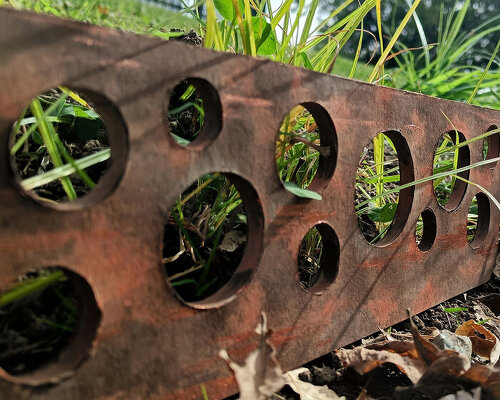
Designer Sara Fernandes has introduced an urban intervention titled Giving Nature a Voice: Let Them Through, which replaces rigid concrete street curbs with porous weathering steel. According to Designboom, the project utilizes irregular circular apertures to allow wild vegetation and soil to permeate pedestrian boundaries, transforming traditional civic infrastructure into an active landscape threshold.
Context from Industry Pulse
The work by Sara Fernandes aligns with a broader creative interest in merging organic growth with human-made structures, as seen in recent reports from Designboom and Dezeen. While other designers are exploring posthuman architecture through 3D-printed scaffolds for bird nests or finding artistic value in twisted trees, Fernandes applies this perspective to functional civic infrastructure. This trend shifts the focus from signature architectural styles toward instinctual spaces and softer boundaries. By reimagining street curbs as porous thresholds rather than dividers, Fernandes contributes to a growing body of work that seeks to incorporate spontaneous biological agency into the rigid frameworks of modern urban design and landscape architecture.
The project challenges the standard municipal approach to street boundaries by replacing conventional cast-concrete curbs with weathered Corten steel profiles. As Designboom reports, these new structural elements feature a non-uniform distribution of circular openings in varying diameters. This design choice is intended to facilitate the growth of grasses and wild plants, allowing biological life to breach the sidewalk threshold that typically separates soil from paved corridors.
Fernandes drew inspiration for the intervention from observing spontaneous plant growth that emerges through cracks in decaying concrete infrastructure. By translating this natural occurrence into an intentional architectural feature, the designer seeks to soften the hard edges of urban environments. Designboom notes that the prototype functions as a conceptual critique of mass-manufactured civic standards, prioritizing biological agency over rigid segregation.
The material selection of Corten steel serves both a functional and aesthetic purpose within the installation. The oxidized, earthy patina of the weathering steel is designed to visually bridge the gap between raw topsoil and the surrounding pedestrian surfaces. According to Designboom, this tonal alignment helps integrate the organic groundcover with the built environment, creating a more cohesive transition between nature and city streets.
Ultimately, the intervention reframes structural weathering and concrete cracking as opportunities for intentional design rather than signs of failure. Designboom highlights that the project uses these subtle structural modifications to test how small-scale physical changes can accommodate natural succession within existing city frameworks. By utilizing an unregimented boundary pattern, the installation encourages a porous edge condition where spontaneous vegetation becomes part of the intentional urban landscape.
The Industry Pulse Bottom Line
Fernandes demonstrates that reimagining basic municipal components like curbs can transform urban decay into an intentional landscape asset, allowing nature to integrate into the city through porous, weathered materials.