
Pedrali Reimagines Office Dynamics Through Hospitality-Driven Design at Orgatec
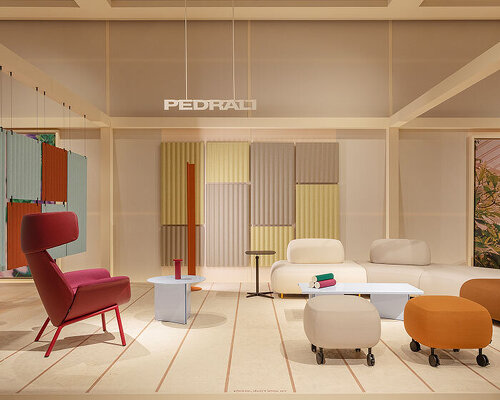
At the Orgatec trade fair in Cologne, Italian manufacturer Pedrali presented an architectural landscape titled Gentle Habitat. As reported by Designboom, the installation marks the brand's ninth appearance at the event, showcasing a move away from rigid corporate structures toward welcoming, flexible environments that prioritize human relationships and acoustic comfort in the modern professional sphere.
Context from Industry Pulse
Pedrali’s presence at Orgatec highlights a shift in workplace design where the boundaries between hospitality and corporate environments are increasingly blurred. By utilizing DWA Design Studio to create a temporary trade show structure that is entirely reusable, the brand addresses the environmental impact of industry events. This circular approach extends into product development through the Unico project, which utilizes manufacturing waste for functional objects. The emphasis on modularity, seen in the Buddyhub and Ondine systems, reflects a demand for offices that can be reconfigured instantly to accommodate different tasks, moving away from fixed infrastructure toward mobile, acoustic-wrapped solutions that respond to immediate professional needs.
The pavilion, designed by Milan-based DWA Design Studio, utilized a 700-square-meter footprint framed by poplar wood and canvas surfaces to create a warm, textured environment. Designboom notes that the entire structure was engineered for circularity, allowing for complete dismantling and reuse. Several major components utilized in the display were repurposed from a previous appearance at Salone del Mobile earlier in the year.
Material innovation was a central focus of the exhibit, highlighted by the Unico project. This experimental collaboration between Pedrali and DWA Design Studio transformed industrial plastic waste, typically flushed during chair molding color transitions, into pressed plates and bowls. According to Designboom, these objects mimic the appearance of carved stone or clay, offering a sustainable alternative to discarding factory leftovers.
Acoustic management was addressed through the introduction of the Ondine collection. These modular, fire-resistant polyester panels were inspired by the undulating forms of the pavilion walls. The system is designed to function as wall mounts, hanging dividers, or desk-mounted screens to mitigate noise in open-plan offices. Designboom highlights how these elements work alongside mobile furniture to create adaptable focus niches within larger shared spaces.
The furniture selection emphasized movement and modularity. New additions included the Buddy Oasi Serpentine system, which features winding upholstered islands, and castor-mounted Buddyhub desks and sideboards for spontaneous collaboration. Designboom also identified the Arki-Table Desk, which now includes an integrated lighting system, and the Polar task chairs, which were updated with new mesh colors and ergonomic support systems.
The layout concluded by blending internal and external work environments. Outdoor-ready pieces like the Ikon Twist table and aluminum Estratto coffee tables demonstrated how office design is expanding beyond traditional walls. By integrating raw tactile materials with clean geometry, the manufacturer aims to transform the workplace into a habitat that supports both intensive focus and social interaction.
The Industry Pulse Bottom Line
Pedrali’s latest exhibition proves that sustainable, circular architecture and hospitality-inspired furniture can effectively replace traditional corporate rigidity, offering a blueprint for versatile, employee-centric workspaces that prioritize comfort.