
Modular CD-ROM PLAYER 01 Repurposes Obsolete Hardware via DIY Aluminum Kit
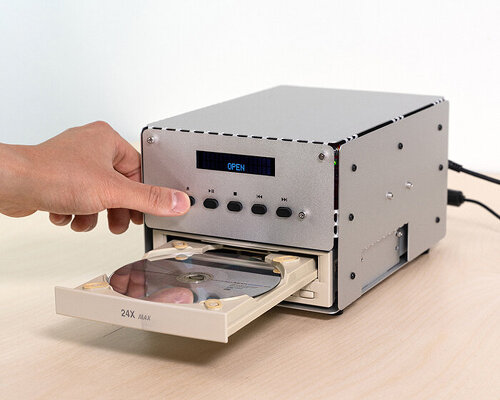
As reported by Designboom, studio das_POD has introduced a modular audio system that utilizes upcycled computer CD-ROM drives. The CD-ROM PLAYER 01 is delivered as an assembly kit, encouraging users to source their own hardware from secondary markets like eBay to complete a functional, long-life audio device housed in laser-cut aluminum.
Context from Industry Pulse
The CD-ROM PLAYER 01 sits within a broader design landscape currently exploring modularity and the visible repurposing of industrial materials. Recent reporting from Designboom highlights a trend toward dissolving traditional barriers between objects and their environments, similar to how this kit exposes internal electronics to the user. While other current industry developments focus on modular urban toolkits for infrastructure or sustainable landscape architecture, das_POD applies this logic to personal electronics. By referencing established upcycling icons like Freitag or vintage military surplus, the project aligns with a growing interest in design that prioritizes repairability and the aesthetic value of hardware history over the standard cycle of electronic obsolescence.
The project by Seong Heum Na of das_POD shifts the focus of consumer electronics from finished goods to a participatory assembly process. According to Designboom, the system relies on the reuse of existing computer components rather than the manufacturing of new disc-reading mechanisms. By allowing users to choose their own CD-ROM drives, the design incorporates variations in production year and mechanical construction into the final aesthetic of the device. This approach highlights the history of the hardware instead of hiding it within a generic casing.
Designboom reports that the kit consists of flat, laser-cut aluminum panels and necessary electronic components. Users are responsible for bending the metal and assembling the structure, which provides a direct understanding of the internal mechanics. This transparency is intended to make future maintenance and repair more accessible for the owner. The design ensures the drive remains a replaceable component, extending the potential lifespan of the player beyond the failure of a single part.
Visual customization is offered through three distinct enclosure finishes. These include a natural anodized option that emphasizes the raw material, as well as orange or matte black powder-coated versions for a more robust surface. As Designboom notes, the final forms were developed through a process of repeated prototyping to ensure the flat panels could be successfully transformed into a functional housing for the drive and circuitry.
The philosophy behind the project draws on established upcycling cultures where the previous life of an object adds to its current value. By treating the CD player as an assembly system rather than a disposable gadget, das_POD promotes a model of hardware longevity. The integration of used computer parts into a high-quality aluminum frame bridges the gap between obsolete technology and modern industrial design.
The Industry Pulse Bottom Line
The das_POD project demonstrates how designers can leverage secondary markets for components to create high-end audio hardware, effectively turning electronic waste into a primary material for sustainable, user-assembled consumer goods.