
Marlot Meyer Translates Wadden Sea Tidal Rhythms into Inflatable Gallery Ecosystem
Dutch artist Marlot Meyer has debuted Pneuma, an interactive installation in Amsterdam that uses giant inflatable sculptures to visualize the environmental pulse of the Wadden Sea. According to Designboom, the work merges human respiratory data with real-time coastal shifts, allowing visitors to physically engage with ecological rhythms that are typically beyond human perception.
Context from Industry Pulse
Meyer’s Pneuma arrives amid a broader creative exploration of post-human themes, where artists challenge the tradition of using human scales as the primary measure of the world. By magnifying diatoms—organisms usually invisible to the naked eye—into dominant gallery fixtures, the work forces a re-evaluation of ecological hierarchies. The project’s technical hurdles, such as the destruction of sensors by the very tides they were meant to measure, illustrate a recurring theme in contemporary environmental art: the tension between precise technological monitoring and the uncontrollable, chaotic forces of the natural world. This installation moves beyond passive observation, suggesting that technology's most profound role may be in facilitating new sensory capacities rather than just recording data points.
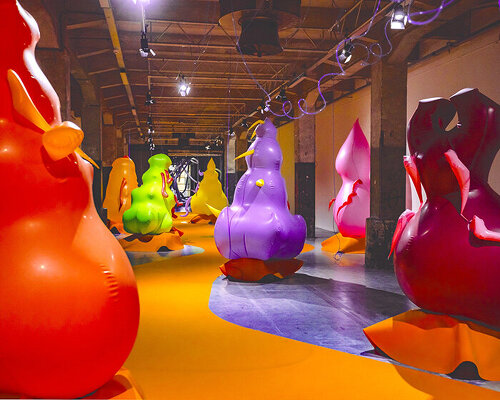
The installation at an Amsterdam gallery features a population of bulbous, brightly colored creatures that expand and contract. These movements are synchronized with the tidal cycles of the Wadden Sea, located along the Dutch coast. Designboom reports that the sculptures are modeled after diatoms, which are microscopic algae found in marine sediment that naturally follow tidal rhythms to capture sunlight. By scaling these invisible organisms to human proportions, Meyer transforms the industrial gallery space into a reactive ecosystem.
Interactivity is a core component of the project, as visitors can influence the large-scale inflatables through their own breathing. Participants wear smaller inflatable devices equipped with sensors that register respiration. These signals are then translated into movement within the larger sculptures. As Designboom notes, this creates a physical exchange between the human body and the distant sea, making the vast movements of a coastal environment tangible through sensory pressure and visual expansion.
The development of Pneuma followed a three-month residency in Friesland called Project Tidal. During this period, Meyer placed wetness sensors in mudflats to transmit environmental data via radio signals to wearable prototypes. The artist experimented with vibrating motors and air-filled devices to find a natural way to communicate water levels. The research faced significant challenges, including equipment failure and a powerful spring tide that submerged electronics, highlighting the unpredictable nature of the marine environment.
Meyer’s work explores the intersection of technology and sensory awareness. By moving away from traditional data visualization like graphs or numbers, the installation seeks to foster a deeper physical connection to nature. The name of the project is derived from the ancient Greek term for breath and spirit, reflecting the artist’s goal of integrating human life into larger environmental systems through the shared rhythm of inhalation and exhalation.
The Industry Pulse Bottom Line
Marlot Meyer’s work demonstrates how wearable technology and soft robotics can bridge the gap between abstract climate data and physical experience, turning environmental monitoring into a visceral, shared human rhythm.