
Lavazza Tablì Earns Third Place Designboom Special Prize at Seoul Design Award
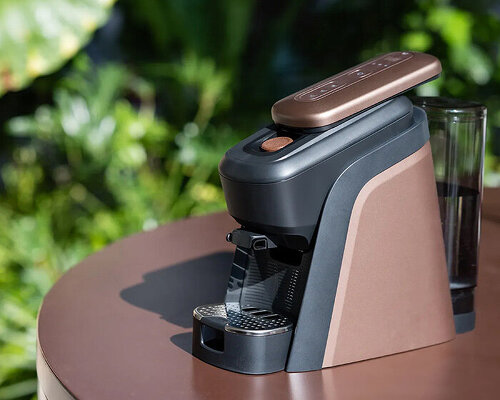
Lavazza has secured third place in the designboom Special Prize at the Seoul Design Award 2026 for Tablì, a capsule-free single-serve coffee system. As reported by Designboom, the project addresses the environmental impact of coffee waste by replacing plastic and aluminum pods with a sustainable ecosystem built around compressed coffee tabs.
Context from Industry Pulse
The recognition of the Tablì system at the Seoul Design Award 2026 occurs alongside other circular design developments reported by Designboom and Dezeen. Recent industry highlights include a modular audio player constructed from repurposed CD-ROM drives and architecture that incorporates biological processes or insect-built structures. This period of creative output also features modular urban toolkits for walkability and furniture held together by single joints. Lavazza's move to eliminate capsules reflects a broader shift toward removing secondary materials entirely, moving past simply improving the recyclability of existing packaging to create products that leave only organic residues.
"Their vision went beyond replacing capsules with a less harmful form of packaging. Instead, they designed a system built around a tab made entirely of coffee."
The Tablì system represents a departure from traditional single-serve methods that rely on discarded pods. Designboom reports that the global consumption of coffee capsules reaches approximately 20 billion units annually, with Germany alone contributing 13,500 metric tons of waste from 3.4 billion discarded pods. The Italian design team, led by Florian Seidl along with Angelica Rella, Marco Rotundo, and Nicola Bettoni, sought to eliminate these materials by developing a tab made entirely of coffee, free from coatings, additives, or aluminum.
Sustainability efforts for this project extend beyond the consumable element to the hardware itself. According to Designboom, the compatible machine is constructed using post-consumer plastics and is engineered for low energy consumption and ease of repair. Because the tabs contain no synthetic materials, they produce only organic waste, aligning with the award's mission to promote harmony between society, individuals, and the environment.
The designboom Special Prize criteria required the project to demonstrate playful disruption and meaningful vision. The publication notes that the system includes not only the machine and coffee tabs but also a dedicated range of accessories, packaging, and a connectivity system. Judges recognized the entry for its holistic approach, where functionality and aesthetics are treated as integrated components rather than separate design challenges.
Practical features highlighted by Designboom include an intuitive user interface featuring a transparent water tank for level monitoring and a sliding opening for tab insertion. The machine also utilizes a height-adjustable cup rest with a metal grid to accommodate various vessel sizes. This combination of technical specifications and environmental consideration allowed the project to stand out among international competitors at the Seoul Design Award ceremony.
The Industry Pulse Bottom Line
Lavazza's Tablì demonstrates that luxury convenience and environmental responsibility can coexist by re-engineering the consumable itself, effectively removing the need for plastic or aluminum waste in the single-serve sector.