
Rockstar Games Details Vice City Design and Florida Field Research for GTA VI
According to Designboom, Rockstar Games has revealed new details regarding the development of Leonida, the fictional Florida setting for Grand Theft Auto VI. The studio shared thirty-nine images showcasing a Miami-inspired landscape built upon a decade of architectural research, field trips to the Everglades, and neighborhood studies that began in 2015.
Context from Industry Pulse
The development of Leonida represents a massive investment in architectural and environmental research that predates the game's narrative. By beginning field research in 2015, Rockstar Games established a geographical foundation that dictates the flow of the story. The inclusion of specific historical references, such as the work of Lawrence Murray Dixon, indicates a shift toward high-fidelity urban preservation within digital spaces. This method ensures that the fictional city functions not just as a backdrop, but as a culturally resonant character. The project integrates diverse ecosystems, from the Everglades to Art Deco districts, to create a multi-layered map where the scale of the environment reflects the protagonists' criminal trajectory.
Designboom reports that the upcoming Grand Theft Auto VI, scheduled for release on November 19, 2026, centers its map on a fictionalized version of Florida known as Leonida. The development process prioritized the environment over character creation, with Rockstar North co-studio head Rob Nelson noting that research trips through the Florida Keys and Miami began in 2015. These excursions allowed designers to observe specific regional characteristics before finalizing the narrative paths of protagonists Jason Duval and Lucia Caminos.
Architectural authenticity serves as a cornerstone for the new Vice City. As Designboom notes, the game includes direct references to historic South Florida landmarks, such as the Hotel Dixon, which serves as a fictional stand-in for the real-world Hotel Victor. Designers studied the history of the Miami Design Preservation League and the work of architect Lawrence Murray Dixon to ensure the digital streets reflected the specific Art Deco heritage of the region alongside contemporary glass towers and residential canal developments.
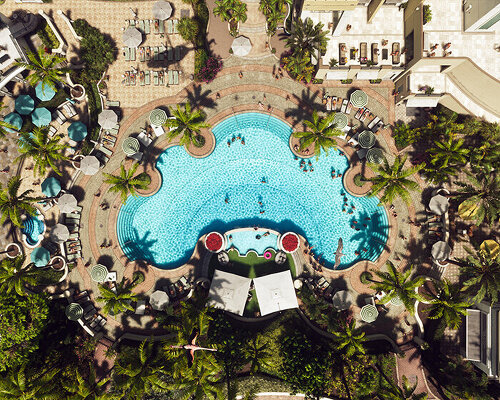
Visual scale and neighborhood identity were refined through aerial surveys of the Everglades and dense urban centers. Designboom highlights how the studio used varying building types to distinguish inland commercial strips from high-rise marina districts. This topographical variety directly influences the gameplay, as the story follows the central characters from small-scale criminal activities in the outskirts toward the massive urban center of Vice City.
Sensory details extend to the audio environment, where Rockstar has implemented localized soundscapes. According to Designboom, the sound design team recorded varying noise levels for appliances in different economic districts, such as louder refrigerators in older convenience stores compared to those in luxury shops. Furthermore, environmental factors like wind speed affect how conversations and ambient city noises travel across the map, creating a living simulation that mirrors the social and physical textures of Miami.
The Industry Pulse Bottom Line
Rockstar Games is utilizing a decade of architectural research and environmental audio systems to transform Vice City into a hyper-specific digital replica of Florida, prioritizing atmospheric realism as the primary driver for narrative and gameplay structure.